
Table of Contents
Overview
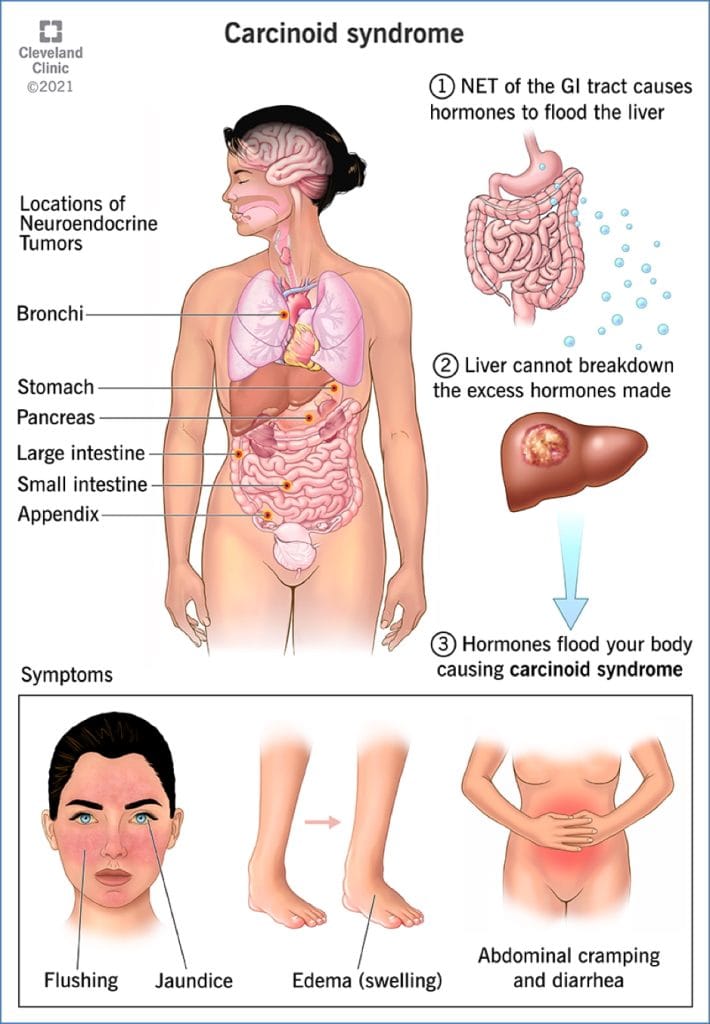
Carcinoid syndrome is a clinical manifestation of serotonin-secreting neuroendocrine tumours (carcinoid tumours), typically originating in the gastrointestinal tract. While carcinoid tumours are often asymptomatic, metastatic spread—especially to the liver—can allow vasoactive substances to enter systemic circulation, triggering classic symptoms like flushing, diarrhoea, and right-sided heart failure. This page outlines the pathophysiology, diagnosis, and treatment of carcinoid syndrome for final-year medical students.
Definition
Carcinoid syndrome refers to the systemic symptoms caused by serotonin and other bioactive substances released by metastatic neuroendocrine tumours (NETs), particularly when hepatic metabolism is bypassed.
Aetiology
- Neuroendocrine tumours that secrete serotonin, bradykinin, histamine, and prostaglandins
- Arise most commonly from:
- Appendix
- Terminal ileum
- Rectum
Morphology / Pathophysiology
- Primary carcinoid tumours in the gut typically do not cause symptoms unless they metastasise (especially to the liver)
- Once in systemic circulation, secreted vasoactive compounds bypass hepatic first-pass metabolism
- Systemic exposure → Diarrhoea, flushing, and cardiac valvular disease
- Notably affects right-sided heart valves (e.g. tricuspid regurgitation, pulmonary stenosis)
Clinical Features
- Asymptomatic until tumour metastasises
- Classic features of carcinoid syndrome:
- Recurrent hot flushing
- Chronic watery diarrhoea and abdominal cramping
- Right-sided valvular heart disease – particularly tricuspid regurgitation or pulmonary stenosis
- Hepatomegaly (suggestive of liver metastases)
Investigations
- Urinary 5-HIAA – metabolite of serotonin, confirms diagnosis
- CT scan – primary tumour and metastases
- Abdominal ultrasound – especially to assess liver involvement
- Echocardiogram – assess for carcinoid heart disease (valvular abnormalities)
Management
- Somatostatin analogues (e.g. octreotide) – first-line symptomatic treatment
- Reduce serotonin secretion → ↓flushing, ↓diarrhoea
- Surgical resection of tumour (curative if localised)
- Cardiac valvuloplasty/repair – if valvular heart disease develops
Complications
- Hepatic metastasis
- Carcinoid heart disease
- Bowel obstruction (if tumour burden increases)
Differential Diagnosis
- Irritable bowel syndrome (IBS)
- Inflammatory bowel disease (IBD)
- Functional diarrhoea
- Menopausal flushing (in non-cardiac, non-metastatic cases)
Summary
Carcinoid syndrome arises when neuroendocrine tumours secrete serotonin and other substances systemically, most often following hepatic metastasis. Students should be aware of its hallmark features—flushing, diarrhoea, and right-sided valvular disease—and the key role of 5-HIAA in diagnosis. For more gastrointestinal tumour conditions, see our Gastrointestinal Overview page.