
Table of Contents
Overview – Liver Physiology
Liver physiology is important for metabolism, detoxification, digestion, and circulation. It manages macronutrient processing, converts toxins and drugs into excretable forms, and synthesises bile for lipid digestion. This article covers hepatic functions from lipid metabolism and drug biotransformation to bile production and enterohepatic recycling — essential knowledge for both physiology and pharmacology revision.
Hepatic Role in Lipid Transport
Chylomicron Processing
- Chylomicrons carry dietary triglycerides through lymph → bloodstream
- Lipoprotein lipase (LPL) in muscle/adipose liberates free fatty acids (FFAs)
- FFAs → resynthesised to triglycerides for storage or energy
- Chylomicron remnants return to liver → broken down into:
- Glycerol
- FFAs
- Cholesterol
- Phosphate
Short-Chain Fatty Acids (SCFAs)
- Absorbed directly into portal blood
- Transported by albumin (synthesised in liver)
- Enter liver → contribute to lipid synthesis pathways
VLDL Construction
- Liver converts glycerol + FFAs + SCFAs → triglycerides (TAGs)
- Also forms phospholipids (PLs) and retains free cholesterol
- Combines TAGs + PLs + cholesterol + apolipoproteins → VLDLs
- VLDLs enter circulation → deliver TAGs to adipose tissue

Hepatic Drug Metabolism (Biotransformation)
First-Pass Metabolism
- Orally taken drugs → absorbed in intestines → portal vein → liver
- Liver alters drug → active/inactive/toxic/non-toxic metabolites
- Bioavailability ≠ administered dose due to first-pass effect
Types of Metabolic Outcomes
- Bioactivation: Inactive drugs converted to active form
- e.g. Codeine → morphine
- Bioinactivation: Active drug rendered inactive
- Toxification: Metabolite more toxic than parent drug
- Detoxification: Reduced toxicity before excretion
- Pre-elimination: Lipophilic drugs converted to hydrophilic for renal excretion

Biotransformation Pathways
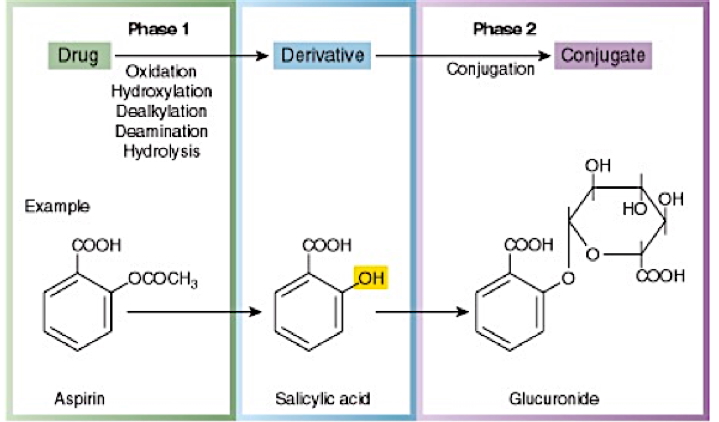
Phase I Reactions
- Expose/add functional groups to drug molecule
- Common reactions: Oxidation, Reduction, Hydrolysis
- Cytochrome P450 enzymes (CYP450):
- Key for oxidation
- Also involved in:
- Bile acid synthesis
- Steroid/Vitamin D metabolism
- FA & eicosanoid metabolism

Phase II Reactions (Conjugation)
- Attach endogenous polar groups → ↑ solubility
- Common conjugations:
- Glucuronidation (most common)
- Glutathione, Sulphate, Amino acid, Acetylation, Methylation
Influencing Factors
- Drug interactions: Enzyme induction/inhibition
- Genetics:
- e.g. CYP2D6 variants:
- Absent in ~7% of Caucasians
- Overactive in ~30% of East Africans
- e.g. CYP2D6 variants:
- Disease: Liver, kidney, or systemic infections affect metabolism
- Hormonal status: e.g. oestrogen alters enzyme expression
- Age/Gender: Enzyme activity varies
- Dietary components: Can modulate enzyme function
Gallbladder & Bile Physiology
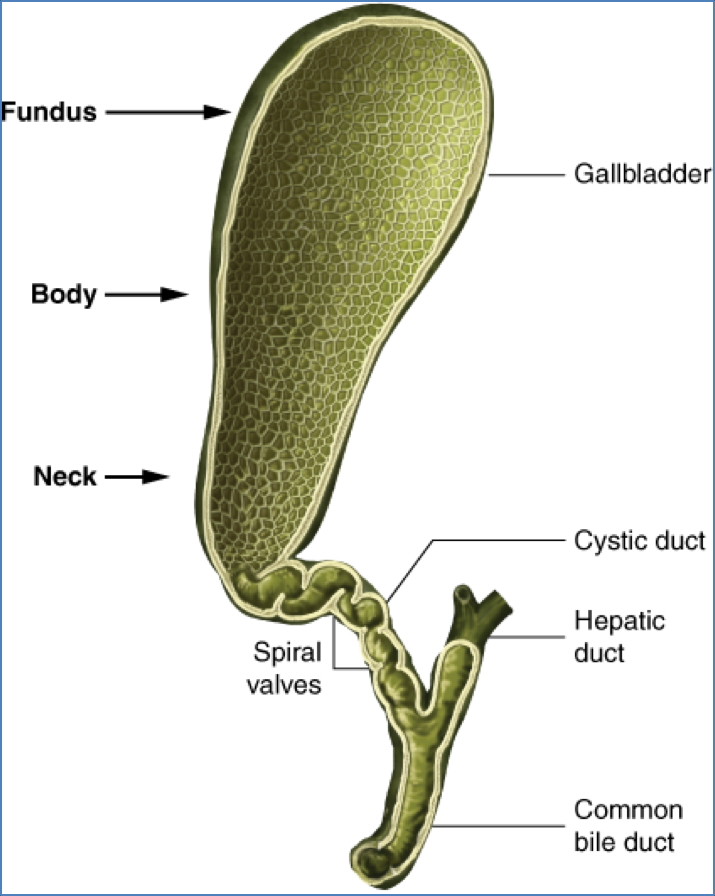
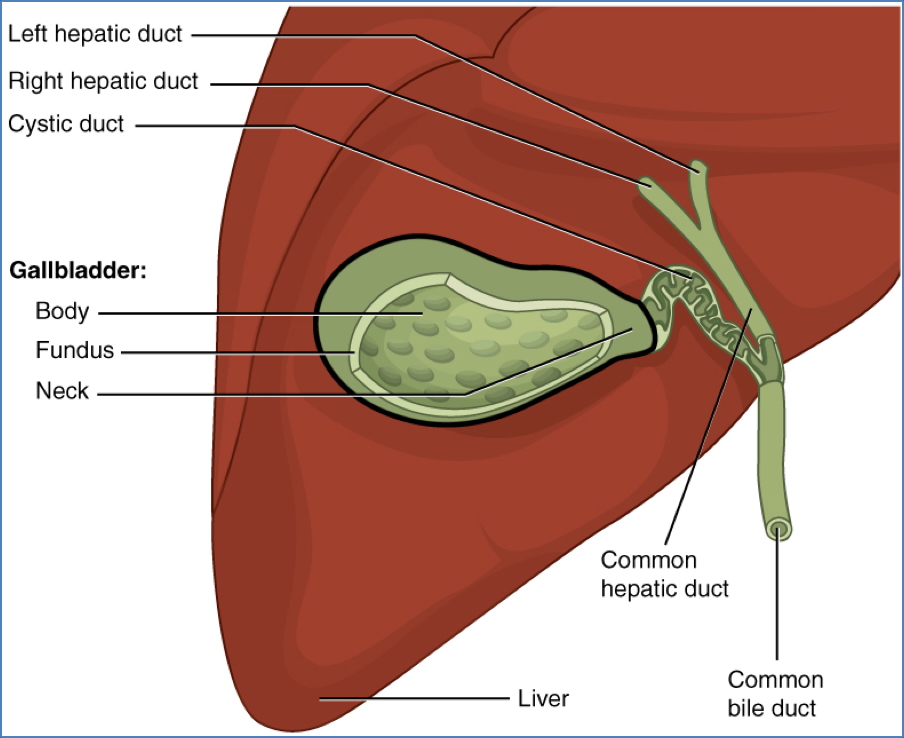
Gallbladder Function
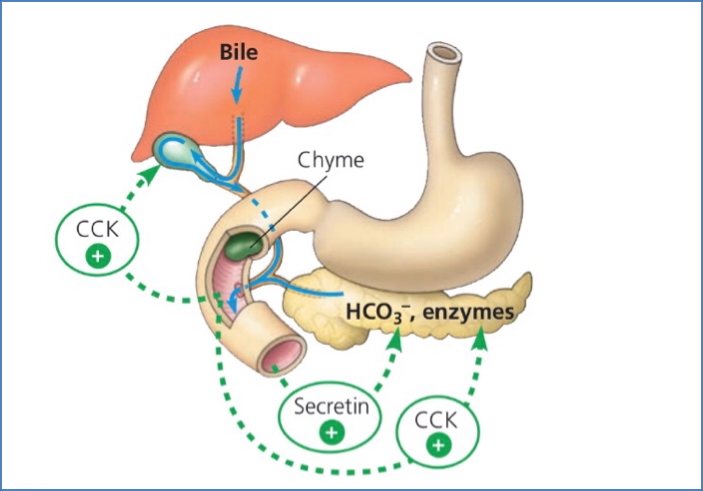
- Stores and concentrates bile
- Contracts in response to CCK (cholecystokinin)
- CCK also relaxes Sphincter of Oddi → bile enters duodenum
Structure
- Pear-shaped organ on liver’s inferior surface
- Connected to bile duct via cystic duct
Bile Composition
- Water, Electrolytes
- Bile salts (cholesterol derivatives)
- Phospholipids
- Cholesterol
- Bilirubin (from RBC breakdown)
Bile Salts
- Synthesised from cholesterol
- Conjugated with:
- Glycine (75%)
- Taurine (25%)
- Become water-soluble

Functions of Bile
- Emulsifies dietary fats in small intestine
- Vehicle for excretion of:
- Endogenous wastes: cholesterol, bilirubin, steroid hormones
- Exogenous wastes: drug metabolites, antibiotics
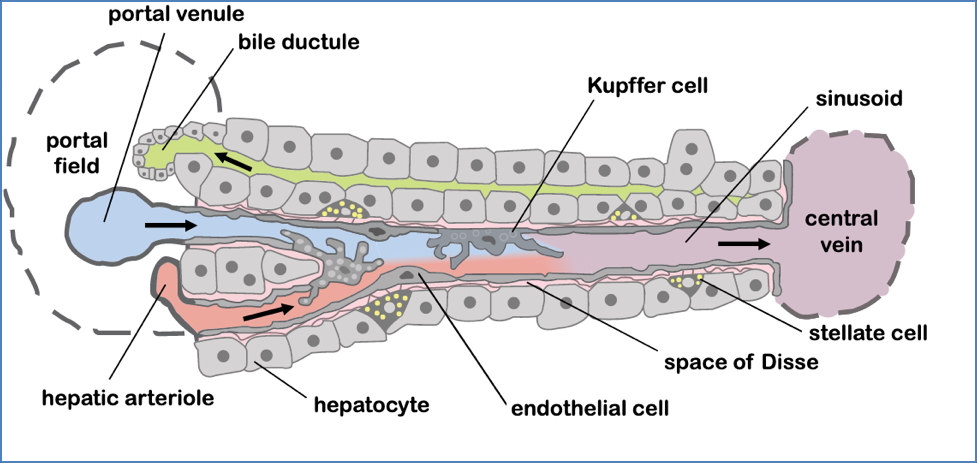
- Secreted into bile canaliculi → ducts → common bile duct
- Duct epithelium adds bicarbonate-rich fluid
Bile Storage & Release
Storage
- When digestion is inactive, bile backs up into gallbladder
- Gallbladder dehydrates bile → concentrates 5x
Release
- Triggered by acidic, fatty chyme in duodenum
- Hormones:
- Secretin: stimulates bile and bicarbonate secretion
- CCK: contracts gallbladder + opens sphincter
- VIP: slows gastric emptying, promotes fluid secretion
Enterohepatic Circulation
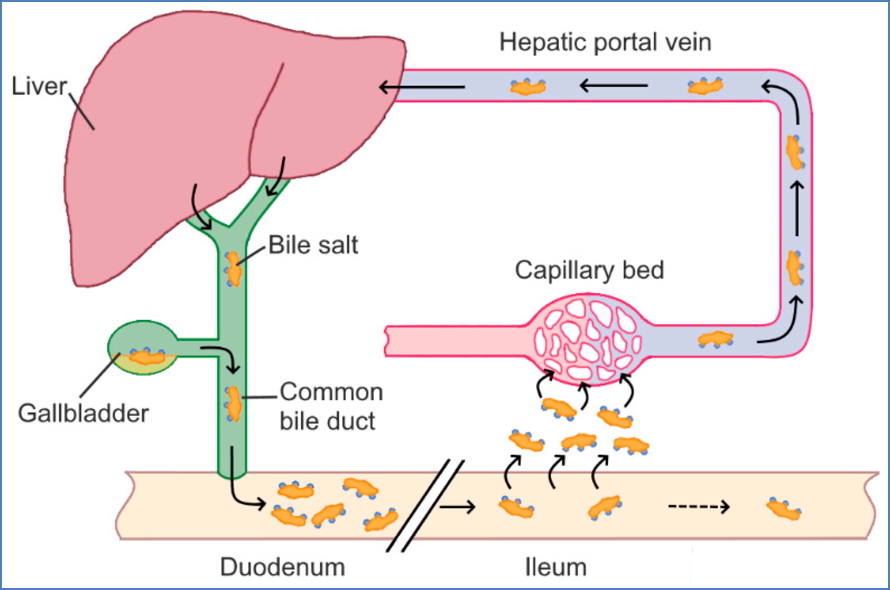
- ~90% of bile salts reabsorbed in ileum
- Returned via portal vein → re-secreted by hepatocytes
- Each bile salt reused 18–20 times
- Efficient conservation of resources, with minimal waste
Summary – Liver Physiology
Liver physiology is complex and includes lipid transport, drug metabolism, and bile production. The liver converts dietary fats into lipoproteins, transforms xenobiotics via phase I and II reactions, and ensures fat digestion through bile synthesis and recycling. For a broader context, see our Gastrointestinal Overview page.