
Table of Contents
Overview – Cardiomyopathy
Cardiomyopathy refers to a group of diseases that affect the heart muscle, resulting in structural and functional abnormalities. These conditions often lead to heart failure, arrhythmias, and increased risk of sudden cardiac death. Cardiomyopathies are classified based on anatomical and functional patterns into dilated, hypertrophic, restrictive, and several specific subtypes like stress-induced cardiomyopathy. Timely diagnosis and classification are critical to guide therapy and reduce morbidity and mortality.
Definition
Cardiomyopathy encompasses primary diseases of the myocardium that result in mechanical or electrical dysfunction. It is often progressive and may be genetic or acquired in origin.
Dilated Cardiomyopathy (DCM) – Most Common
- Aetiology:
- Idiopathic
- Chronic alcohol use
- Post-viral myocarditis
- Genetic mutations
- Chemotherapy (e.g. anthracyclines)
- Chronic anaemia
- Pathogenesis:
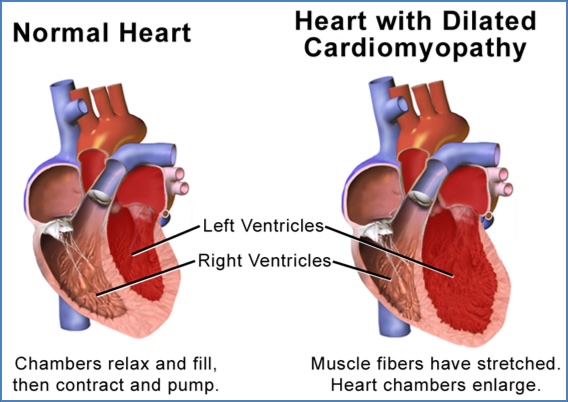
- Progressive ventricular dilation and hypertrophy → systolic dysfunction
- Leads to chamber enlargement, mural thrombi, and valvular regurgitation (especially mitral and tricuspid)
- Clinical Features:
- Any age, including children
- Presents with features of congestive cardiac failure:
- Dyspnoea, orthopnoea, paroxysmal nocturnal dyspnoea
- Fatigue, exercise intolerance
- Wet cough
- Complications:
- Mitral regurgitation
- Arrhythmias
- Systemic thromboembolism
- Investigations:
- ECG
- CXR (enlarged globular heart)
- Echocardiogram (dilated ventricles, reduced EF)
- Management:
- Reduce alcohol intake
- Standard CCF therapy:
- ACE inhibitor or ARB
- β-blocker
- Loop diuretic
- Anticoagulation (warfarin) if risk of thromboembolism
- Vaccinations: Flu and Pneumococcal
- Heart transplant in refractory cases
- Prognosis:
- 50% 5-year mortality without transplant
Hypertrophic Cardiomyopathy (HOCM)
- Aetiology:
- Genetic mutations (often autosomal dominant)
- Pathogenesis:
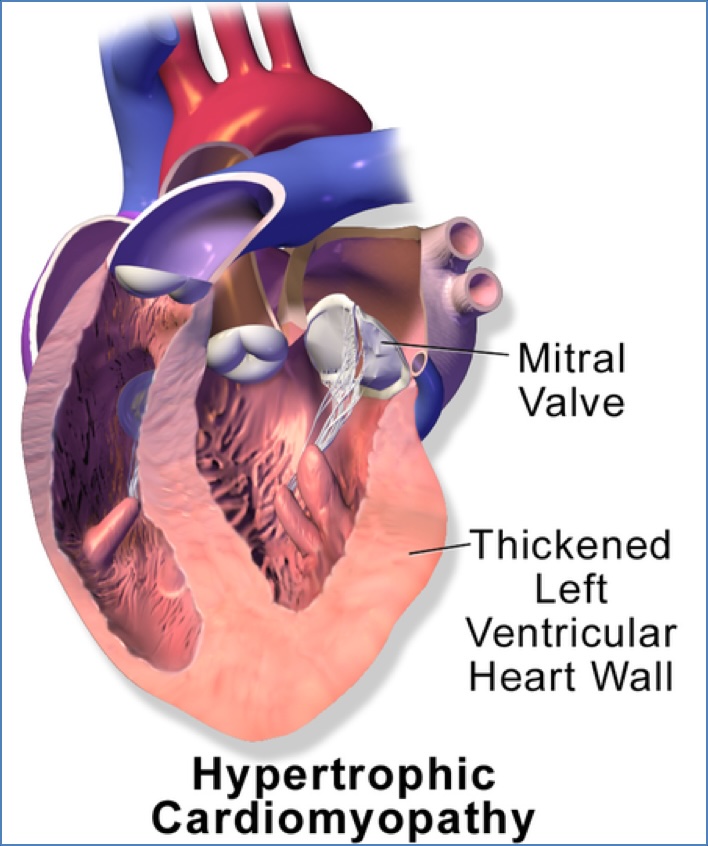
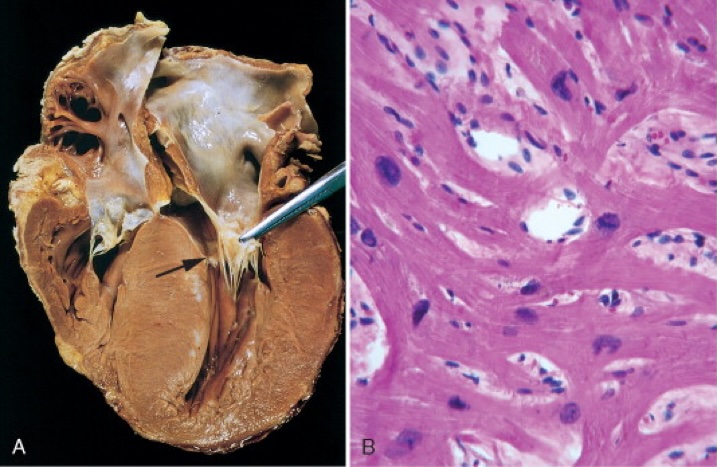
- Myocardial hypertrophy (especially septal) → diastolic dysfunction
- May result in left ventricular outflow tract (LVOT) obstruction
- Risk of focal ischaemia despite normal coronary arteries
- Clinical Features & Complications:
- Symptoms of heart failure
- Syncope (especially on exertion)
- Harsh systolic murmur (↑ with Valsalva)
- Angina
- Atrial or ventricular arrhythmias
- Embolism (from mural thrombus)
- Sudden cardiac death (especially in young athletes)
- Investigations:
- ECG: LVH, deep Q waves
- Echo: Asymmetric septal hypertrophy, diastolic dysfunction
- Management:
- β-blockers (↓ HR and ↓ contractility)
- Septal myomectomy (if significant obstruction)
- Implantable cardioverter-defibrillator (ICD) for high-risk cases
Restrictive Cardiomyopathy
- Aetiology:
- Infiltrative disorders: Amyloidosis, sarcoidosis, scleroderma, haemochromatosis
- Pathogenesis:
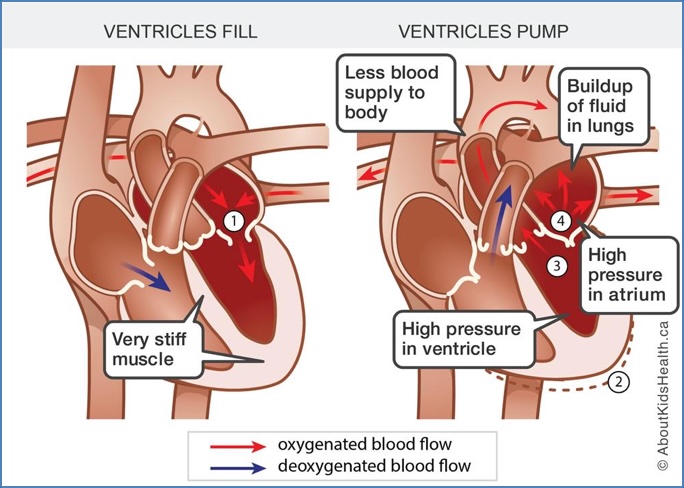
- Stiff myocardium → impaired diastolic filling → heart failure
- Ventricular size typically normal
- Myocardium is non-compliant
- Clinical Features:
- Features of right and left heart failure
- Chest pain, palpitations
- Elevated JVP
- Pulmonary crackles, peripheral oedema
- Investigations:
- ECG: Low voltage
- CXR: Signs of heart failure
- Echo: Normal EF, diastolic dysfunction
- Myocardial biopsy to identify cause
- Management:
- Standard CCF therapy
- Anticoagulation
- Anti-arrhythmics if needed
- Definitive: heart transplantation
Cor Pulmonale (Special Case)
- Definition:
- Right ventricular hypertrophy and dilation secondary to chronic pulmonary hypertension (e.g. COPD)

Stress Cardiomyopathy (Takotsubo Cardiomyopathy)
- Also known as:
- “Broken Heart Syndrome”
- “Apical Ballooning Syndrome”
- Aetiology:
- Emotional or physical stress
- Catecholamine surge → coronary vasospasm and myocardial stunning
- Pathogenesis:
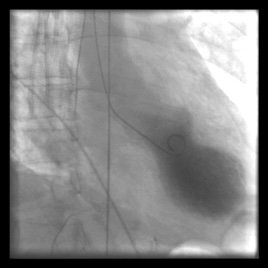
- LV apex balloons while the base remains hypercontractile → classic “octopus trap” shape
- Clinical Features:
- Sudden-onset heart failure
- Chest pain, dyspnoea
- ECG changes mimicking myocardial infarction
- Risk of arrhythmias, ventricular rupture
- Investigations:
- ECG: ST elevation
- Raised troponins
- CXR and echocardiogram: regional wall motion abnormalities
- Serum catecholamines
- Management:
Summary – Cardiomyopathy
Cardiomyopathy encompasses a group of conditions affecting heart muscle function, leading to heart failure, arrhythmias, and sometimes sudden death. Types include dilated, hypertrophic, restrictive, and stress-induced cardiomyopathies, each with distinct aetiologies and pathophysiological mechanisms. Management involves addressing the underlying cause, symptomatic control with standard heart failure therapy, and in selected cases, surgical or device-based interventions. For a broader context, see our Cardiovascular Overview page.