
Table of Contents
Overview – Acute Dermatitis
Acute dermatitis, also known as acute eczema, is a common inflammatory skin condition marked by erythema, blistering, and intense pruritus. It typically arises from allergen exposure or skin barrier dysfunction. There are several subtypes, including contact dermatitis and atopic dermatitis, which share common immunological mechanisms. Understanding the morphology and pathophysiology of acute dermatitis is crucial for diagnosis and treatment in both paediatric and adult populations.
Types of Acute Dermatitis
- Contact Dermatitis – triggered by prolonged exposure to allergens (e.g. soaps, creams, deodorants)
- Atopic Dermatitis – associated with atopy and genetic predisposition
- Drug Eczema
- Photoeczema
- Primary Irritant Dermatitis
Aetiology
- Type IV Hypersensitivity Reaction (T-cell mediated)
- Triggered by allergens such as:
- Urine, soaps, antiseptics, fragrances
- Occlusive agents (e.g. adhesives, topical agents)
Epidemiology
- Most common in children
- Strong family history (70% of cases)
- Often associated with atopic triad:
- Atopic dermatitis
- Allergic rhinitis
- Asthma
- ~50% of patients have a filaggrin deficiency (barrier protein in epidermis)
Pathogenesis
Initial Sensitisation
- Allergen processed by Langerhans cells in the epidermis
→ Presented to T-cells in lymph nodes → T-cell priming
Upon Re-exposure
- Type IV hypersensitivity reaction
→ Epidermal oedema + vesiculation = “Wet Eczema”
Chronic Exposure
- Leads to hyperplasia and hyperkeratosis
→ Lichenified “Dry Eczema”

Morphology
Gross Features
- Erythema
- Vesicles/blisters – may weep and crust
- Papules and plaques
- Hyperkeratosis and lichenification (in chronic stages)
Microscopy
- Spongiosis (intraepidermal oedema)
- Epidermal blistering
- Perivascular lymphocytic infiltrate
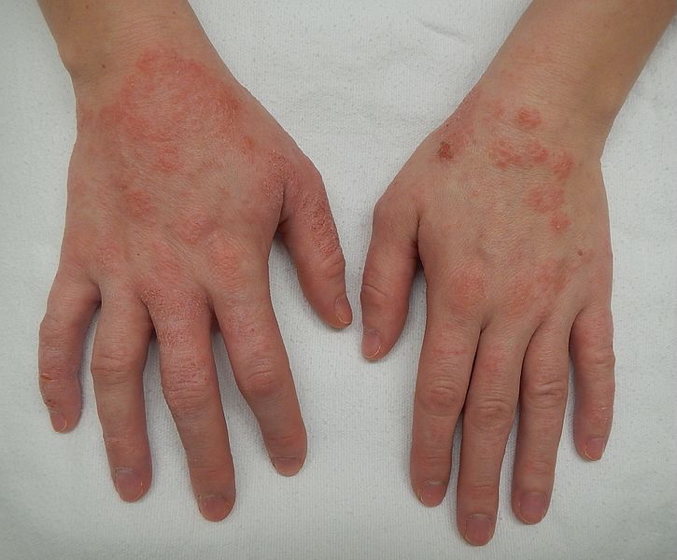
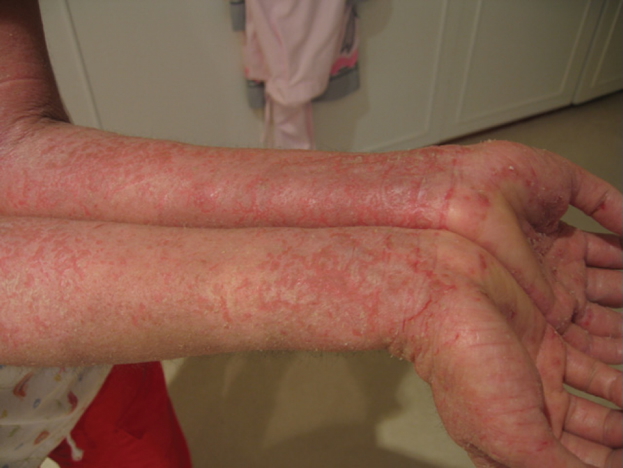
2. OpenStax College, CC BY 3.0 <https://creativecommons.org/licenses/by/3.0>, via Wikimedia Commons
Clinical Features
- Severe itching (pruritus)
- Patchy erythematous rash, often poorly defined
- Typically affects:
- Cubital and popliteal fossae
- Face
- Typically affects:
- Dry skin, excoriation, and lichenification
- Weeping and crusting if secondarily infected
- Contact dermatitis may have a geometric shape (e.g. square from adhesive)
Management
- Avoidance of triggering agents (soaps, allergens)
- Lifestyle modifications
- Emollients and bath additives to restore barrier function
- Topical corticosteroids for inflammation
- Oral antihistamines for itch relief
Summary – Acute Dermatitis
Acute dermatitis is a hypersensitivity reaction that results in itchy, inflamed, and sometimes weeping skin lesions. It commonly affects children and those with a genetic predisposition to atopy. Identifying triggers and restoring the skin barrier are central to management. Recognising the difference between “wet eczema” and chronic “dry eczema” helps guide treatment decisions. For a broader context, see our Skin & Dermatology Overview page.