
Table of Contents
Overview – Lymphoid Organs
Lymphoid organs are specialized structures of the immune system responsible for the development, maturation, activation, and coordination of lymphocytes (B and T cells). These organs are broadly categorized into primary and secondary types and are composed of reticular connective tissue, providing both physical support and a dynamic immune microenvironment for antigen surveillance and response.
1. Primary Lymphoid Organs
Function
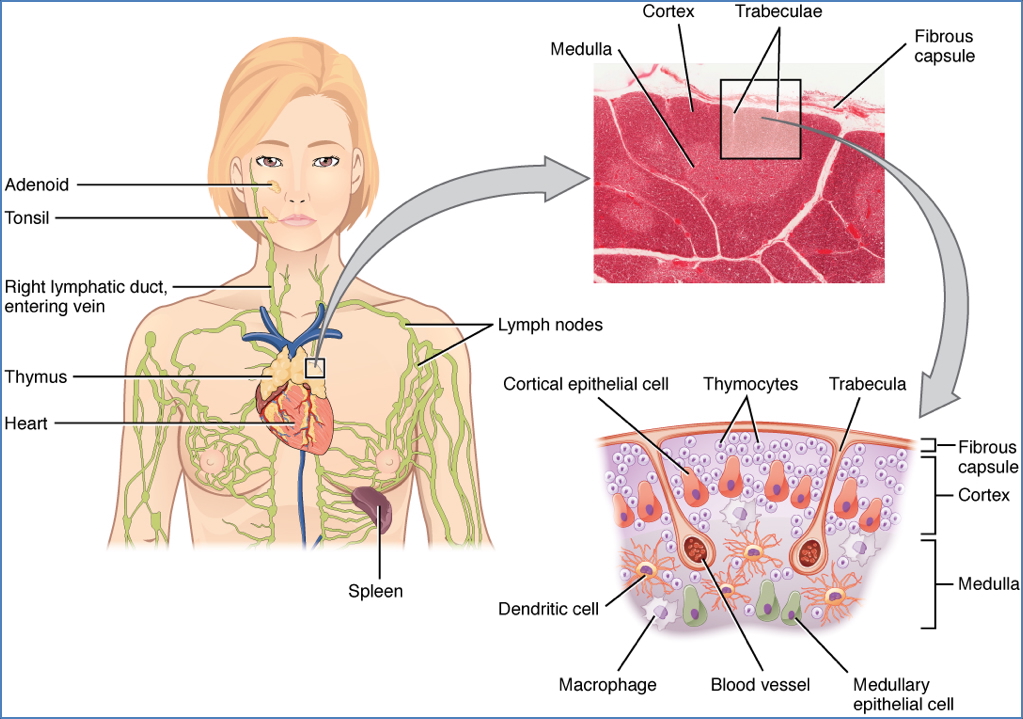
Sites where lymphocytes develop and mature, acquiring immunocompetence (i.e., the ability to recognize and respond to a specific antigen).
Key Sites
- Bone Marrow – Site of B-cell maturation
- Thymus – Site of T-cell maturation
Features of Immunocompetence
- Lymphocytes must recognize self-MHC molecules (MHC restriction).
- Lymphocytes must not strongly bind self-antigens (self-tolerance).
→ Cells failing either step are eliminated via apoptosis.
2. Secondary Lymphoid Organs
Function
Sites where naive lymphocytes encounter antigens for the first time and become activated, differentiating into effector and memory cells.
Major Organs
- Lymph Nodes
- Spleen
- Mucosa-Associated Lymphoid Tissue (MALT)
- Tonsils, Adenoids
- Peyer’s Patches
- Appendix
- Bronchus/Gut/Genitourinary Tracts
- Skin (as an immune interface)
Lymph Nodes
Structure
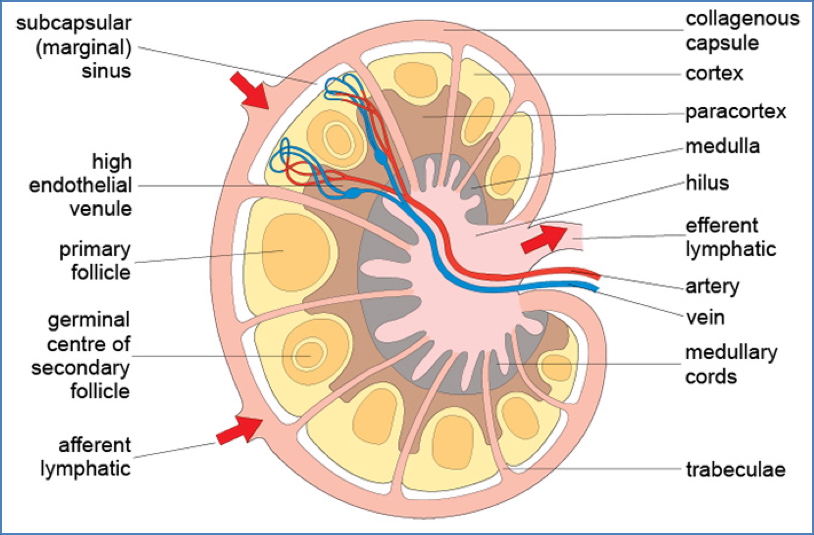
- Cortex → B-cells in follicles (with germinal centers)
- Paracortex → T-cell zone; entry via High Endothelial Venules (HEVs)
- Medulla → Plasma cells, macrophages, and lymphocytes
- Reticular network → Supports migration and interactions among immune cells
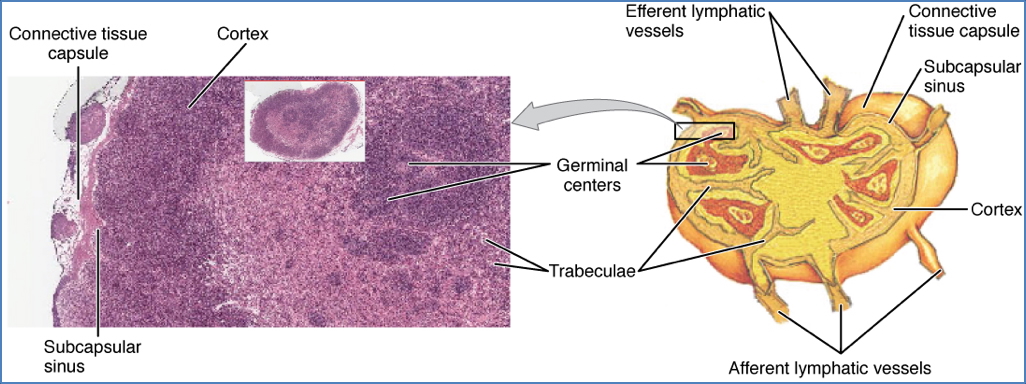
2. CNX OpenStax, CC BY 4.0 <https://creativecommons.org/licenses/by/4.0>, via Wikimedia Commons
Function
- Filter lymph-borne antigens
- Act as a hub for antigen-presenting cells (APCs) like dendritic cells and macrophages
- Enable T- and B-cell interaction and activation
Immune Response Sequence
- Antigens and dendritic cells enter via afferent lymphatics
- Naive lymphocytes enter via HEVs
- Antigen presentation activates T-cells → Activate B-cells
- B-cells proliferate in germinal centers → Differentiate into plasma cells
- Antibodies and effector T-cells exit via efferent lymphatics
Note: Site of immunoglobulin class switching (e.g., IgM → IgG)

Spleen
Function
- Filters blood-borne antigens
- Removes aged erythrocytes and stores platelets
- Initiates immune responses in the circulation
Structure
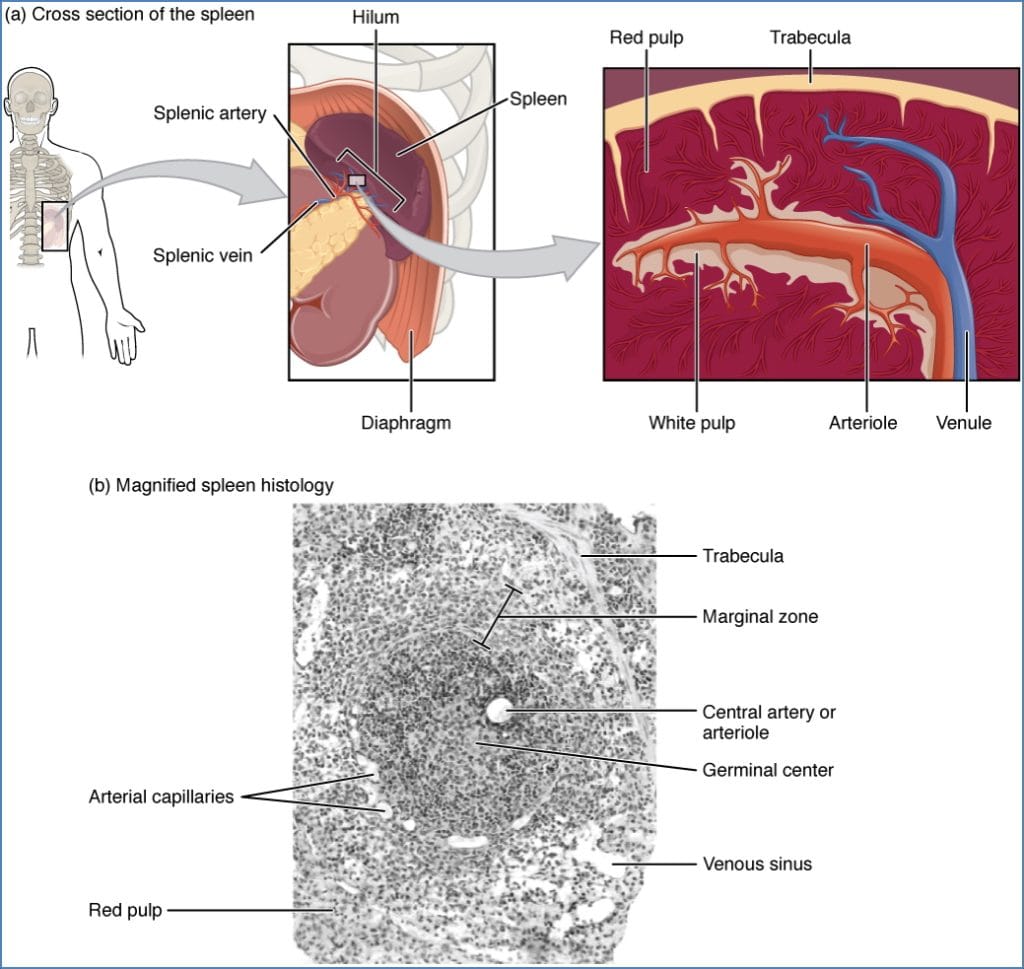
- White Pulp:
- Periarteriolar Lymphoid Sheath (PALS) → T-cells
- Lymphoid Follicles → B-cells
- Marginal Zone → Macrophages, non-circulating B-cells
- Red Pulp:
- Venous sinuses and splenic cords → Remove aged RBCs and filter pathogens
Immune Response Sequence
- Antigens enter via perifollicular capillaries
- Filtered by macrophages and immature dendritic cells
- Dendritic cells activate naive T-cells → Activate B-cells
- B-cells proliferate and differentiate into plasma cells
- Antibodies and effector T-cells enter systemic circulation
Asplenia – Clinical Importance
- Risk of severe infections from encapsulated bacteria
- Prophylaxis: Vaccination, antibiotics, infection vigilance
Mucosa-Associated Lymphoid Tissue (MALT)
Function
- Defends mucosal surfaces (GI, respiratory, urogenital tracts)
- Supports common mucosal immunity – priming at one site enhances protection at others
Subtypes
- Gastrointestinal Associated Lymphoid Tissue (GALT)
- Bronchus Associated Lymphoid Tissue (BALT)
- Peyer’s Patches, Tonsils, Adenoids, Appendix

Protective Features
- Non-immune: Mucus, gastric acid, enzymes, motility
- Immune: Secretory IgA, T-cells, macrophages, dendritic cells
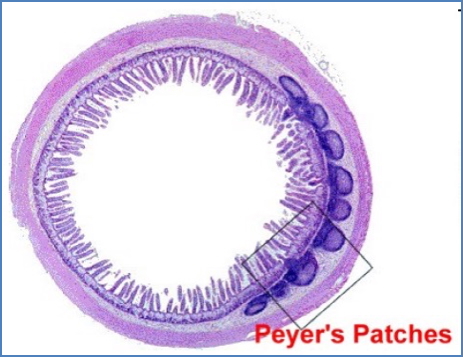
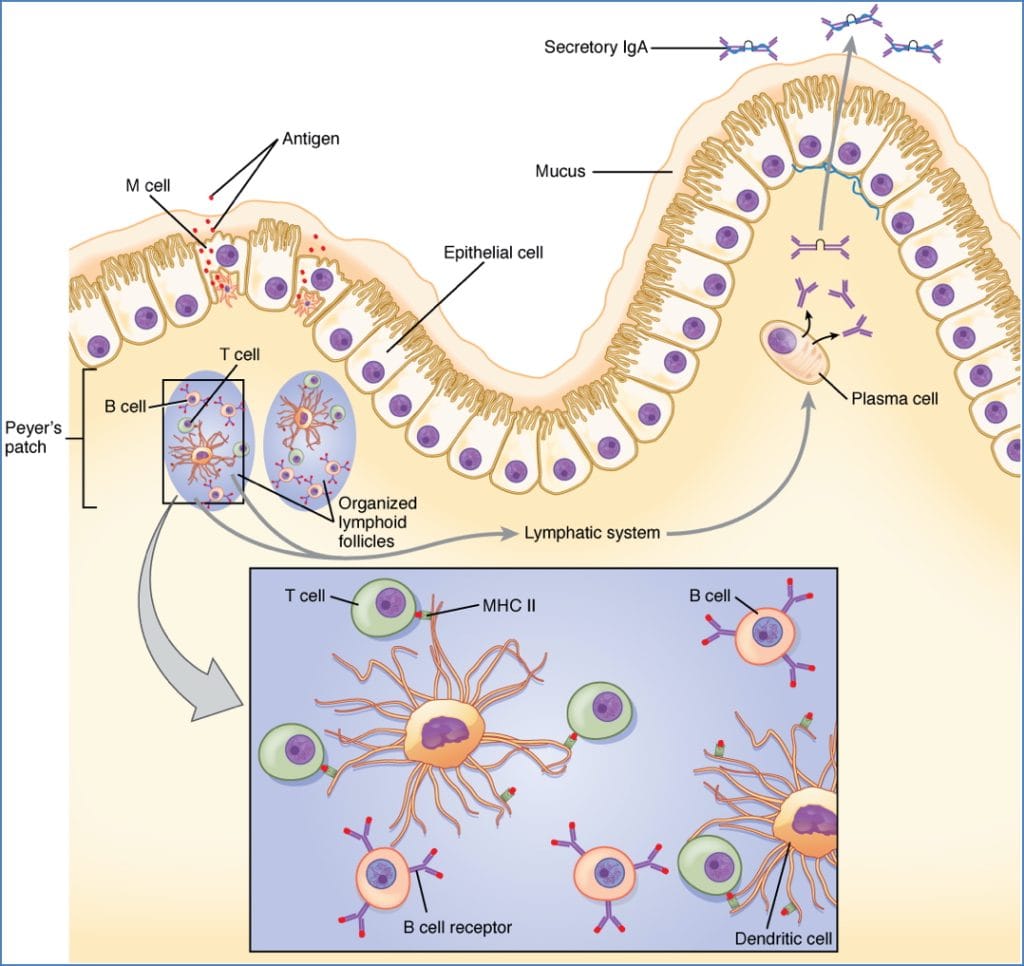
Peyer’s Patches – Immune Function
- M-cells transport antigens to underlying APCs and B-cells
- Dendritic cells activate T-cells → Activate B-cells
- Cells migrate to lymph nodes → Differentiate
- Re-enter MALT via chemokine-guided circulation (e.g., CCR9)
- Plasma cells produce secretory IgA (sIgA) and sIgM
- sIgA neutralizes pathogens in the gut lumen (but cannot opsonize)
Note: IgM can compensate in IgA deficiency due to shared J-chain

Summary – Lymphoid Organs
Lymphoid organs are critical for immune cell development, antigen surveillance, and immune activation. Primary lymphoid organs ensure only functional, self-tolerant lymphocytes mature, while secondary lymphoid organs facilitate efficient antigen recognition and response. From lymph nodes to MALT and the spleen, each plays a specialized role in maintaining immunity. For a broader context, see our Immune & Rheumatology Overview page.