
Table of Contents
Overview – Red Blood Cells
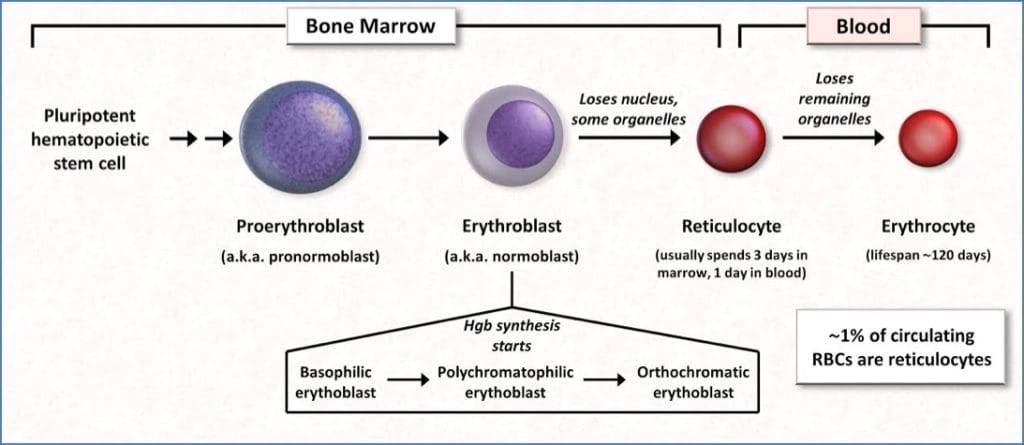
Red blood cells (RBCs), or erythrocytes, are the most abundant cells in the bloodstream and are essential for oxygen transport and carbon dioxide clearance. They are produced in the bone marrow via a process called erythropoiesis and undergo tightly regulated development before entering circulation. Understanding erythrocyte formation, metabolism, and death is crucial for interpreting anaemias, oxygen transport dynamics, and haematological disorders.
Definition
- Red blood cells (RBCs) = anucleate, biconcave cells specialised in oxygen and carbon dioxide transport
- Lifespan: ~120 days
- Produced via erythropoiesis in the bone marrow
Erythropoiesis
- Daily production: ~10¹² RBCs
- Sequence:
- Pluripotent stem cell → Pronormoblast (Proerythroblast)
- → Normoblasts (Erythroblasts) → Reticulocytes
- → Mature RBCs (Erythrocytes)
- Reticulocytes:
- Circulate for 1–2 days before maturation (mainly in spleen)
- Lack nuclei but contain organelle remnants
- <1% of RBCs in peripheral blood under normal conditions
- ↑ Reticulocyte count suggests active erythropoiesis (e.g. in anaemia)
- Nucleated RBCs in circulation indicate severe marrow stress
Microscopy
- Methylene blue stain used to visualise reticulocytes
Regulation by Erythropoietin
- Erythropoietin (EPO):
- Hormone regulating RBC production
- Produced by peritubular interstitial cells in kidneys (90%) and liver (10%)
- Triggered by:
- Anaemia
- Hypoxia (e.g. high altitude)
- CO poisoning
- Renal ischaemia
- Inhibited when tissue oxygenation is sufficient

Requirements for Erythropoiesis
Metals
- Iron – essential for haemoglobin
- Cobalt
Vitamins
- Vitamin B12, Folate – DNA synthesis
- Vit C, Vit E, B6, Thiamine, Riboflavin, Pantothenic acid
Amino Acids
- Required for globin synthesis
Hormones & Growth Factors
- Erythropoietin
- Androgens
- Thyroxine
- Interleukin-3
- GM-CSF (Granulocyte-Macrophage Colony Stimulating Factor)
Haemoglobin
Function
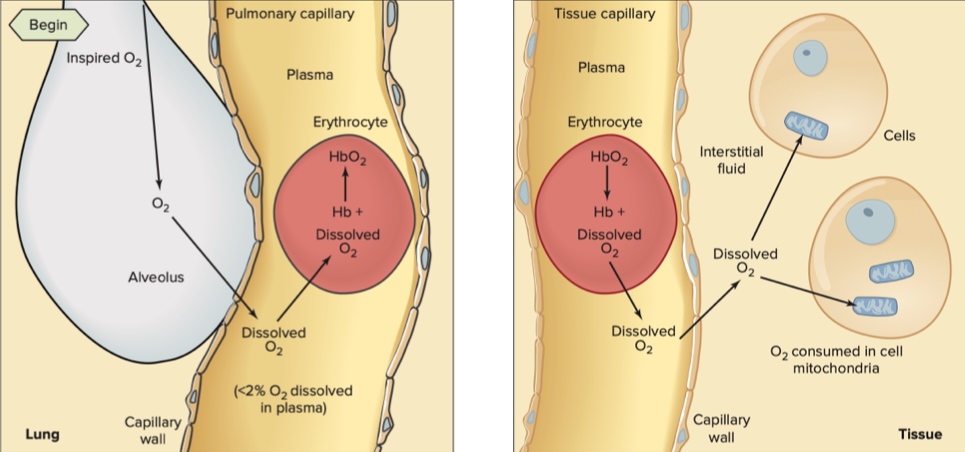
- Binds O₂ in lungs → delivers to tissues
- Returns CO₂ from tissues → lungs
- Major iron store (65% of body’s iron)
Structure
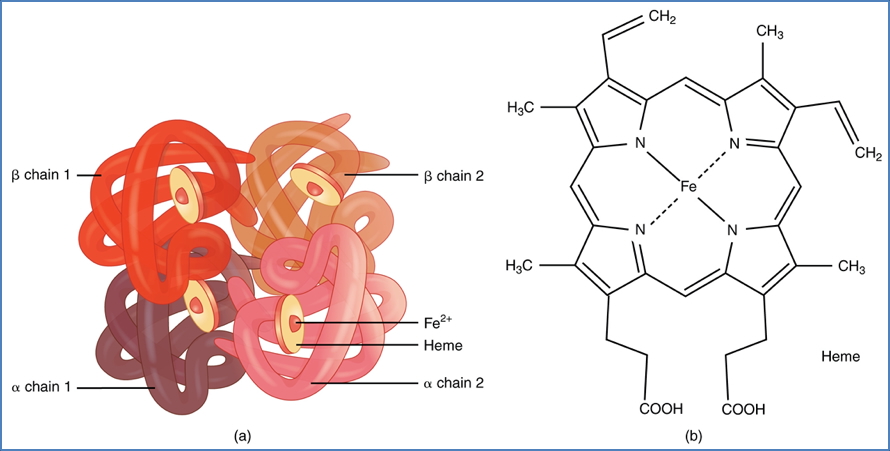
- Tetramer: 2 alpha + 2 beta globin chains
- Each chain has a haem group:
- Protoporphyrin ring + Fe²⁺ (ferrous iron)
- Each iron binds one O₂ molecule → 1 Hb = 4 O₂ molecules
Oxygen Binding & Release
- Oxyhaemoglobin (lungs): oxygen-bound, bright red
- Deoxyhaemoglobin (tissues): oxygen-released, dark red
- CO₂ binds to globin chains, not haem

Haemoglobin-Oxygen Dissociation Curve
- Shows relationship between O₂ partial pressure and saturation
- P50: ~26 mmHg (point of 50% saturation)
- Right shift: facilitates O₂ release to tissues
- Left shift: increases O₂ uptake in lungs


Erythrocyte Metabolism
- No mitochondria → anaerobic energy generation only
Pathways:
- Embden-Meyerhof Pathway:
- Glycolysis → ATP
- Pentose Phosphate Pathway:
- Produces NADPH
- Maintains iron in ferrous state (Fe²⁺) via methaemoglobin reductase
- Prevents oxidative damage
- Fe³⁺ (ferric) can’t bind O₂ → leads to oxidative stress

Erythrocyte Death & Recycling
- Lifespan: ~120 days
- Ageing leads to:
- ↓ Glycolysis, ↓ ATP
- ↓ Membrane flexibility
- Removal by macrophages in spleen and liver
Recycling
- Iron:
- Reused via transferrin → bone marrow
- Stored as ferritin
- Protoporphyrin:
- Converted → bilirubin → conjugated in liver → excreted in bile/faeces

Summary – Red Blood Cells
Red blood cells are essential for gas transport and iron storage, formed via a tightly regulated erythropoiesis process controlled by erythropoietin and nutrient availability. Their life cycle, from stem cell to clearance by macrophages, is central to understanding anaemia, erythrocyte disorders, and oxygen-carrying capacity. For a broader context, see our Blood & Haematology Overview page.