
Table of Contents
Overview – Thyroid Gland
The thyroid gland plays a crucial role in regulating metabolism, growth, and numerous physiological processes through the secretion of thyroid hormones. Understanding its anatomy, embryology, hormone synthesis, regulation, and systemic effects is fundamental for diagnosing and managing a wide spectrum of endocrine disorders.
General Info
- Thyroid hormone receptors are present throughout the body.
- Approximately 75–100µg of thyroid hormone is secreted daily.
- The thyroid gland maintains long-term hormonal reserves due to its unique follicular storage system.
Anatomy of the Thyroid Gland
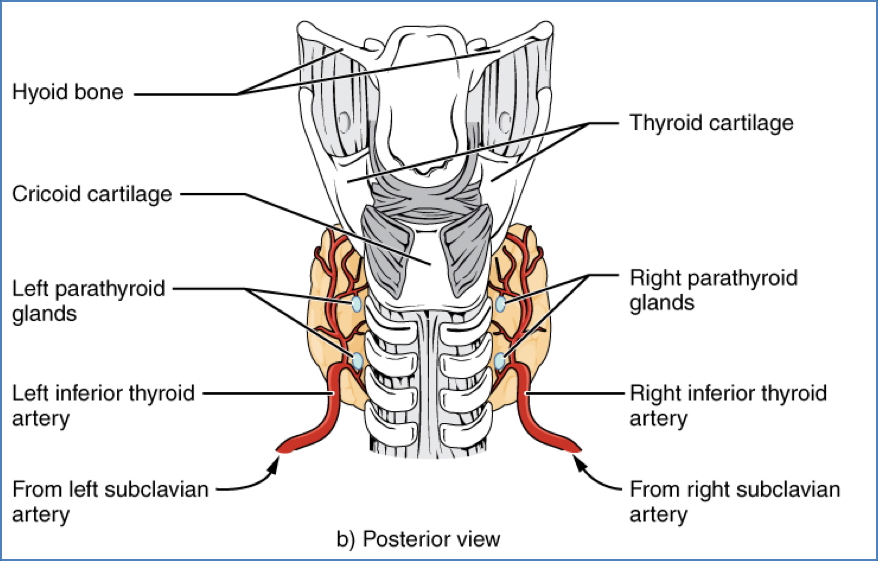
- Structure: Bilobar (left and right lobes), connected by the isthmus.
- Location: Anterior to the trachea, directly below the larynx.
- Blood Supply:
- Highly vascularised to support hormone production and rapid secretion.
- Flow regulated by the sympathetic nervous system.

- Histology:
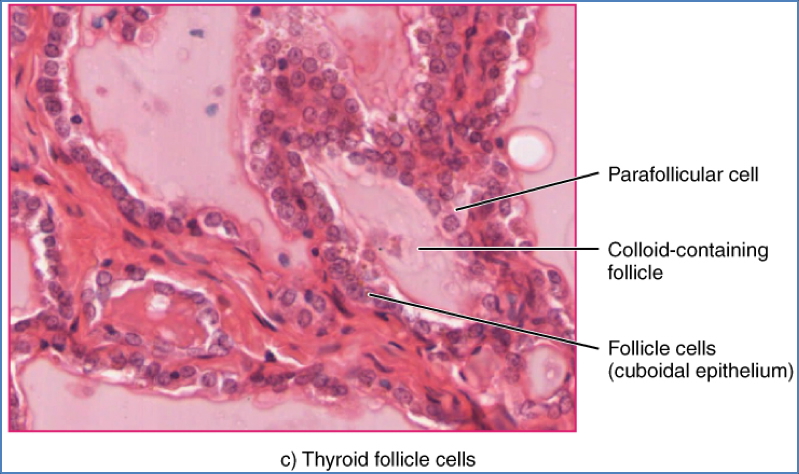
- Composed of millions of follicles filled with colloid (thyroglobulin-bound thyroid hormones).
- Follicle cells (principal cells) secrete T3 and T4.
- Parafollicular cells (C cells) secrete calcitonin.
Embryology of the Thyroid Gland
- Develops from pharyngeal pouches at 4–5 weeks gestation.
- Derived from endoderm.
- Migrates from the base of the tongue to its final anterior neck location.
- Migration defects may result in ectopic thyroid tissue along the thyroglossal duct pathway.

Major Thyroid Hormones
| Hormone | Proportion | Key Features |
|---|---|---|
| T3 (Triiodothyronine) | 7% | Most biologically active |
| T4 (Thyroxine) | 93% | Less active, converted to T3 |
| Calcitonin | Small amounts | Lowers plasma calcium |
- Calcitonin:
- Secreted by parafollicular cells.
- Lowers calcium by inhibiting osteoclasts and stimulating osteoblasts.
- Stimulated by elevated extracellular calcium.
Iodine Balance
- Iodine is essential for T3 and T4 synthesis.
- 20% of dietary iodine is taken up by the thyroid; 80% is excreted renally.
- Iodine trapping actively transports iodide into follicle cells, regulated by TSH.

TSH Stimulation of Thyroid Hormone Synthesis
- TSH binding to follicle cells triggers:
- Activation of adenylyl cyclase → ↑ cAMP → activates protein kinase A.
- Increased:
- Thyroglobulin cleavage (↑ T3/T4 release).
- Iodine uptake (iodine trapping).
- Tyrosine iodination (↑ DIT/MIT formation).
- Follicle cell size, secretory activity, and cell number.
- Overall effects: hyperplasia, increased iodine uptake, enhanced hormone synthesis and release.
Synthesis of Thyroid Hormones (Stimulated by TSH)
- Iodide trapping: Active uptake of iodide into follicle cells.
- Iodide oxidation: Conversion of I- to I2 by peroxidase.
- Secretion into colloid: Active iodine enters colloid lumen.
- Thyroglobulin synthesis: Tyrosine-rich glycoprotein secreted into colloid.
- Iodination: Formation of MIT (mono-) and DIT (di-iodinated tyrosines).
- Endocytosis & cleavage: Thyroglobulin endocytosed; lysosomal enzymes release T3 and T4.
- Recycling: Deiodinase salvages unpaired MIT/DIT components.
- Hormone release: T3/T4 diffuse into circulation, bind to carrier proteins.

Regulation of Thyroid Hormone Production
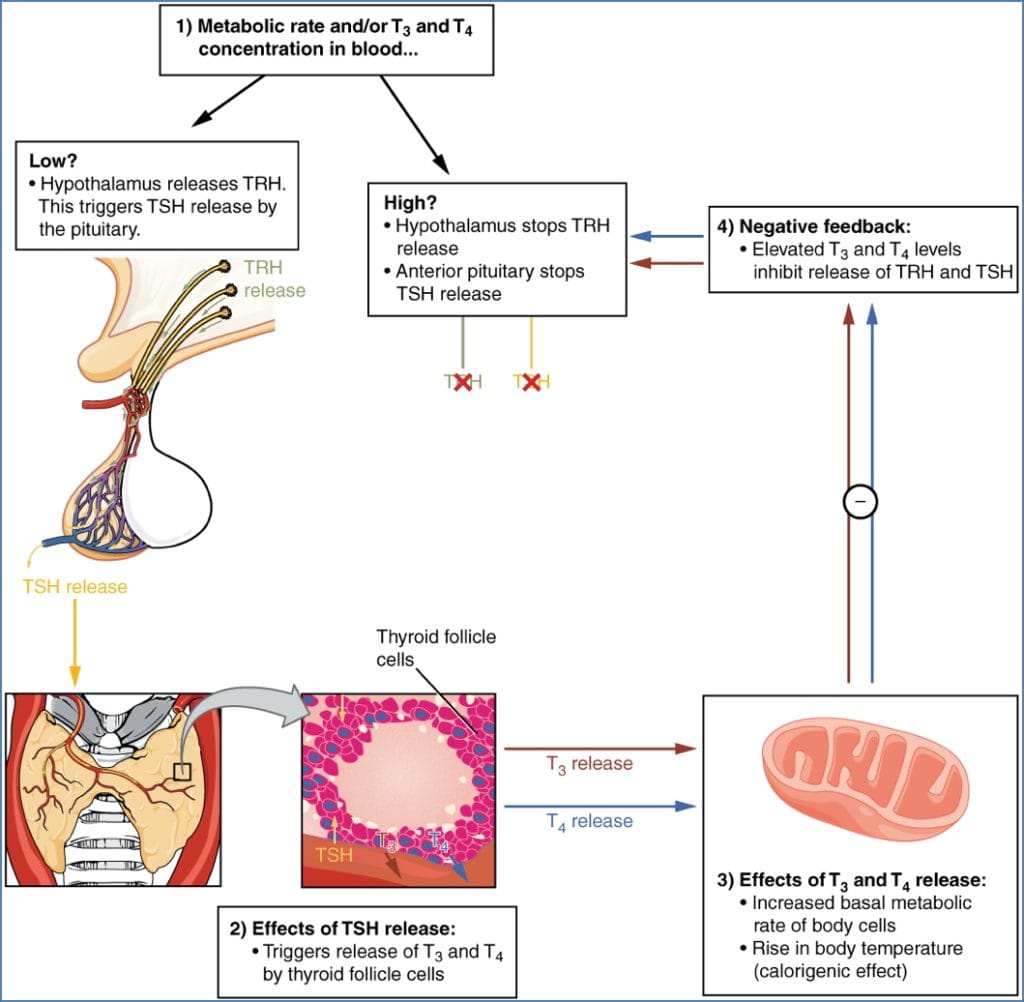
- TRH (hypothalamus) stimulates:
- TSH (anterior pituitary) stimulates:
- Thyroid gland: Releases primarily T4 and some T3.
- Negative feedback: T3 and T4 inhibit TRH and TSH release.
Transport of Thyroid Hormones
- Majority of thyroid hormones are protein-bound in circulation:
- Thyroxine-binding globulin (TBG): 70%
- Albumin: 30%
- Only free, unbound thyroid hormones exert biological effects.
Mechanism of Action
- T4 enters target cells.
- T4 converts to T3 intracellularly.
- T3 binds nuclear receptors → alters gene transcription.
- Changes protein synthesis, enzyme activity, and cellular function.
Physiological Effects of Thyroid Hormones
Cellular Effects
- ↑ Carbohydrate and fat metabolism.
- ↑ Glucose uptake.
- ↑ Protein turnover.
- ↑ Mitochondrial activity.
- ↑ Na/K-ATPase activity.
Systemic Effects
| System | Effects |
|---|---|
| Cardiovascular | ↑ O2 consumption, cardiac output, HR, and respiration |
| Gastrointestinal | ↑ Food intake, glucose absorption, digestive secretions, motility |
| Metabolism | ↑ BMR, insulin secretion, lipolysis, body temperature, vitamin demand |
| Bone | ↑ Turnover and resorption |
| Muscle | ↑ Speed of contraction and relaxation |
| Sympathetic Nervous System | ↑ Catecholamine sensitivity |
- Latent period: Delayed onset of action due to gene activation.
- T4: 2–3 days.
- T3: 6–12 hours.

Summary – Thyroid Gland
The thyroid gland, located anterior to the trachea, synthesises and secretes thyroid hormones that regulate metabolism, growth, and numerous physiological systems. Its precise regulation via the hypothalamic-pituitary-thyroid axis ensures homeostasis across multiple organ systems. For a broader context, see our Endocrine Overview page.