
Table of Contents
Overview – Bone Tissue
Bone tissue is a dynamic, living connective tissue that plays a vital role in structural support, protection of organs, locomotion, mineral storage, and blood production. It undergoes constant remodelling and is tightly regulated by hormonal control mechanisms. Understanding bone composition, structure, formation, and repair is crucial for recognising common pathologies such as osteoporosis and for mastering core musculoskeletal concepts in clinical medicine.
Definition
Bone tissue, or osseous tissue, is a specialized connective tissue composed of both organic and inorganic components. It supports body structure, facilitates movement, stores minerals, houses marrow for hematopoiesis, and protects internal organs.
Functions
- Support – Framework for the body and attachment for muscles.
- Protection – Shields organs like the brain, heart, and lungs.
- Movement – Levers for muscles to act upon.
- Storage:
- Minerals – Especially calcium (Ca²⁺), crucial for physiological processes.
- Marrow:
- Hematopoietic stem cells → Blood cell formation.
- Fat storage.
- Blood Production – Via red bone marrow (hematopoiesis).
Bone Composition
- Organic (35%):
- Collagen and proteins.
- Provides tensile strength and flexibility.
- Inorganic (65%):
- Mineral salts (primarily calcium phosphate).
- Enables compression resistance.
- Responsible for bone durability post-mortem.
Histology of Bone and Associated Tissue
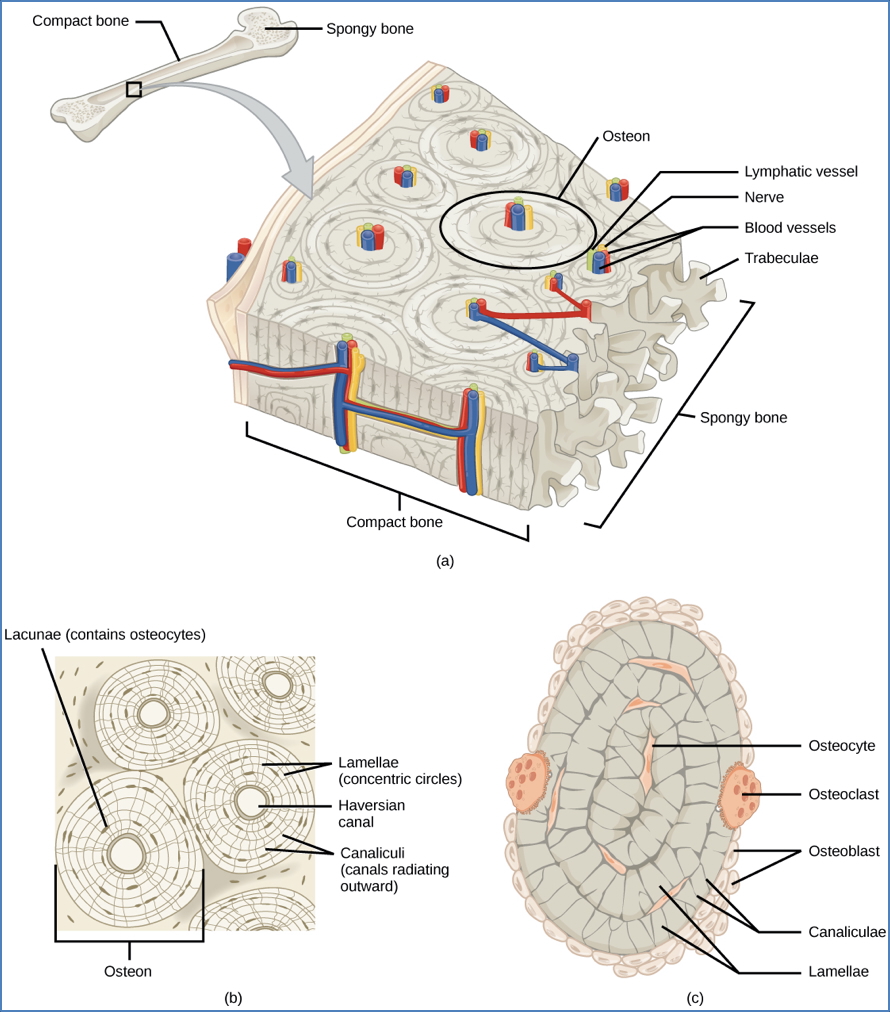
Compact Bone
- Osteons – Cylindrical structural units.
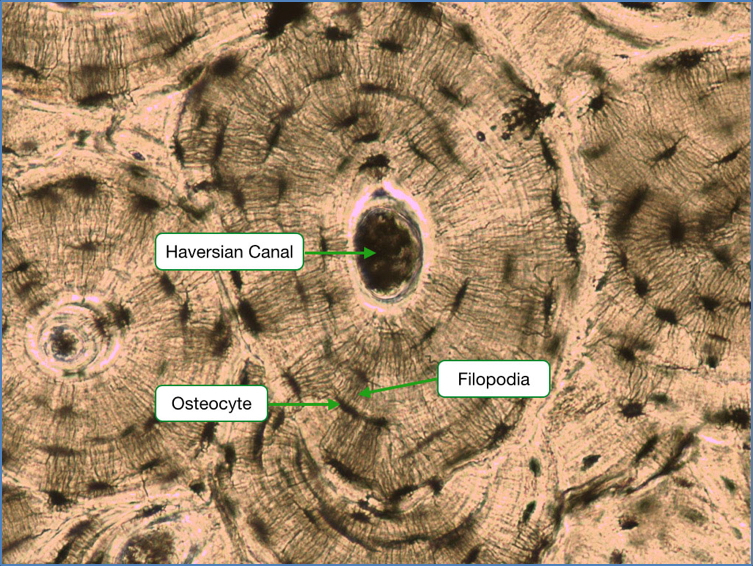
- Haversian Canal: Contains blood vessels and nerves.
- Lamellae: Concentric rings with alternating collagen fibre orientation to resist torsion.
- Lacunae: Small cavities housing osteocytes.
- Osteocytes: Maintain bone matrix; if they die, the matrix is resorbed.
- Canaliculi: Tiny channels for intercellular communication and nutrient sharing.
2. http://histology.med.yale.edu/bone/bone_reading.php
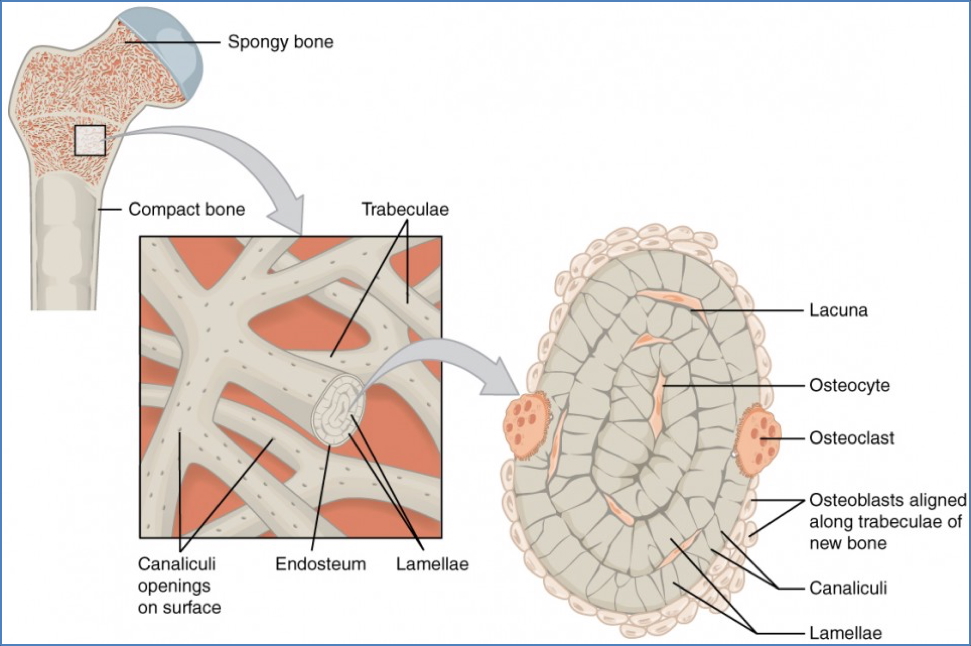
Cancellous (Spongy) Bone
- Trabeculae – Aligned with stress lines to distribute load.
- Contains:
- Marrow spaces
- Osteoblasts
- Fat cells
- Blood vessels
Cartilage
- Avascular connective tissue.
- Composed of:
- Chondrocytes in lacunae.
- Ground substance = fibres + water.
- Provides smooth surfaces for joint articulation and template for bone development.

Bone Development
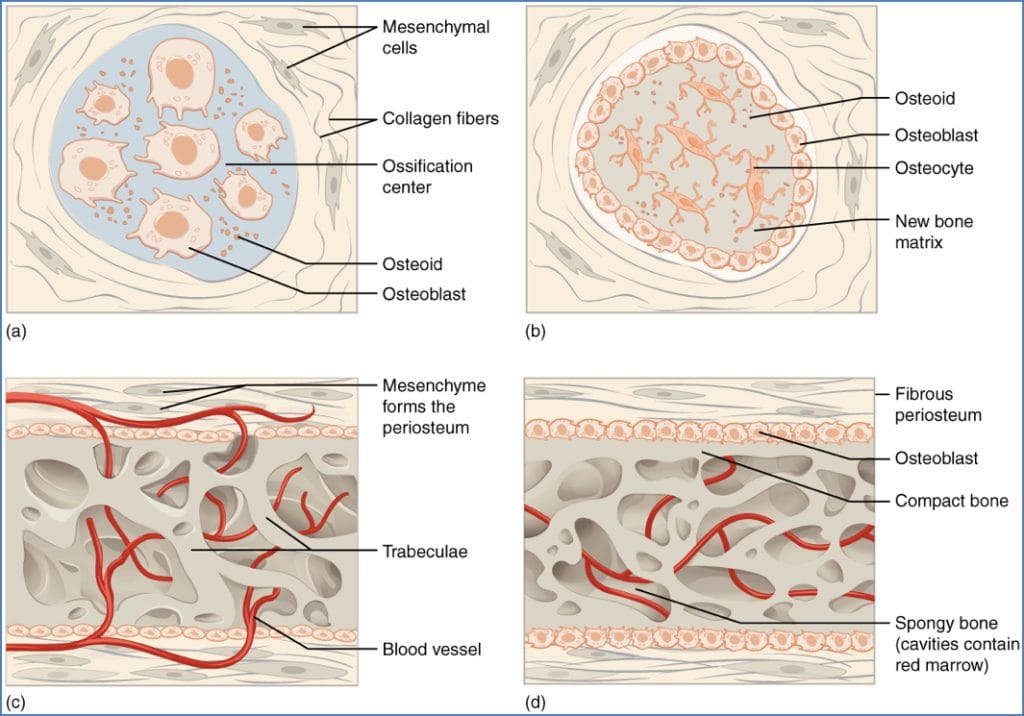
Intramembranous Ossification
- Direct bone formation within fibrous membranes.
- E.g. Cranial bones, clavicles.
Endochondral Ossification
- From cartilage (hyaline) template.
- 5 phases:
1–2 (In Utero)
- Formation of cartilage model.
- Bone collar forms.
- Central chondrocytes die → cavity forms.
- Primary ossification centre in diaphysis.
3 (In Utero)
- Blood vessels invade.
- Fibroblasts become osteoblasts → Spongy bone formation.
4 (At Birth)
- Diaphysis elongates.
- Secondary ossification centres form in epiphyses.
- Marrow cavity forms.
5 (Growth)
- Complete ossification of epiphyses.
- Cartilage remains at:
- Epiphyseal (growth) plate
- Articular surface

Bone Metabolism & Hormonal Regulation
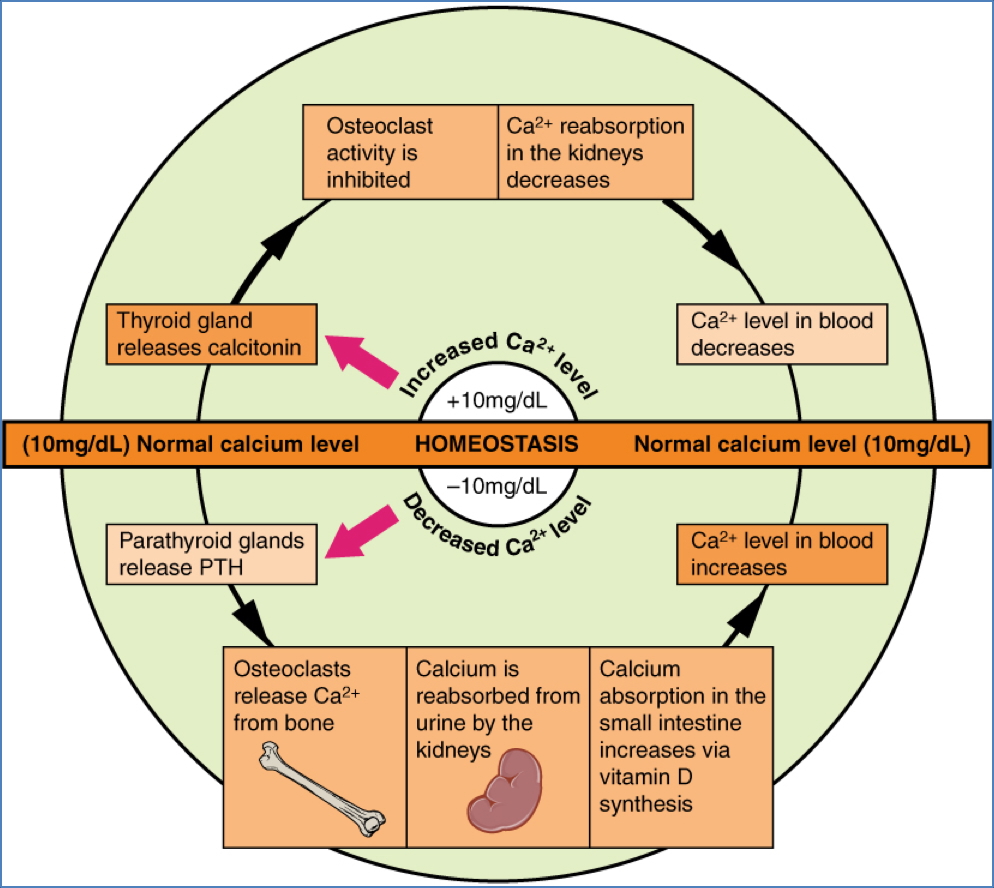
- Calcitonin – Promotes Ca²⁺ deposition in bone.
- Parathyroid Hormone (PTH) – Stimulates osteoclast activity → increases serum Ca²⁺.
- Estrogen – Inhibits osteoclasts and promotes bone deposition. Loss (e.g. menopause) → ↑ bone resorption.
Bone Remodelling
- Ongoing throughout life; responds to:
- Mechanical stress
- Calcium homeostasis
Resorption (by Osteoclasts)
- Multinucleated cells form sealed zone.
- Secrete acid, enzymes (e.g. collagenase).
- Forms Howship’s lacunae (resorption pits).
- Material is digested, endocytosed, and removed via bloodstream.
Apposition (by Osteoblasts)
- High protein-producing cells.
- Secrete osteoid → unmineralised matrix.
- Mineralisation → mature bone.
- Osteoblasts become osteocytes once encased in matrix.

Growth of Long Bones
- Length: Occurs at epiphyseal plates via osteoblast activity.
- Width:
- Bone deposition by osteoblasts.
- Bone resorption by osteoclasts.

Bone Repair Mechanism
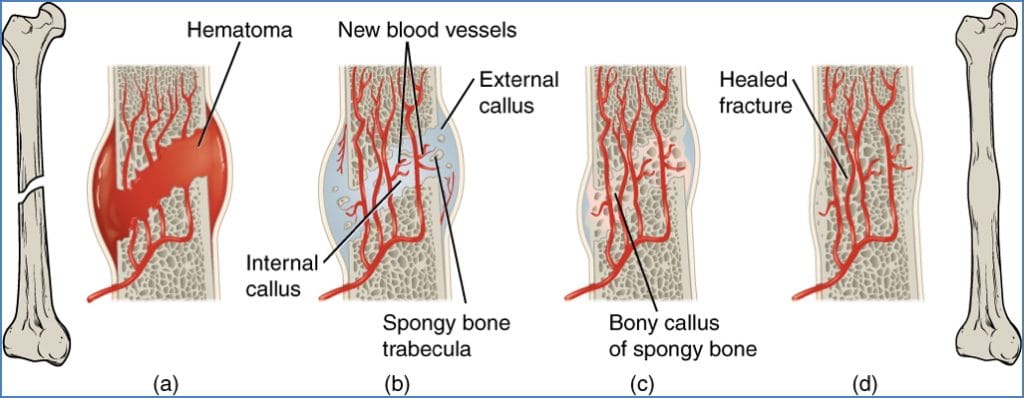
- Hematoma Formation – Blood clot at fracture site.
- Fibrocartilaginous Callus Formation – Soft callus stabilises area.
- Bony Callus Formation – New spongy bone replaces soft callus.
- Bone Remodelling – Restores original bone structure and strength.
Clinical Correlation – Osteoporosis
- Bone resorption > deposition.
- ↓ Bone density → ↑ fracture risk.
- Cancellous bone affected first due to high turnover.
- Trabeculae thin/disappear.
- Common in postmenopausal women:
- ↓ Estrogen → ↑ osteoclast activity.

Summary – Bone Tissue
Bone tissue is a dynamic and highly specialised structure essential for movement, mineral storage, protection, and hematopoiesis. It consists of both compact and cancellous bone, with complex development and constant remodelling processes regulated by hormones like PTH, calcitonin, and estrogen. Understanding these features is key to recognising disorders like osteoporosis. For a broader context, see our Musculoskeletal Overview page.