
Table of Contents
Overview – Fatty Acid Metabolism
Fatty acid metabolism is the essential process by which the body mobilises, transports, and oxidises fats to produce energy, particularly during fasting or low-carbohydrate states. Fatty acids are a dense energy source, yielding more ATP per gram than carbohydrates or proteins. This metabolic pathway includes lipolysis, mitochondrial beta-oxidation, and integration with the TCA cycle and electron transport chain, making it a cornerstone of systemic energy homeostasis.
Definition
- Fatty acids = simplest lipid form
- Consist of a carboxylic acid group + long hydrocarbon chain
- Classified by chain length:
- Short–medium chain: mostly from dietary fats
- Long chain: synthesised in liver and adipose tissue
- Key functions:
- Fuel – major ATP source via beta-oxidation
- Energy storage – highest energy-density of any nutrient
- Biosynthetic precursor – for triglycerides, phospholipids, hormones, ketones
Fatty Acid Oxidation
1. Lipolysis
- Occurs in adipose tissue
- Lipase enzyme breaks down triglycerides → releases fatty acids
- Stimulated by:
- Glucagon
- Epinephrine
- Triggered in response to falling blood glucose
2. Transport in Blood
- Fatty acids are hydrophobic, require carriers
- Bound to plasma albumin for transport
3. Cellular Uptake
- Enter cells via specific transport proteins (e.g. SLC27 family)
4. Activation
- In cytoplasm:
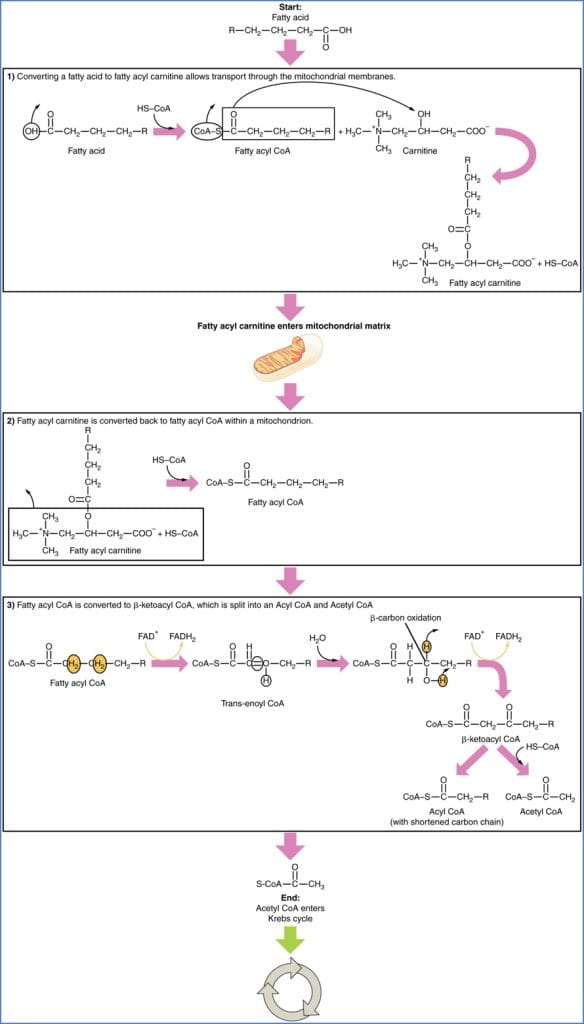
- Fatty acid + Coenzyme A → Fatty acyl-CoA
5. Mitochondrial Transport
- Fatty acyl-CoA transported across mitochondrial membranes via the carnitine shuttle
- Essential step for long-chain fatty acids
6. Beta-Oxidation
- Occurs in the mitochondrial matrix
- Fatty acyl-CoA undergoes repetitive cleavage to generate:
- Multiple acetyl-CoA units (2-carbon)
- NADH and FADH₂ as electron carriers
- Each acetyl-CoA enters the TCA cycle:
- Combines with oxaloacetate to form citrate
Ketogenesis & Ketone Oxidation
Ketogenesis
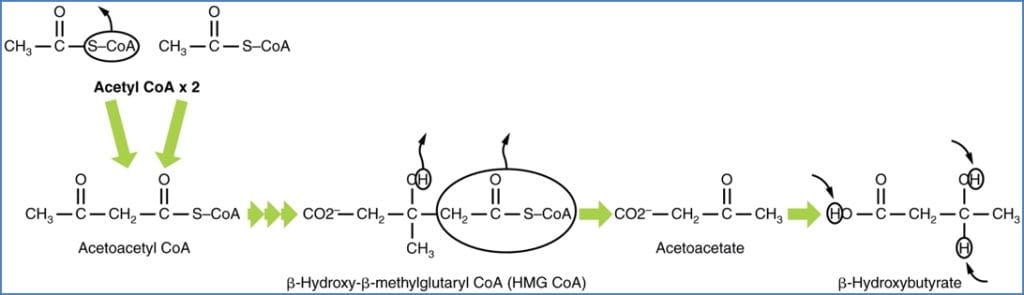
- Excess acetyl-CoA (esp. during fasting or diabetes) → converted to ketone bodies in the liver mitochondria
- Main product: β-hydroxybutyrate
- Ketones are water-soluble, energy-rich molecules transported to peripheral tissues
Ketolysis (Ketone Oxidation)
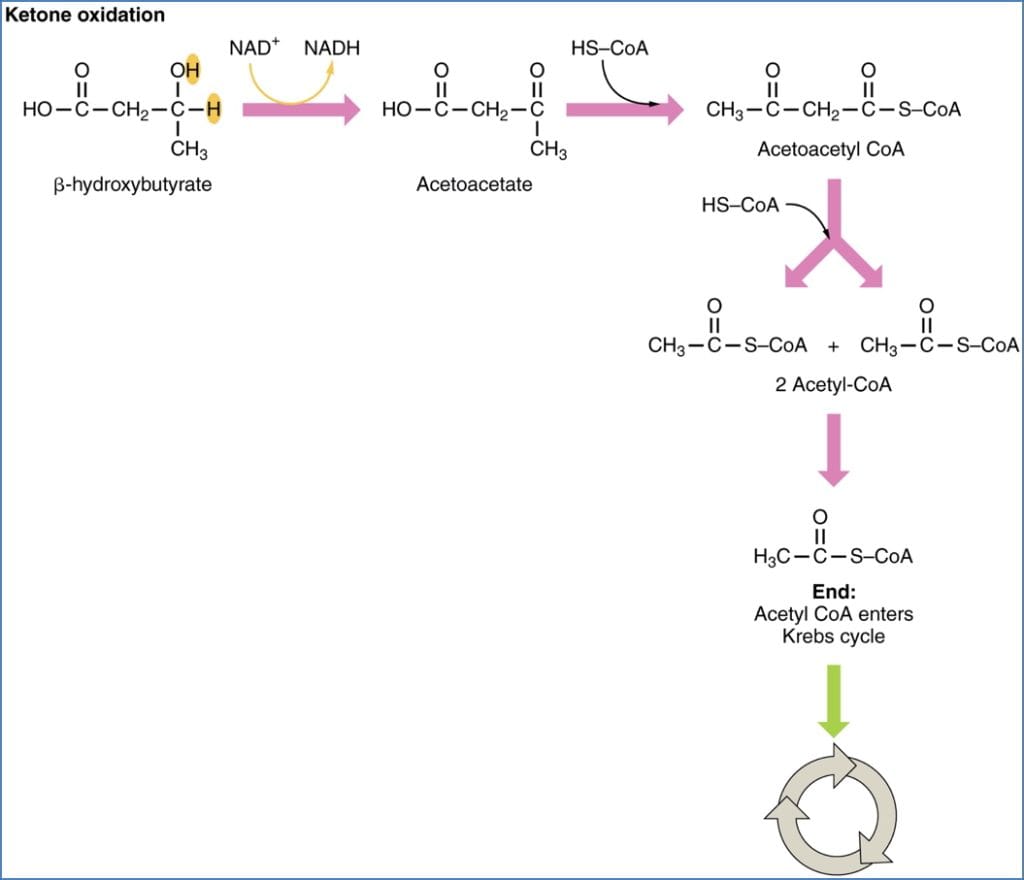
- In tissues like brain, heart, skeletal muscle:
- β-hydroxybutyrate → converted back to acetyl-CoA
- Acetyl-CoA enters TCA cycle for energy
ATP Yield and Electron Transport Chain
Oxidative Phosphorylation
- Final step in fatty acid metabolism
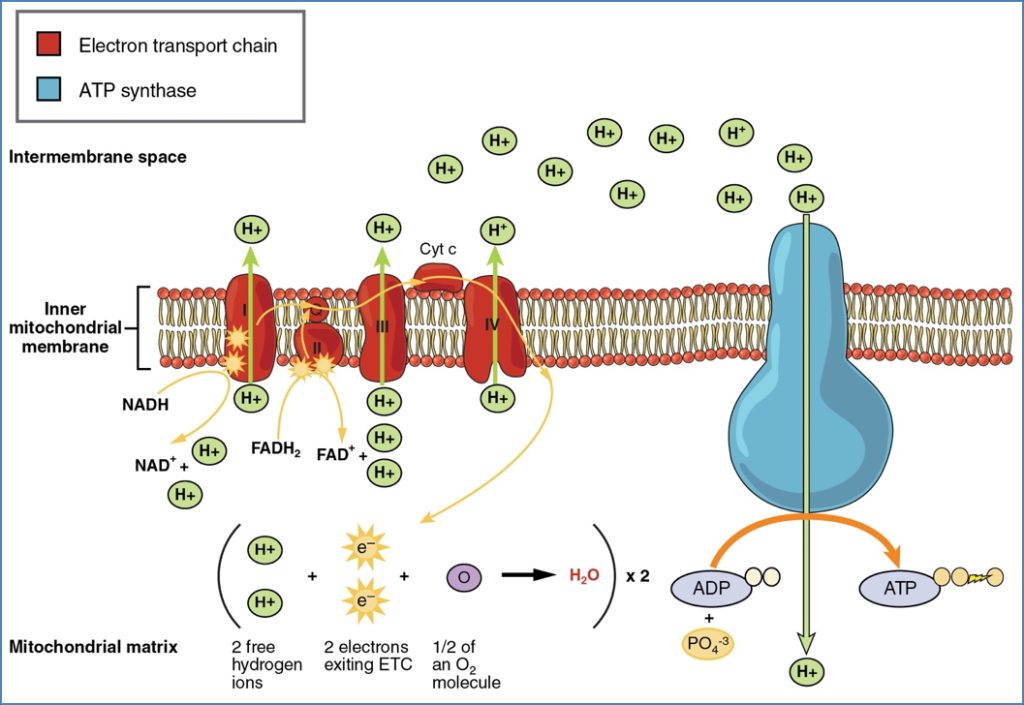
- NADH and FADH₂ generated in beta-oxidation and TCA → enter electron transport chain
- Located in inner mitochondrial membrane
- Proton gradient generated → drives ATP synthase
- Yields:
- 1 NADH → ~3 ATP
- 1 FADH₂ → ~2 ATP
- Final by-products: CO₂ and H₂O
- Fatty acid metabolism yields significantly more ATP than glucose metabolism
Summary – Fatty Acid Metabolism
Fatty acid metabolism allows the body to produce energy from lipids during fasting, exercise, or carbohydrate scarcity. Through lipolysis, mitochondrial beta-oxidation, the TCA cycle, and the electron transport chain, fatty acids yield high ATP output and act as key metabolic fuels. For a broader context, see our Cell Biology & Biochemistry Overview page.