
Table of Contents
Overview – Cell Ageing and Cancer
Cell ageing and cancer represent two opposing but interlinked biological fates. Ageing cells lose the ability to divide and function, while cancer cells evade senescence, resist apoptosis, and become immortal. This article explores the differences between normal and malignant cell behaviour, the molecular mechanisms of senescence, apoptosis, and necrosis, and how mutations in regulatory genes lead to unchecked proliferation and tumour formation.
Definition
Cell ageing and cancer refer to the divergence between normal regulated cellular lifespan and the malignant capacity of cancer cells to bypass senescence and resist programmed death. These processes underpin both degenerative disease and tumourigenesis.
Normal Cell Growth
- Subject to contact inhibition
- Require anchorage to extracellular matrix
- Growth-factor dependent
- Limited replicative potential (due to telomere shortening)
- Capable of apoptosis under stress or damage
Cancer Cell Growth
- Ignore contact inhibition
- Anchorage-independent proliferation
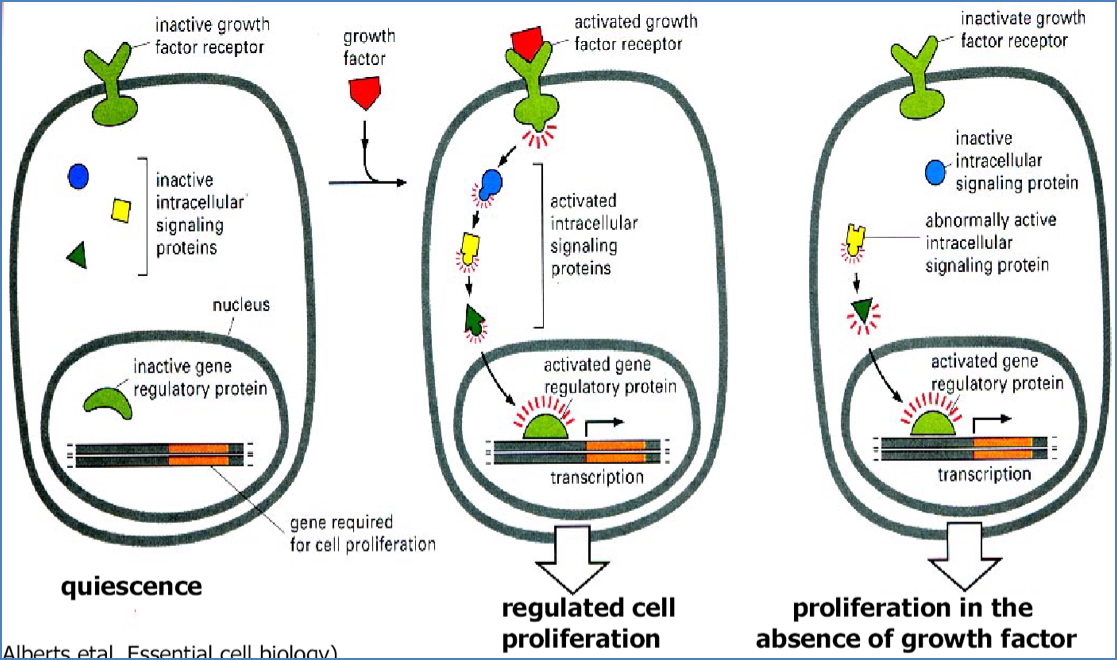
- Proliferate without external growth signals
- Immortal (bypass senescence)
- Evade apoptosis
- Abnormal differentiation → may form teratomas (e.g. hair, teeth, bone)
Tumour Classifications
Benign Tumours
- Lower mitotic index
- Well-capsulated, non-invasive
- Well-differentiated (resemble origin tissue)
- Do not metastasise
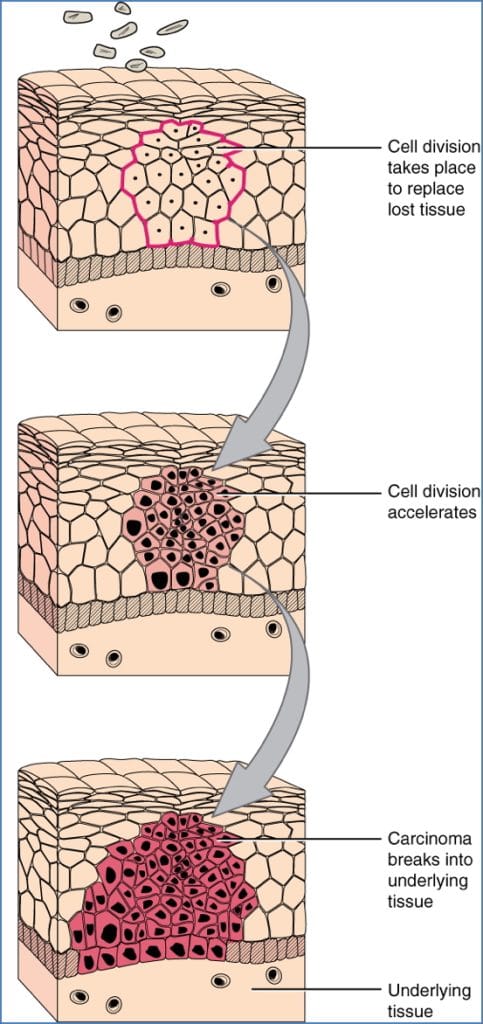
Malignant Tumours
- High mitotic activity
- De-differentiated (primordial stem-cell-like)
- Grow as disorganised, invasive masses
- Capable of metastasis via lymphatics or bloodstream
- Genetic abnormalities:
- Aneuploidy
- Chromosomal deletions/translocations
- Do not require external growth factors
- Maintain malignant phenotype across generations
Molecular Aetiology
Causes of Cancer
- Non-lethal mutations due to:
- Carcinogens (e.g. tobacco, UV, radiation)
- Free radicals
- Oncogenic viruses
- Inherited genetic defects
- Result → dysregulation of cell growth and division

Mutated Gene Classes
- DNA repair genes → mutation accumulation
- Cell ageing genes → loss of senescence
- Proto-oncogenes → gain-of-function leads to uncontrolled growth
- Tumour suppressor genes → loss-of-function removes growth inhibition
- Apoptosis-regulating genes → survival of damaged cells

2. https://www.sciencedirect.com/topics/medicine-and-dentistry/monomeric-guanine-nucleotide-binding-protein
Senescence and Telomeres
Cellular Senescence
- Permanent G1 arrest
- Triggered by age, telomere shortening, DNA damage
- Morphological changes, reduced metabolic activity
- Resistant to apoptosis
- Limited number of cell divisions before senescence sets in
Telomere Dynamics
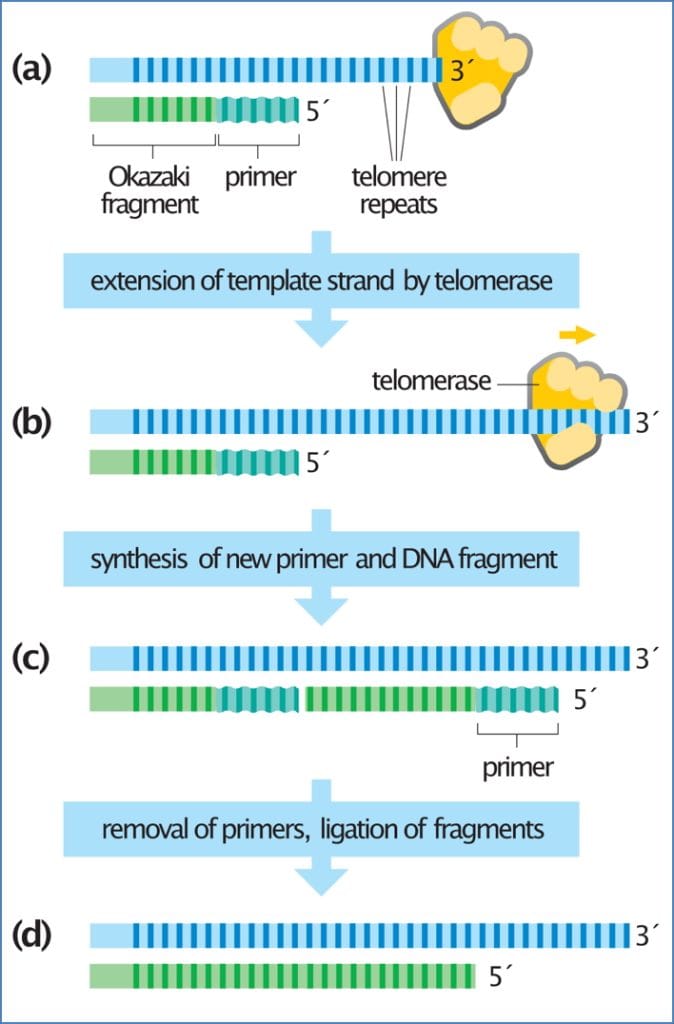
- Telomeres protect chromosome ends but shorten with each division
- Telomerase extends telomeres, mostly inactive in somatic cells
- Reactivation of telomerase in cancer cells contributes to immortality
Apoptosis
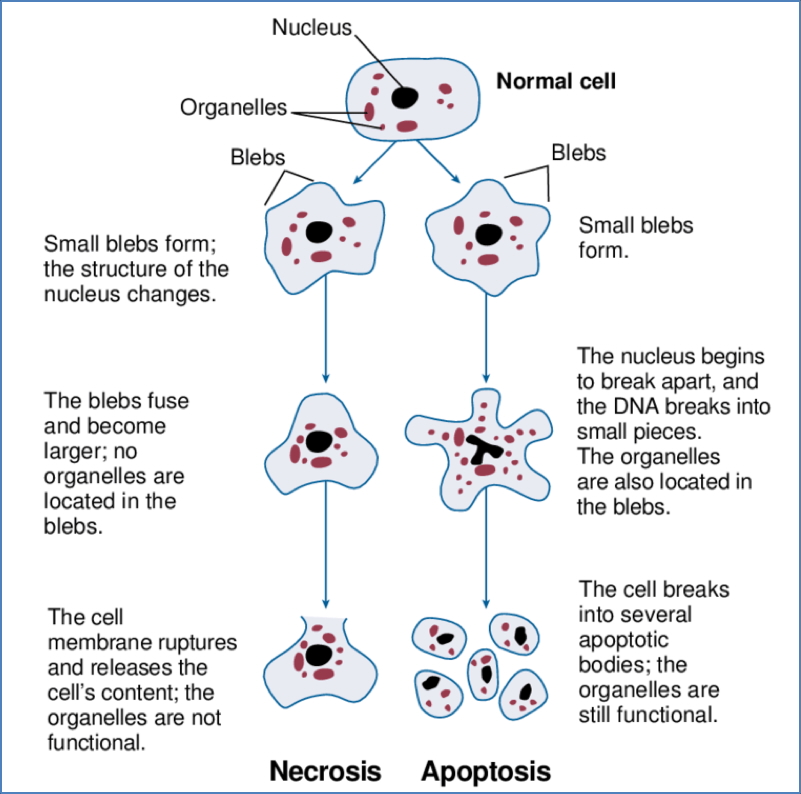
- Programmed cell death → regulated, controlled, non-inflammatory
- Cells shrink, fragment into apoptotic bodies → phagocytosed
- Minimal tissue damage
Molecular Mechanism
- Controlled by caspases (proteolytic enzymes)
- Caspases activated by:
- Mitochondrial cytochrome c release
- Bax/Bak-mediated membrane permeabilisation
- Bcl-2 family regulation
- Caspase cascade is self-amplifying and irreversible
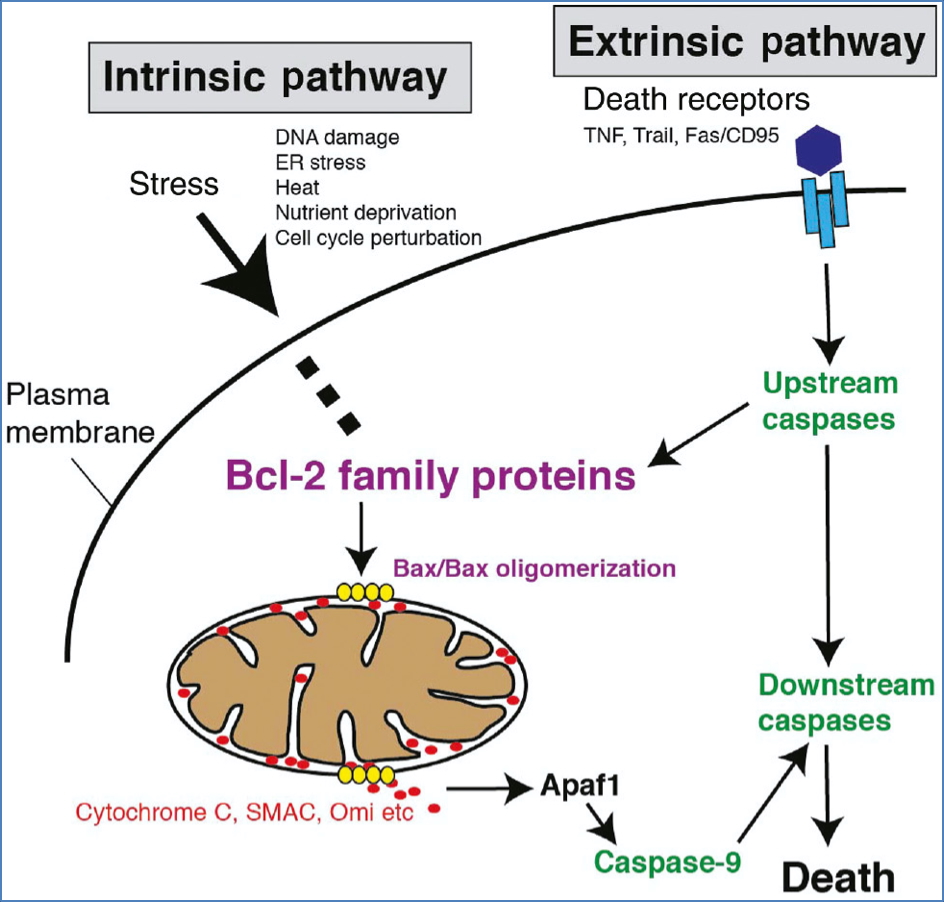
2. From the journal Nanotechnology Reviews; https://doi.org/10.1515/ntrev-2016-0070
Necrosis
- Unregulated cell death due to acute injury
- Cell swells and bursts → contents spill into ECM
- Triggers inflammation and scarring
- Energy-independent, enzyme-independent process

Summary – Cell Ageing and Cancer
Cell ageing and cancer highlight contrasting cellular fates — one of deterioration, the other of malignant immortality. While ageing cells senesce and die in a controlled manner, cancer cells bypass these safeguards to proliferate indefinitely. Understanding telomeres, caspases, apoptosis, and DNA repair is key to grasping how cancer arises and how it can be targeted therapeutically. For a broader context, see our Cell Biology & Biochemistry Overview page.