
Table of Contents
Overview – Scarlet Fever
Scarlet Fever is a clinical syndrome caused by erythrogenic toxin-producing strains of Group A β-haemolytic Streptococcus (GABHS). It typically affects children and presents with a characteristic sandpaper-like rash, fever, and sore throat. Though much less common in the post-antibiotic era, it remains clinically important due to its potential for serious complications such as rheumatic heart disease and post-streptococcal glomerulonephritis (PSGN).
Definition
Scarlet Fever is an acute, toxin-mediated illness resulting from infection with Group A Streptococcus (Streptococcus pyogenes) strains that produce erythrogenic exotoxins.
Aetiology
- Causative organism: Group A β-haemolytic Streptococcus (GABHS)
- Disease occurs when these bacterial strains are infected by a bacteriophage carrying genes for erythrogenic (pyrogenic) exotoxins
Pathogenesis of Scarlet Fever
- Initial GABHS infection of the pharynx or tonsils
- Toxin release causes:
- Inflammation of the tonsils and oropharynx
- Systemic toxin-mediated effects on the tongue and skin
Morphological Features
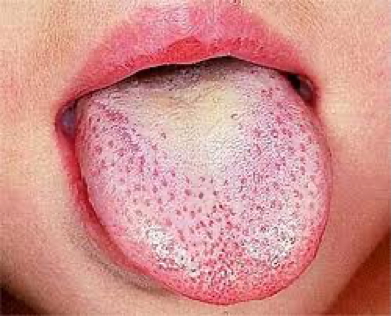
Tongue
- Initially: White coating
- Later: Coating sheds, revealing inflamed papillae → “Strawberry tongue”
Skin
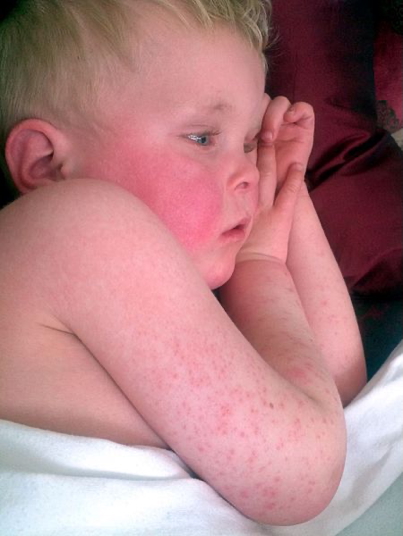
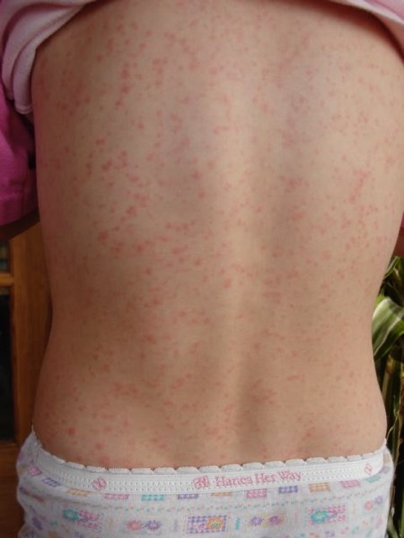
- Diffuse, erythematous, sandpaper-like rash
- Typically starts on the chest and neck, then spreads
- May desquamate during recovery phase
Clinical Features
- Fever
- Sore throat ± tonsillar exudates
- Strawberry tongue
- Cervical lymphadenopathy
- Diffuse erythematous rash (sandpaper texture)
- Rash accentuates in skin folds (Pastia’s lines)
Complications of Scarlet Fever
Immune-mediated
- Rheumatic fever (2–3 weeks post-infection)
- Post-streptococcal glomerulonephritis (PSGN)
Others
- Otitis media
- Peritonsillar abscess
Investigations
- Clinical diagnosis is often sufficient
- Throat swab for culture and sensitivity
- Indicated if: Fever + Tonsillar exudate + Cervical lymphadenopathy + <15 years old + NO cough
- Rapid antigen detection test (RADT) if available
- Anti-streptolysin O titres (ASOT) may be supportive post-infection
Management of Scarlet Fever
Antibiotics
- First-line: Penicillin V or Penicillin G
- If allergic: Erythromycin or other macrolides
- Duration: 10 days to prevent complications
Supportive Measures
- Paracetamol or NSAIDs for fever and throat pain
- Adequate fluid intake
Differential Diagnosis
- Viral exanthems (e.g. measles, rubella)
- Kawasaki disease
- Drug eruptions
- Infectious mononucleosis (EBV)
- Toxic shock syndrome
Summary – Scarlet Fever
Scarlet Fever is a toxin-mediated illness caused by Group A Streptococcus, classically presenting with fever, pharyngitis, strawberry tongue, and a sandpaper-like rash. Prompt antibiotic treatment is essential to prevent serious complications like rheumatic fever and PSGN. For broader context, visit our Respiratory Overview page.