
Table of Contents
Overview – Antimicrobial Drugs
Antimicrobial drugs form the cornerstone of modern infectious disease treatment. The term refers to a wide range of pharmacologic agents used to treat infections caused by bacteria, fungi, viruses, and parasites. These drugs are designed to exploit structural or metabolic differences between pathogens and host cells—a concept known as selective toxicity—to minimise harm to human tissue while eliminating or inhibiting microbial pathogens.
Definition
Antimicrobial drugs are substances used to kill or inhibit the growth of microorganisms, including bacteria (antibacterials), fungi (antifungals), viruses (antivirals), and parasites (antiparasitics).
Antibacterial Drug Classes
1. Anti Cell-Wall Synthesis Antibiotics – Bactericidal
- Target peptidoglycan synthesis → primarily affect Gram-positive bacteria.
β-Lactam Antibiotics:
- Examples: Penicillins (e.g. Penicillin G, V, Amoxicillin, Ampicillin, Flucloxacillin), Methicillin, Ticarcillin.
- Mechanism: Inhibit penicillin-binding proteins → block peptidoglycan layer synthesis.
- Common Uses: Gram-positive infections.
- Side Effects: GI upset, diarrhoea, allergic rash, anaphylaxis.
Cephalosporins (e.g. Ceftriaxone):
- As above, but often used when resistance to penicillins is suspected.
- Extra Caution: Mild renal toxicity.
β-Lactamase Inhibitors (e.g. Augmentin):
- Combined with penicillins to overcome β-lactamase resistance.
- Mechanism: Inhibit β-lactamase enzymes.
- Side Effects: Nausea, vomiting, diarrhoea, allergy.
Glycopeptides (e.g. Vancomycin, Teicoplanin):
- Use: Gram-positive bacteria, MRSA, and β-lactam allergy.
- Mechanism: Prevent incorporation of peptide subunits into peptidoglycan.
- Side Effects: Phlebitis, nephrotoxicity, ototoxicity.

2. Anti Protein-Synthesis Antibiotics – Bacteriostatic
- Exploit differences between prokaryotic and eukaryotic ribosomes.
- Selective binding to bacterial ribosomal subunits.
Aminoglycosides (e.g. Gentamicin, Streptomycin):
- Use: Gram-negative bacteria, synergistic with β-lactams.
- Mechanism: Bind 30S subunit → misreading of mRNA.
- Side Effects: Nephrotoxicity, ototoxicity.
Tetracyclines (e.g. Doxycycline):
- Use: Gram-negative infections (e.g. Chlamydia, Lyme disease), malaria.
- Mechanism: Prevent tRNA binding to mRNA-ribosome complex.
- Side Effects: GI upset, photosensitivity, teeth staining, renal/hepatic toxicity.
Macrolides (e.g. Erythromycin, Azithromycin):
- Use: Gram-negative infections.
- Mechanism: Inhibit translocation of tRNA.
- Side Effects: GI upset, jaundice.

3. Anti Nucleic Acid Synthesis Antibiotics – Bacteriostatic
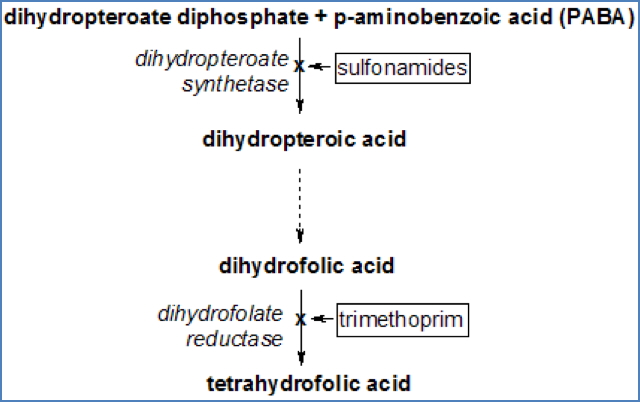
- Exploit differences in folate synthesis (humans use dietary folate; bacteria synthesise it).
Sulphonamides (e.g. Sulfasalazine):
- Mechanism: Inhibit dihydropteroate synthase.
- Use: Urinary tract infections (UTIs).
- Side Effects: GI upset, rash, crystalluria, photosensitivity, leukopenia.
Trimethoprim:
- Mechanism: Inhibit dihydrofolate reductase.
- Use: UTIs.
- Side Effects: Same as sulphonamides; may cause birth defects.
Quinolones (e.g. Ciprofloxacin):
- Mechanism: Inhibit DNA gyrase/topoisomerase.
- Use: UTIs, pneumonia, bacterial diarrhoea, gonorrhoea.
- Side Effects: GI upset, rash.

4. Antimycobacterial Drugs
- Target mycobacteria (e.g. tuberculosis, leprosy).
- Challenges: Intracellular survival, multi-drug resistance.
- Treatment requires: Long-term, combination therapy.
Isoniazid:
- Mechanism: Unknown.
- Side Effects: Hepatotoxicity, rash, haemolysis in G6PD deficiency.
Rifampicin:
- Mechanism: Inhibits bacterial RNA polymerase.
- Side Effects: Hepatotoxicity, rash, fever.
Ethambutol:
- Mechanism: Unknown.
- Side Effects: Optic neuritis, colour blindness.
Pyrazinamide:
- Mechanism: Active in acidic environments (e.g. phagolysosomes).
- Side Effects: GI upset, hepatotoxicity, gout.

Antifungal Drugs
- Challenge: Fungi are eukaryotic → difficult to achieve selective toxicity.
- Targets:
- Ergosterol (vs cholesterol in humans)
- Ergosterol synthesis enzymes
- DNA/RNA synthesis via intracellular conversion
- Administration Routes:
- Systemic (for deep infections)
- Oral or topical (for mucocutaneous infections)

Antiviral Drugs
- Viruses hijack host-cell machinery → selective toxicity is limited.
- Mechanisms of Action:
- Nucleoside and non-nucleoside reverse transcriptase inhibitors
- Protease inhibitors
- DNA polymerase inhibitors
- Fusion and uncoating inhibitors
- Biologics and immunomodulators (e.g. interferon)

Antiparasitic Drugs
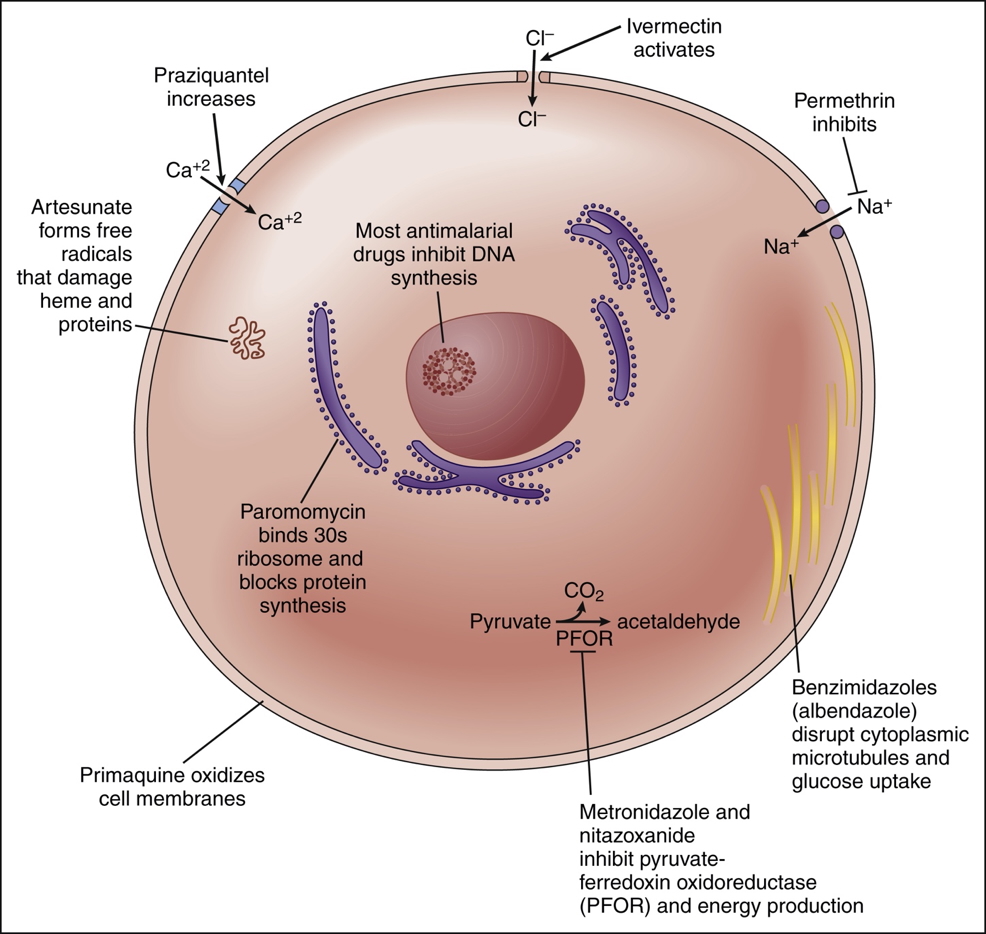
- Parasites are eukaryotic → similar selective toxicity challenges as fungi.
- Targets:
- Unique enzymes not present in host
- Shared enzymes essential to parasite survival
- Common pathways with different properties
G6PD Deficiency Caution
- Antimalarials like chloroquine, primaquine, and pamaquine can cause fatal haemolysis in patients with glucose-6-phosphate dehydrogenase (G6PD) deficiency.
- Always screen at-risk patients prior to administration.
Summary – Antimicrobial Drugs
Antimicrobial drugs remain essential in treating infections caused by bacteria, fungi, viruses, and parasites. Each class exploits key biological differences to achieve selective toxicity, though challenges exist with eukaryotic organisms like fungi and parasites. Understanding antimicrobial drug classes, mechanisms, and toxicity profiles ensures safe and effective prescribing. For a broader context, see our Pharmacology & Toxicology Overview page.