
Table of Contents
Overview – Regulation of Cell Fate
Regulation of cell fate is the complex, highly controlled process by which cells decide whether to divide, differentiate, remain unchanged, or die. This process is governed by nutrient availability, signalling molecules, and environmental cues. Balancing cell proliferation, differentiation, terminal differentiation, and apoptosis is vital for embryogenesis, tissue repair, immune responses, and homeostasis. Dysregulation can result in necrosis, developmental errors, or cancer.
Core Processes in Cell Fate Regulation
Proliferation / Division
- Controlled cytoplasmic growth followed by mitosis
- Regulated by:
- Nutrients
- Secreted chemical messengers
- Local environmental signals
- Essential for:
- Development
- Growth
- Tissue repair
- Homeostatic maintenance
Differentiation
- Stepwise process where cells acquire or lose specialised morphological and biochemical features
- Enables formation and maintenance of organs and specialised tissues
Terminal Differentiation
- Final differentiation step where cells lose the ability to proliferate
- Maintains tissue architecture and function
Apoptosis
- Programmed cell death for the benefit of the organism
- Essential for:
- Embryogenesis
- Menstrual shedding
- Ovulation
- Immune selection
- Disease response
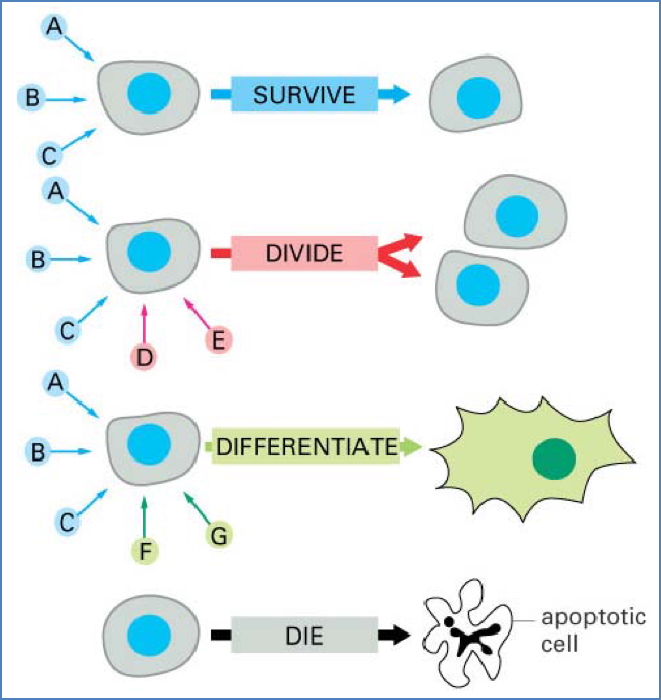
Imbalance of these processes may result in unregulated growth (cancer) or necrosis.
Stem Cells and Lineage Decisions
Capabilities of Stem Cells
- Can proliferate
- Can be determined (fate-preprogrammed but not yet differentiated)
- Can differentiate into various cell types
Proliferation in Stem Cells
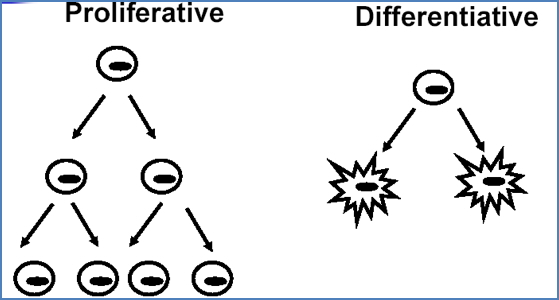
- Proliferative stem cells → maintain undifferentiated state (e.g. early embryogenesis)
- Differentiative stem cells → lose proliferative ability over time (e.g. oogenesis)
- Some exhibit both capabilities depending on context
Determination
- Fate is committed but not morphologically expressed
- Occurs in early embryogenesis:
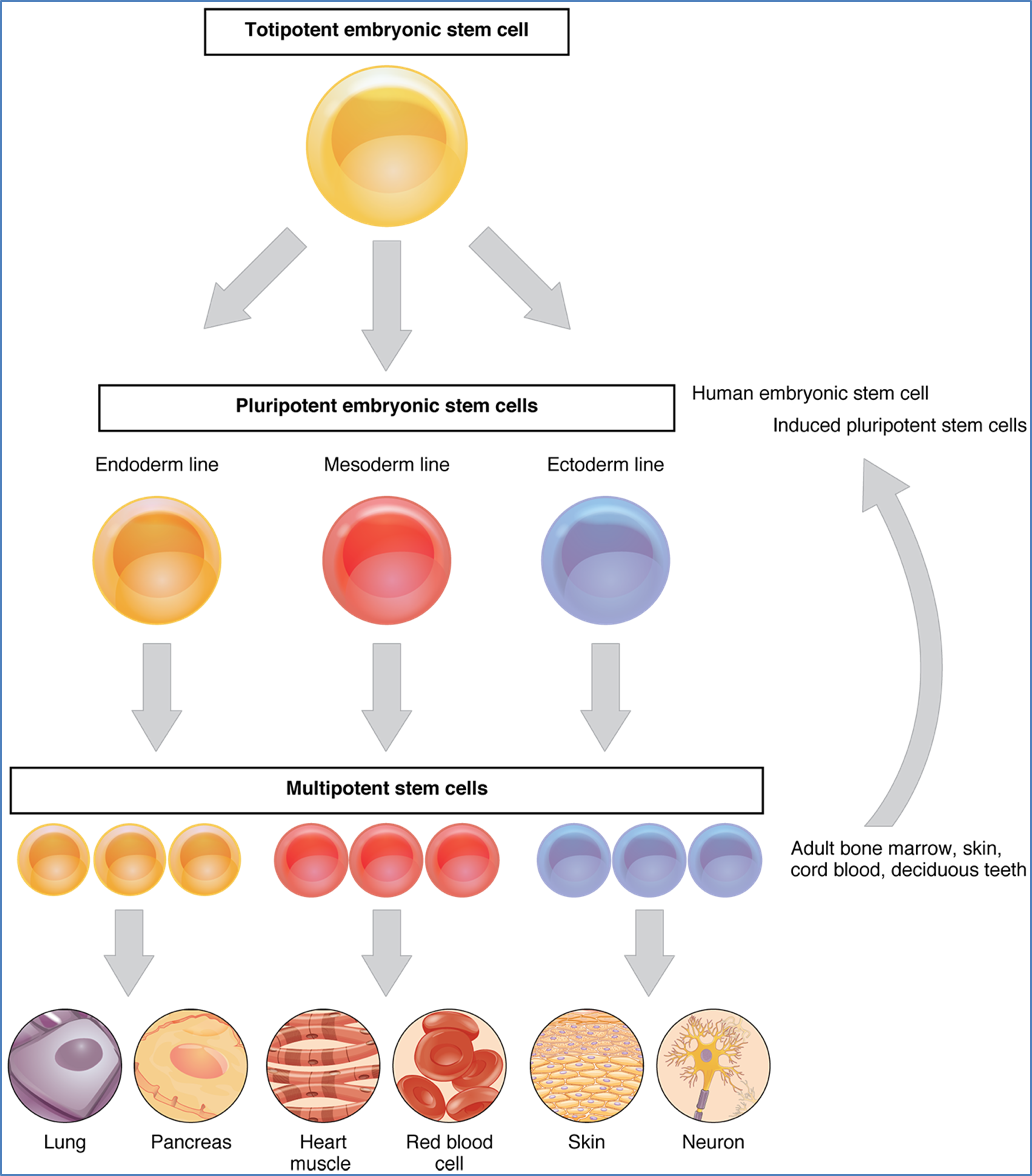
- Pre-morula: Totipotent
- Morula: Pluripotent (germ layer vs trophoblast)
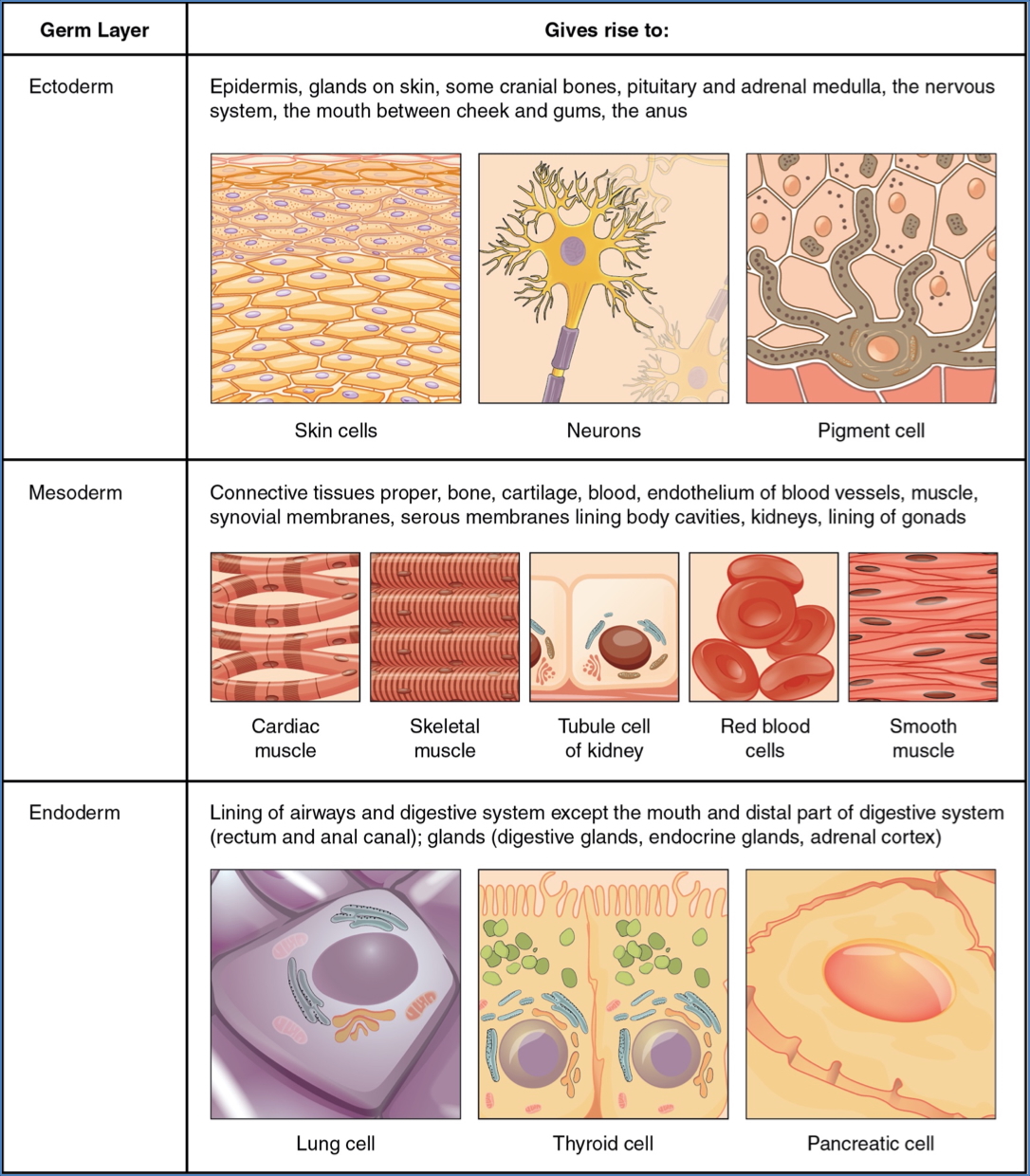
- Primary germ layers are determined, but can still follow multiple lineages
Differentiation
- Determined stem cells commit to a specific phenotype
- Example: Haematopoietic stem cells in bone marrow → all immune cell types
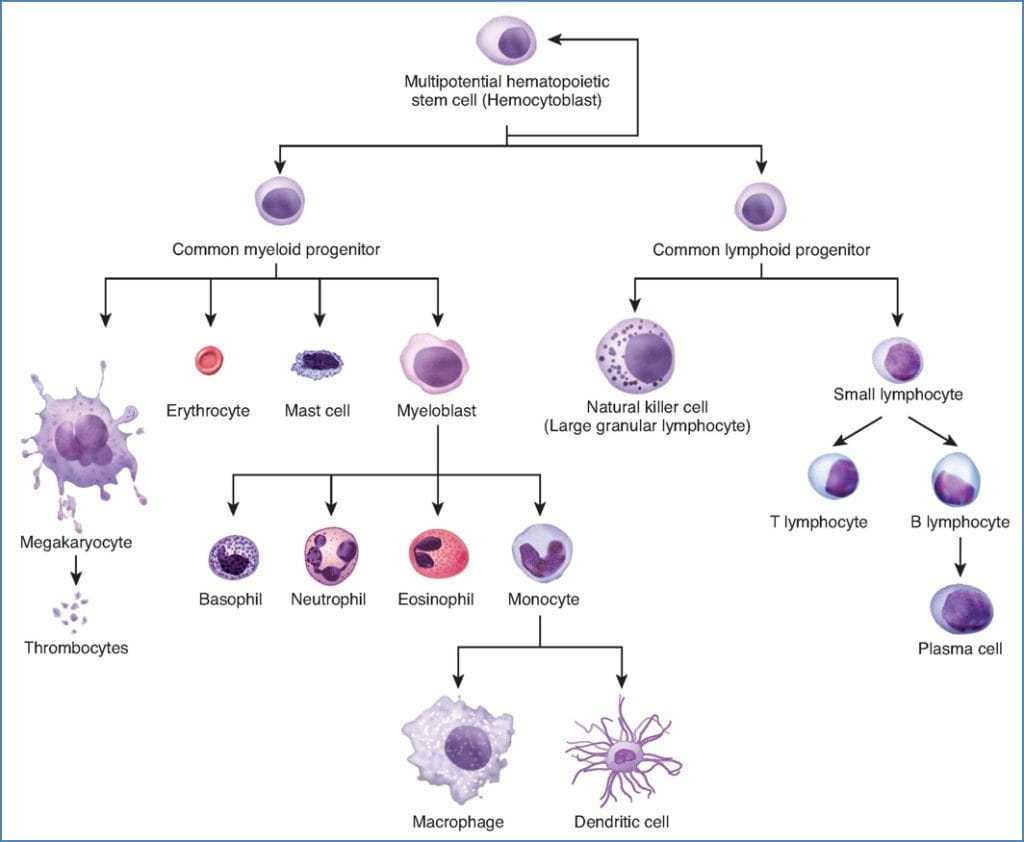
Regulation of Cell Fate
Cell Memory
- Gene expression is epigenetically limited
- Cells retain identity through cycles of division
Chemical Messengers – “Growth Factors”
- Act via autocrine or paracrine signalling
- Regulate:
- Proliferation
- Differentiation
- Apoptosis


Mitogens stimulate proliferation only
Growth Factors stimulate proliferation plus constructive processes
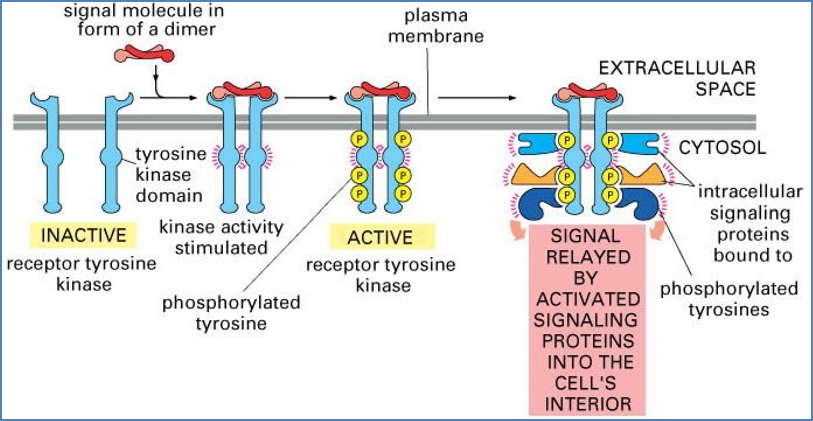
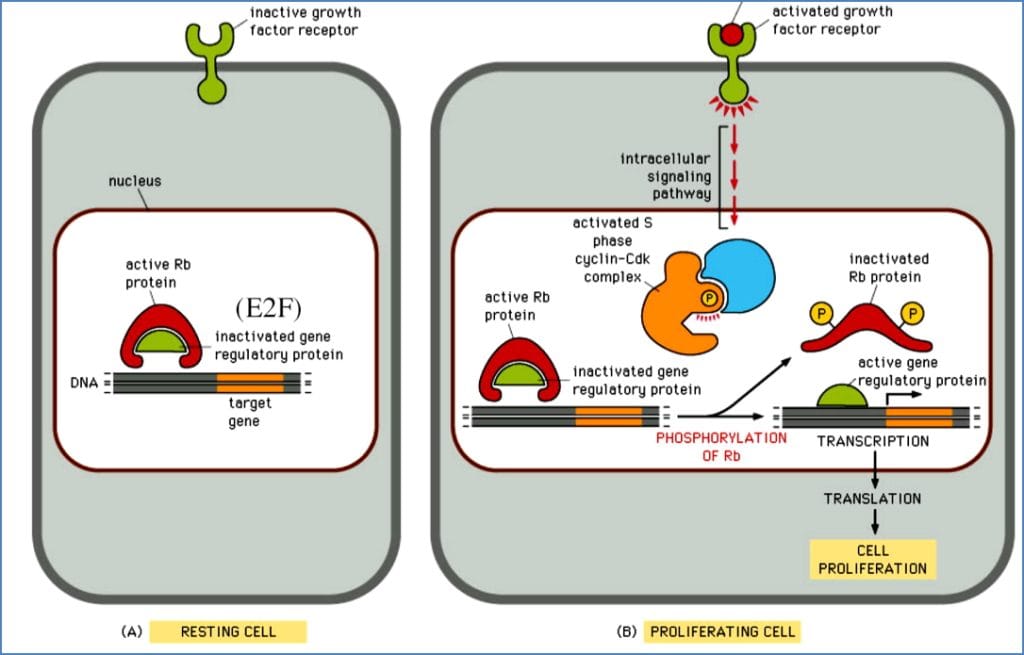
Enzyme-Linked Receptor Signalling
- Ligand binding → dimerisation of tyrosine kinase receptor
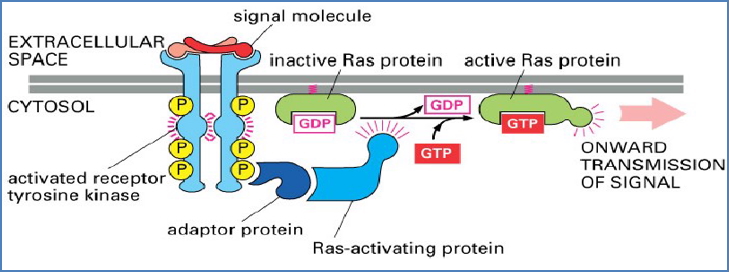
- Autophosphorylation → Adapter protein recruitment
Ras Activation & MAP-Kinase Cascade
- Ras-activating protein binds to adapter protein
- Ras converts GDP → GTP → becomes active
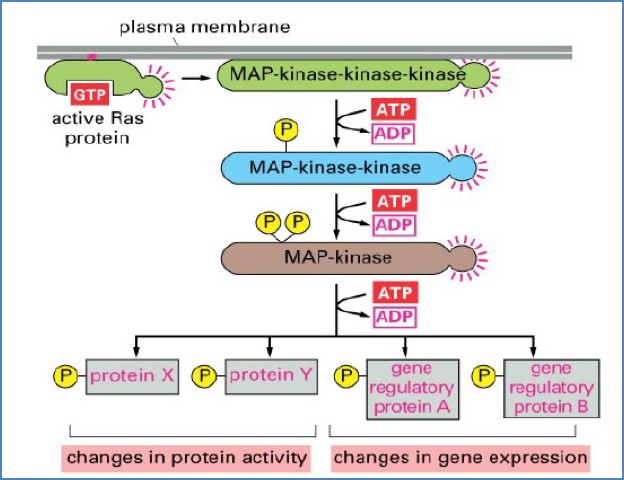
- Ras activates MAP-Kinase-Kinase-Kinase (MAP3K)
- MAP3K → MAP2K → MAPK (via phosphorylation)
- MAPK phosphorylates Rb-protein → releases E2F → gene transcription
- → Drives proliferation via protein synthesis
Positional Information
Cell–Cell Contact
- Contact through gap junctions → regulates transcription and proliferation
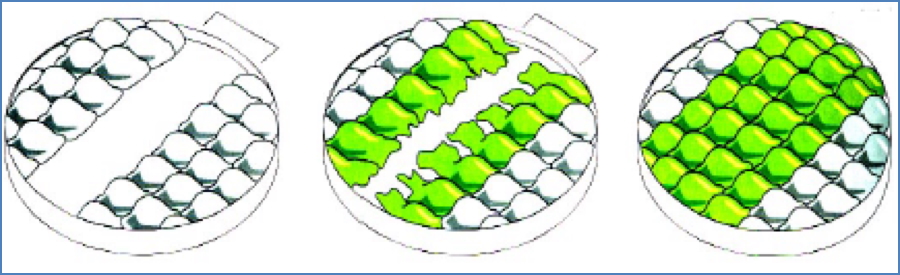
- Contact inhibition:
- Prevents overgrowth once all surrounding space is filled
- Classical experiment: Cells grow to fill scraped area, then stop
Cell–Matrix Contact
- Structural matrix:
- Facilitates nutrient/waste diffusion
- Directs the orientation of cell growth
- Anchorage dependence:
- Cells require physical contact with ECM for proliferation
- Without anchorage, division ceases
- Demonstrated in cell culture experiments

Summary – Regulation of Cell Fate
Regulation of cell fate is a multifaceted process involving tightly controlled pathways of proliferation, differentiation, terminal differentiation, and apoptosis. These outcomes are orchestrated by internal gene programs and external signals such as growth factors and positional cues. Misregulation of any element can contribute to pathological outcomes like cancer or tissue necrosis. For a broader context, see our Cell Biology & Biochemistry Overview page.