
Table of Contents
Overview – The Cell Cycle
The cell cycle is the fundamental process through which all eukaryotic cells grow, replicate their DNA, and divide into genetically identical daughter cells. It underpins tissue growth, repair, and maintenance throughout life. In this article, we’ll explore the key phases of the cell cycle, the molecular control systems that regulate it, and the checkpoints that safeguard genomic integrity. Dysregulation of the cell cycle is a hallmark of cancer, making this topic clinically and academically crucial for final-year medical students.
Definition
- The cell cycle is the ordered sequence of events that a cell undergoes to duplicate its contents and divide
- Grounded in the cell doctrine: “All cells arise from pre-existing cells”
- Ensures faithful transmission of genetic and cytoplasmic material to daughter cells
Functions of the Cell Cycle
- Accurate replication and inheritance of DNA
- Equal distribution of chromosomes
- Coordination of cellular growth with division
- Maintenance of cell size and content across generations
- Prevention of mutations and chromosomal errors
Phases of the Cell Cycle
Interphase
- Majority of the cell’s time is spent here
- Metabolically active: gene transcription, protein synthesis, and growth
1. G1 Phase
- Growth phase
- Duplication of cytoplasmic organelles
- Prepares for DNA synthesis
2. S Phase
- Synthesis phase
- DNA replication occurs
- Includes the restriction (commitment) point: cell commits to full cycle
3. G2 Phase
- Further growth and preparation for mitosis
- Chromosomes begin to condense
4. M Phase (Mitosis & Cytokinesis)
- Divides the nucleus and cytoplasm
- Five stages:
- Prophase: Chromosomes condense
- Prometaphase: Nuclear envelope breaks down; spindle attaches
- Metaphase: Chromosomes align at equator
- Anaphase: Chromatids separate and move to poles
- Telophase: Nuclear envelopes reform; chromosomes decondense
- Cytokinesis: Cytoplasm divides, forming two daughter cells
G0 Phase
- Cells that exit the cycle (e.g. neurons) and do not divide
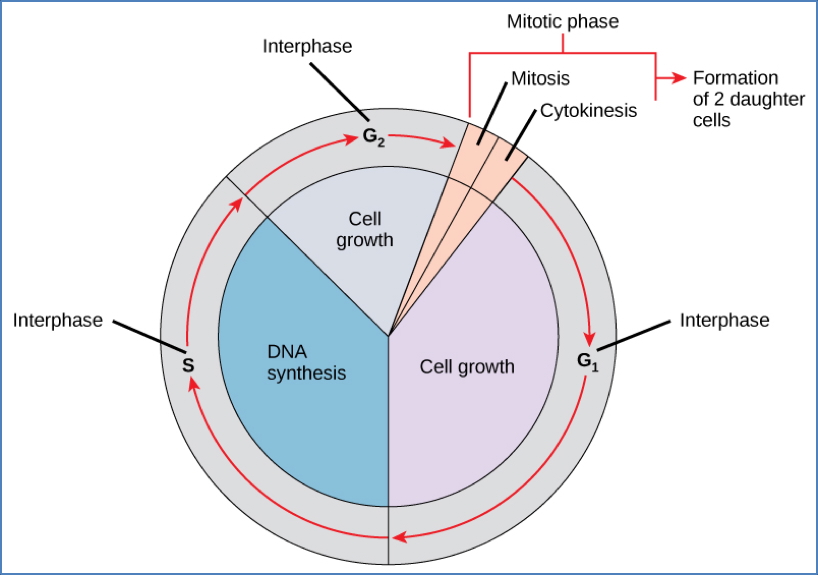
Cell-Cycle Control System
- Complex network of proteins monitors and controls cycle progression
- Functions as a molecular “checkpoint” system
- Ensures accurate replication and segregation of DNA
- Responds to intracellular and extracellular signals
- Malfunction leads to genomic instability and cancer
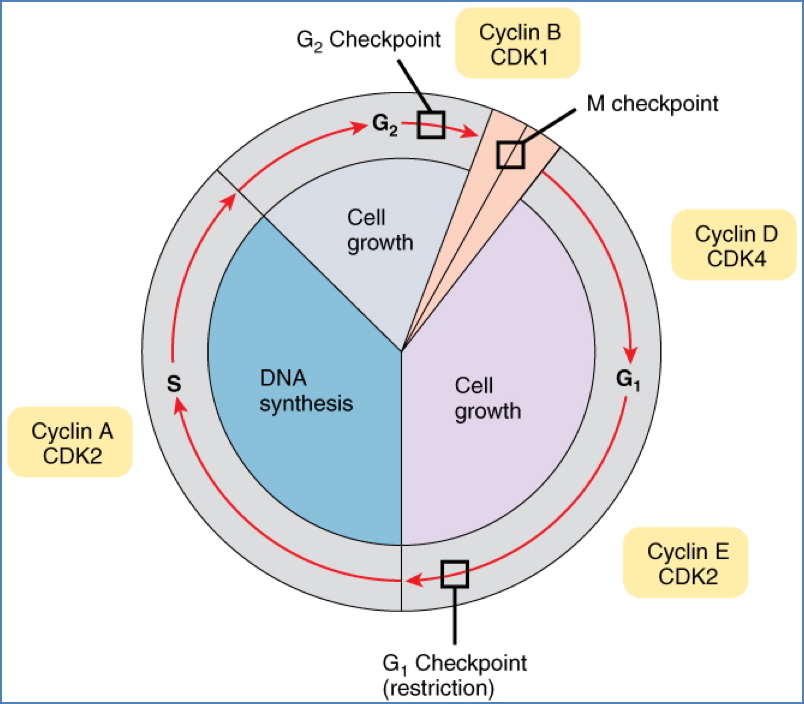
Key Regulatory Molecules
Cyclins and Cyclin-Dependent Kinases (Cdks)
- Cyclins: regulatory proteins without enzymatic function
- Cdks: require binding to cyclins for activation
- Fully activated by Cdk-activating kinase (CAK)
- Specific complexes trigger different phases:
- S-Cdk → Initiates S Phase
- M-Cdk → Initiates M Phase
- Inactivation: Ubiquitin-mediated proteolysis degrades cyclins

Cell Cycle Checkpoints
G1 Checkpoint
- Assesses DNA integrity and external signals
- S-Cdk is inhibited by a Cdk inhibitor if DNA is damaged
- Prevents progression into S Phase
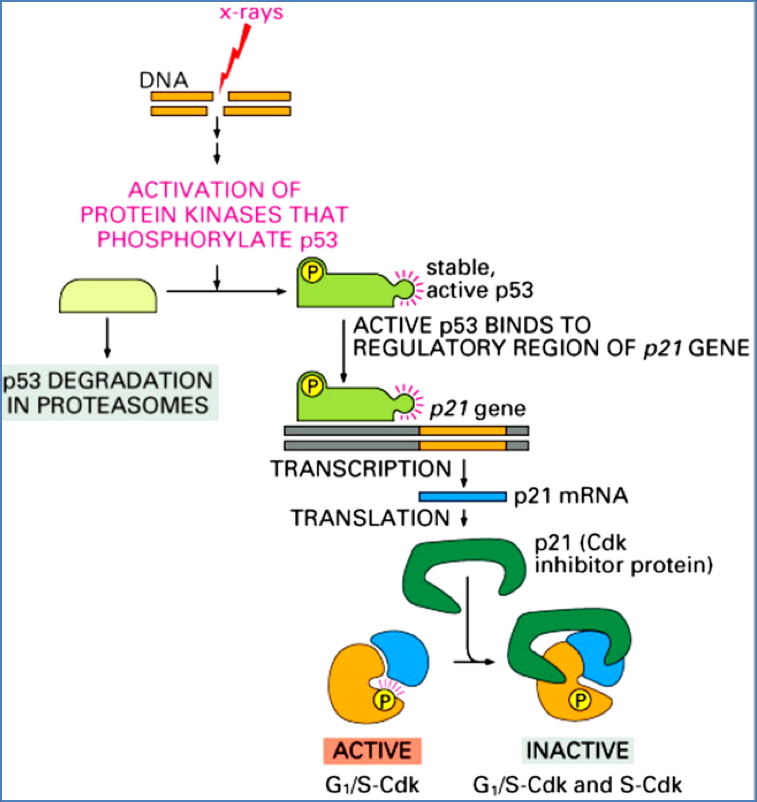
Key Regulators:
- Cdc6: binds to Origin Recognition Complex (ORC) to suppress replication
- Phosphorylated and removed by active S-Cdk → DNA replication proceeds
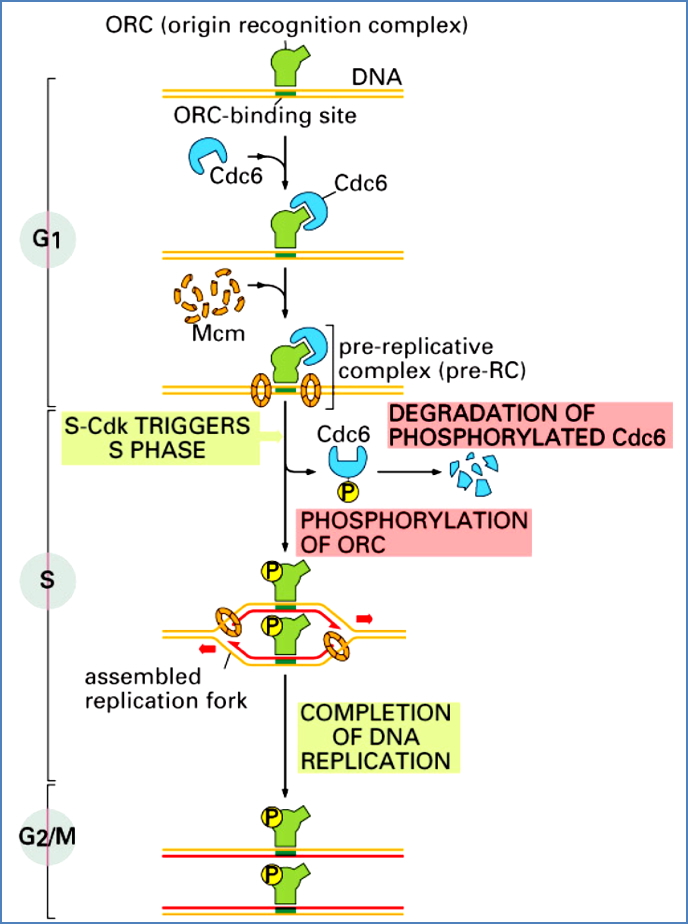
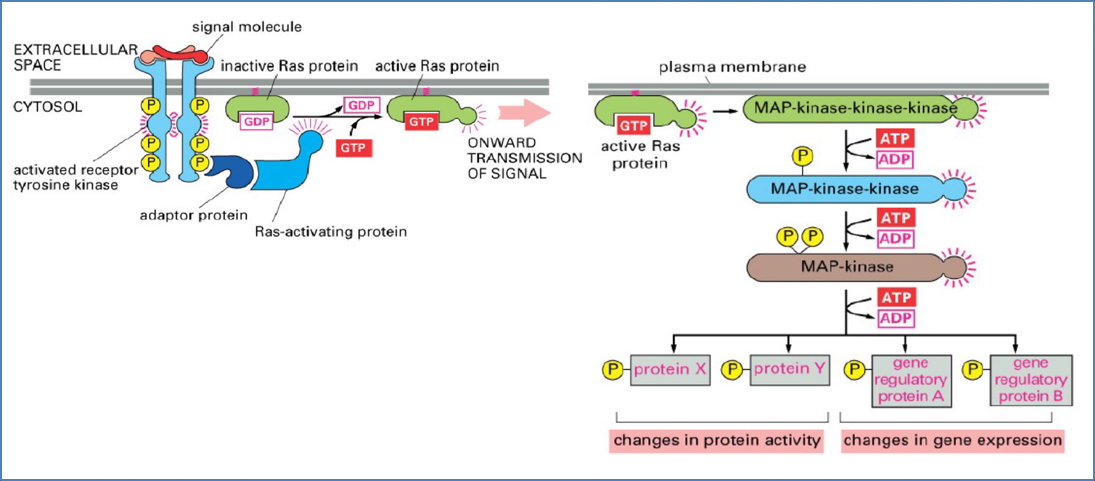
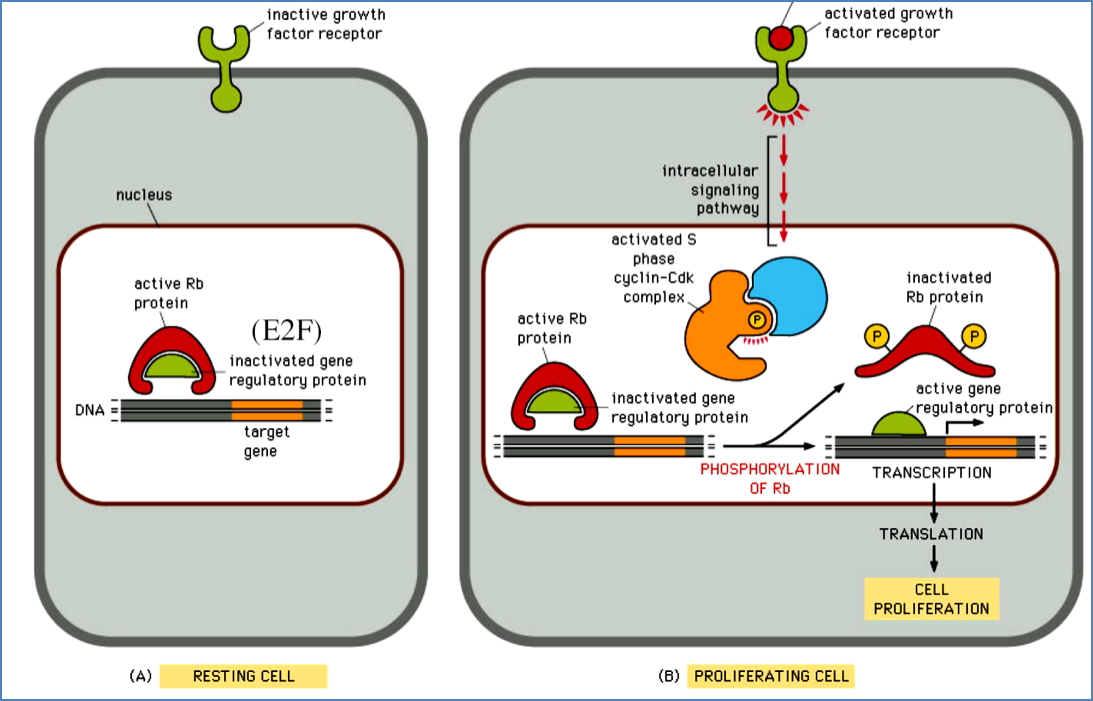
- Rb Protein: blocks transcription of S-phase genes
- Removed via MAP-Kinase cascade triggered by growth factor signalling
2. Source: https://slidetodoc.com/growth-factors-and-enzymelinked-receptor-signal-systems-lecture/
G2 Checkpoint
- Ensures complete and correct DNA replication
- M-Cdk activated only if DNA is undamaged
- Activated by phosphatase Cdc25
- Feedback loop enhances activation and suppresses inhibitors

Centrosomes & Spindle Checkpoint
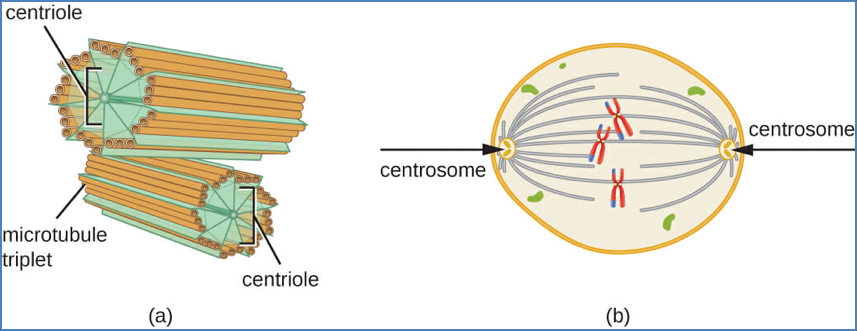
- Centrosomes = Microtubule organising centres with centrioles
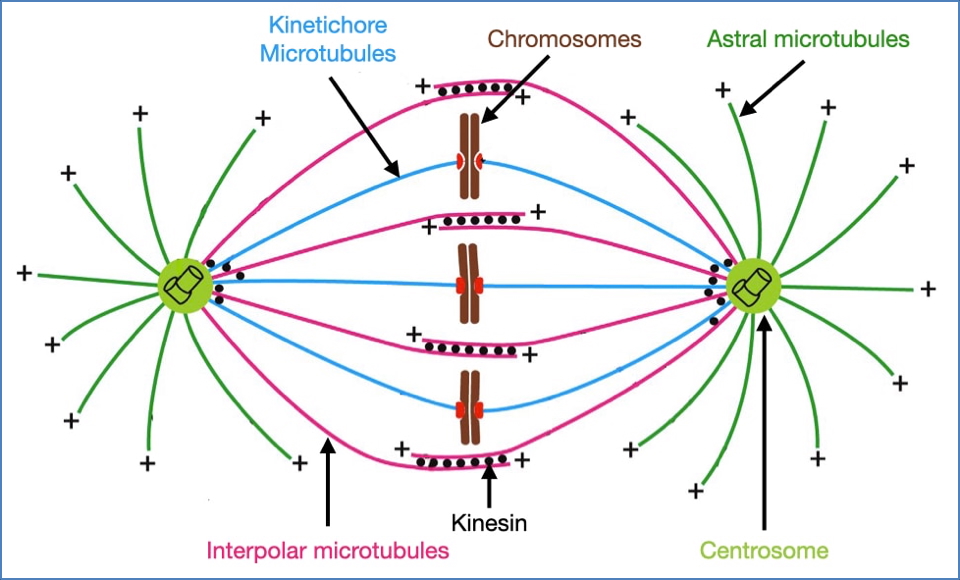
- Assemble mitotic spindle for chromosome separation
- Spindle checkpoint prevents progression until all chromosomes are attached
- Cohesin holds chromatids together
- Once tension is detected → cohesin cleaved → anaphase begins

2. Source: http://tbl.med.yale.edu/cell_growth_control/reading.php
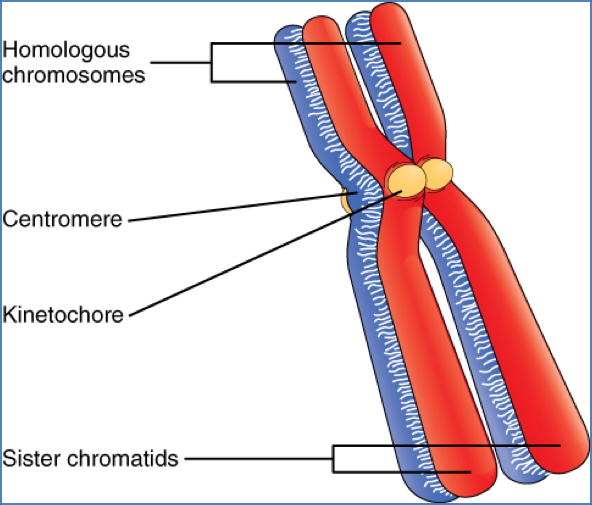
CNX OpenStax, CC BY 4.0 <https://creativecommons.org/licenses/by/4.0>, via Wikimedia Commons
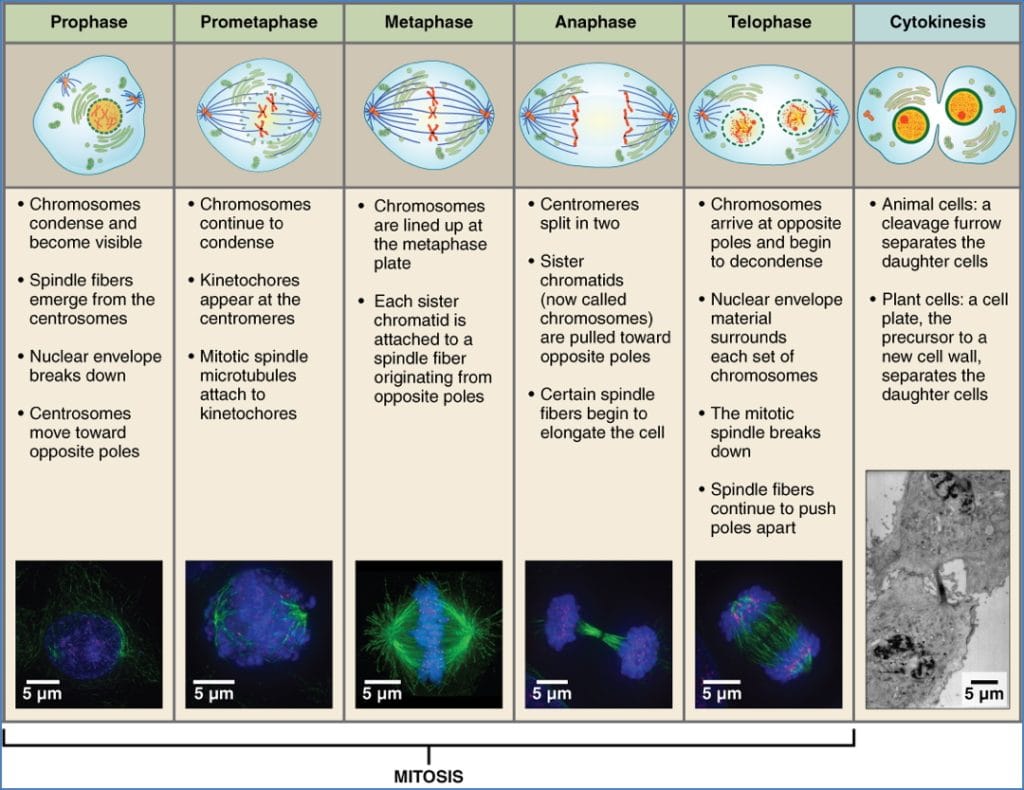
Mitosis – Cellular Division
- Process of dividing the nucleus and cytoplasm:
- Prophase: Chromosomes condense
- Prometaphase: Spindle fibres attach
- Metaphase: Chromosomes align
- Anaphase: Chromatids separate
- Telophase: New nuclei form
- Cytokinesis: Two daughter cells produced
Meiosis – A Side Note
- Shares mechanisms with mitosis
- Occurs in gamete production (sperm and ova)
- Covered in Reproductive Health

Summary – The Cell Cycle
The cell cycle is the orchestrated process that governs cell replication, ensuring genetic fidelity and balanced cell numbers. Understanding the phases, checkpoints, and regulatory proteins like cyclins, Cdks, and Rb-protein is vital in both basic biology and clinical pathology. For a broader context, see our Cell Biology & Biochemistry Overview page.