
Table of Contents
Overview – Pelvic Inflammatory Disease
Pelvic Inflammatory Disease (PID) is a significant complication of sexually transmitted infections, particularly Chlamydia trachomatis and Neisseria gonorrhoeae. PID refers to an ascending infection of the female upper genital tract, involving the uterus, fallopian tubes, and/or ovaries. If left untreated, PID can result in chronic pelvic pain, infertility, and pelvic abscesses. Early diagnosis and treatment are essential to prevent irreversible reproductive damage.
Definition
Pelvic Inflammatory Disease (PID) is an infection and inflammation of the female upper genital tract structures, including the uterus, fallopian tubes, and ovaries. It is most commonly caused by sexually transmitted bacteria.
Aetiology
- Most commonly bacterial (may rarely be viral, fungal, or parasitic)
- Causative organisms:
- Chlamydia trachomatis (≈50%)
- Neisseria gonorrhoeae (≈50%)
- Others: Streptococcus, Staphylococcus, anaerobes
Morphology / Pathophysiology
Pathogenesis
- Often subclinical or chronic infection
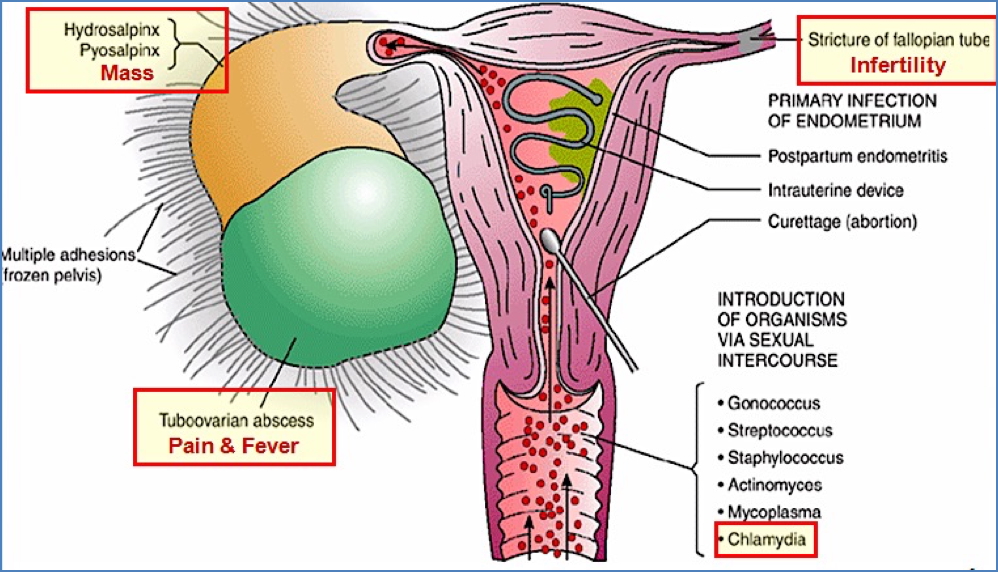
- Ascending spread of pathogens from cervix → uterus → fallopian tubes/ovaries
- Inflammation causes:
- Abscess formation
- Scar tissue → tubal occlusion
- Adhesions → tethering to surrounding organs
Morphological Features
- Fallopian tube strictures
- Tubo-ovarian abscesses
- Cystic dilatations
- Inflammatory pelvic masses
Clinical Features
- Common in adolescents and postpartum women
- Symptoms:
- Chronic pelvic pain
- Lower abdominal pain
- Dyspareunia (painful intercourse)
- Fever
- Infertility (due to tubal scarring and obstruction)
- Palpable pelvic mass
Differential Diagnoses
- Acute appendicitis
- Ectopic pregnancy
- Ovarian torsion
- Ovarian cyst or tumour
Investigations
- Clinical diagnosis supported by history and examination
- Laparoscopy may confirm diagnosis and assess extent of disease
- Important to detect early to minimise long-term complications
Management
- Empirical antibiotic therapy:
- Azithromycin or Doxycycline (covers common pathogens)
- Fertility management:
- In vitro fertilisation (IVF) may be needed for conception if tubal damage is severe
Complications
- Infertility due to fallopian tube damage
- Chronic pelvic pain
- Ectopic pregnancy (due to tubal dysfunction)
- Tubo-ovarian abscesses
- Adhesions and chronic pelvic mass
Summary – Pelvic Inflammatory Disease
Pelvic Inflammatory Disease is a common and serious reproductive health condition, often caused by Chlamydia trachomatis or Neisseria gonorrhoeae. It results in upper genital tract inflammation, with complications such as infertility, chronic pelvic pain, and pelvic abscesses. Early recognition and antibiotic treatment are critical. However, structural damage may be permanent, sometimes necessitating fertility interventions. For more, visit our Reproductive Health Overview page.