
Table of Contents
Overview – Waterhouse-Friderichsen Syndrome
Waterhouse-Friderichsen syndrome is a rare but life-threatening cause of acute adrenal insufficiency, typically triggered by overwhelming sepsis. It is most commonly associated with Neisseria meningitidis infection in children and young adults and is characterised by bilateral adrenal haemorrhage leading to a sudden drop in adrenal hormones. Without immediate treatment, the condition rapidly progresses to hypovolaemic shock and death. Recognising and treating this syndrome urgently is critical in the emergency and infectious disease context.
Definition
Waterhouse-Friderichsen syndrome is an acute, fulminant adrenal crisis caused by massive adrenal haemorrhage, most often due to bacterial septicaemia, leading to acute adrenocortical insufficiency.
Aetiology
- Primary cause: Overwhelming bacterial sepsis
- Most commonly due to Neisseria meningitidis
- Other potential pathogens: Haemophilus influenzae, Streptococcus pneumoniae, Pseudomonas spp.
Pathophysiology
- Bacterial endotoxins trigger systemic inflammation and coagulopathy (disseminated intravascular coagulation – DIC)
- Leads to bilateral adrenal haemorrhagic infarction
- Destruction of adrenal cortex and medulla → sudden drop in cortisol and aldosterone
- ↓ Aldosterone → salt and water loss → hypovolaemia
- ↓ Cortisol → poor stress response → worsens shock
Morphology
Macroscopic
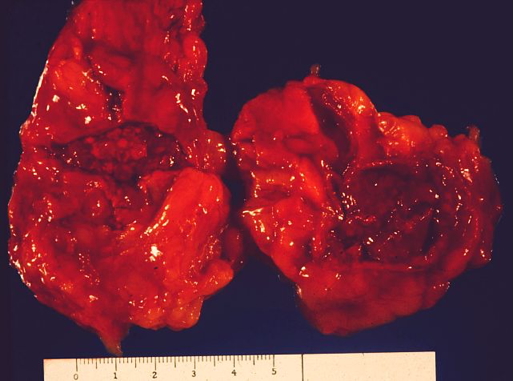
- Adrenal glands replaced by large haemorrhagic masses
- Fresh blood clots obscure normal gland structure
Microscopic
- Extensive acute haemorrhagic necrosis
- Begins in medulla, spreads into cortex
- Scattered islands of remaining cortical cells
- Often accompanied by inflammatory infiltration
Clinical Features
- Abrupt, severe onset – rapid clinical deterioration
- Signs of meningococcal sepsis:
- Fever
- Purpuric rash
- Neck stiffness (meningism)
- Signs of DIC
- Hypovolaemic shock due to aldosterone deficiency
- May also see:
- Vomiting
- Abdominal pain
- Confusion or coma
- Circulatory collapse
Investigations
- Blood cultures (confirm septic cause, e.g. Neisseria)
- UECs: Hyponatraemia, hyperkalaemia, raised urea
- Coagulation panel: Prolonged clotting times, low platelets (suggestive of DIC)
- Serum cortisol: Low
- Imaging (if time permits): CT may reveal adrenal enlargement with haemorrhage
Management
- Immediate empirical IV antibiotics (e.g. ceftriaxone)
- Aggressive IV fluid resuscitation
- IV hydrocortisone replacement
- Intensive care support for circulatory failure
- Monitor and correct electrolyte abnormalities
Complications
- Death within hours if untreated
- Long-term adrenal insufficiency if bilateral adrenal destruction is incomplete and undetected
- Neurological sequelae from meningococcal infection
Summary – Waterhouse-Friderichsen Syndrome
Waterhouse-Friderichsen syndrome is a medical emergency characterised by adrenal haemorrhage and acute adrenal failure secondary to severe bacterial sepsis, most notably meningococcal infection. It presents with shock, signs of DIC, and rapidly deteriorating clinical status. Prompt recognition, antibiotic therapy, and corticosteroid replacement are lifesaving. For more related content, see our Endocrine Overview.