
Table of Contents
Overview – Adrenal Glands
The adrenal glands are key endocrine organs involved in stress response, fluid and electrolyte balance, metabolism, and immune modulation. Situated atop each kidney, they secrete a variety of hormones from both the cortex and medulla, each with distinct physiological roles. Understanding adrenal gland anatomy, hormonal regulation, and systemic effects is crucial for medical students and clinicians alike.
General
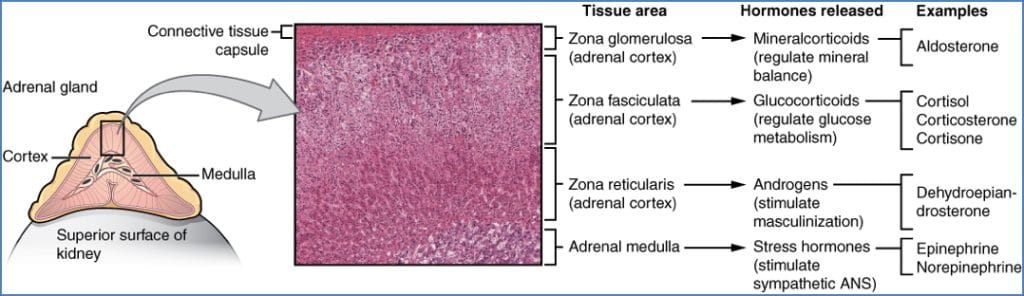
- The adrenal glands are retroperitoneal endocrine glands located superior to each kidney.
- Comprised of:
- Cortex (outer layer): subdivided into three zones.
- Medulla (inner layer): chromaffin cell population.
Anatomy
Adrenal Cortex (Three Zones – “GFR”)
- Zona Glomerulosa (Outer)
- Produces mineralocorticoids (e.g., aldosterone).
- Zona Fasciculata (Middle)
- Produces glucocorticoids (e.g., cortisol).
- Zona Reticularis (Inner)
- Produces adrenal androgens (e.g., DHEA).
Adrenal Medulla
- Composed of chromaffin cells.
- Produces catecholamines: adrenaline and noradrenaline.
Regulation
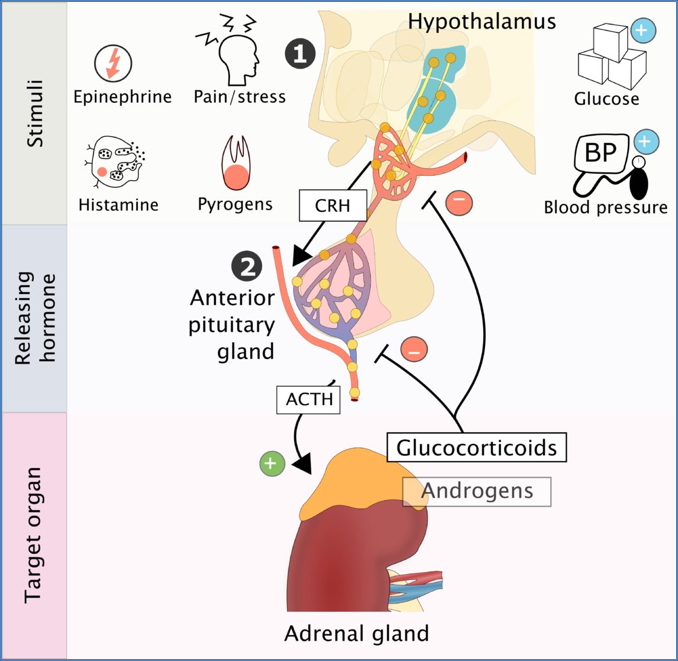
- Adrenal Cortex:
- Controlled by ACTH (from anterior pituitary) in response to CRH (from hypothalamus).
- Regulated via negative feedback loops.
- Adrenal Medulla:
- Regulated by direct sympathetic nervous system stimulation.
Adrenocortical Hormone Synthesis
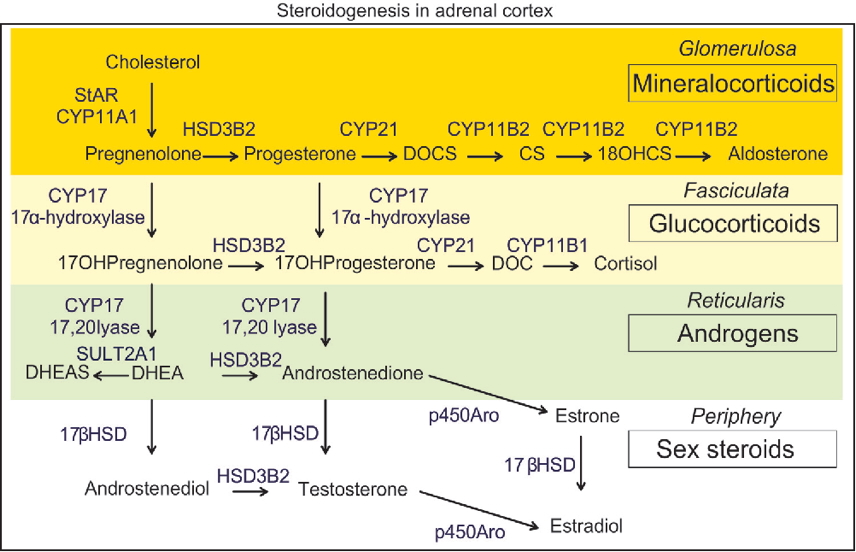
- All adrenocortical hormones are steroidal and derived from cholesterol.
- Prognenolone is the precursor:
- Zona Glomerulosa: Converts to aldosterone.
- Zona Fasciculata: Converts to cortisol.
- Zona Reticularis: Converts to adrenal androgens (testosterone, oestrogen).
Major Hormone Actions
Stress Hormones
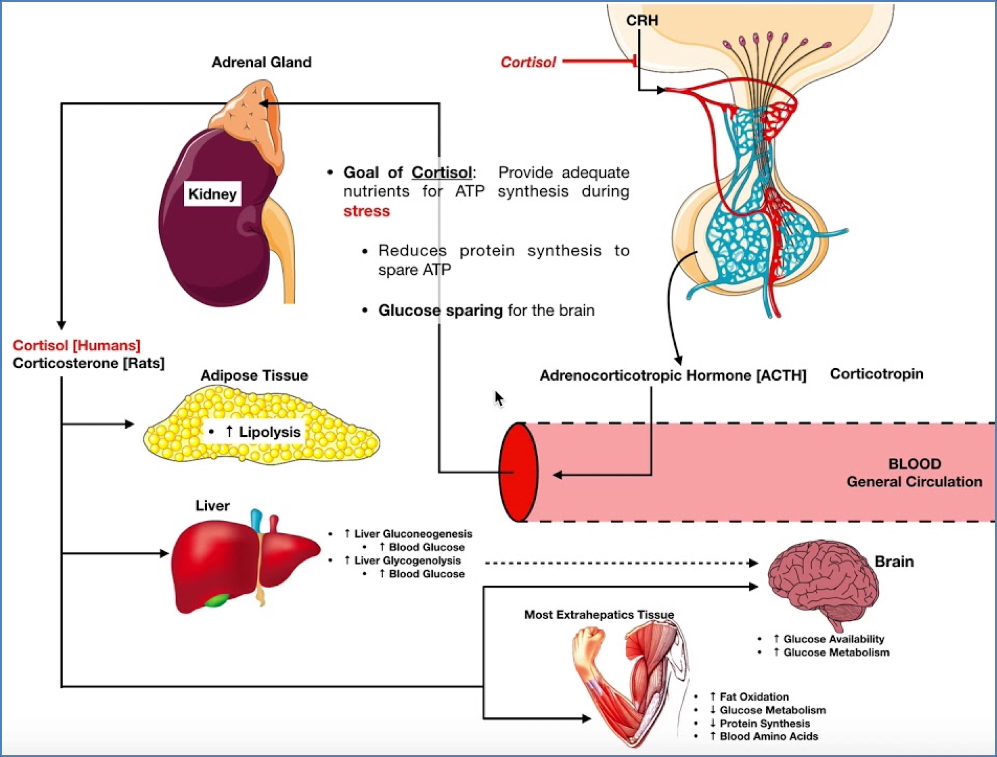
- Cortisol (Glucocorticoid):
- Increases blood glucose via gluconeogenesis.
- Immunosuppressive and anti-inflammatory effects.
- Inhibits bone formation.
- Catecholamines (Adrenaline/Noradrenaline):
- Increase heart rate and blood pressure.
- Elevate blood glucose.
- Reduce parasympathetic tone.
Electrolyte Balance
- Aldosterone (Mineralocorticoid):
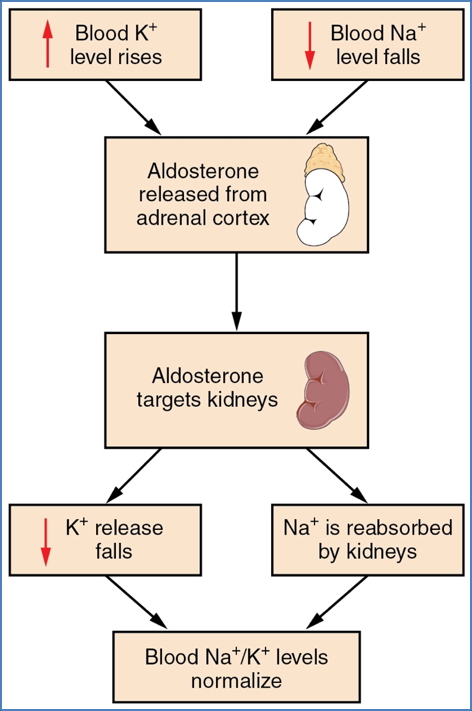
- Promotes sodium reabsorption and potassium excretion.
- Increases blood volume and pressure.
Cortisol
Secreted by
- Cells of the zona fasciculata.
Metabolic Actions
- Increases plasma glucose (hepatic gluconeogenesis).
- Increases proteolysis (muscle) and lipolysis (adipose tissue).
- Stimulates urea cycle to handle nitrogen waste.
- Inhibits glucose uptake in muscle and adipose (glucose-sparing effect).

Immune Actions
- Suppresses inflammatory mediators (prostaglandins, thromboxanes, leukotrienes).
- Reduces interleukin, interferon, TNF production.
- Inhibits T-cell proliferation and neutrophil phagocytosis.
Other Actions
- Supports blood pressure maintenance.
- Reduces bone formation.
- Enhances renal filtration.
- Stimulates erythropoietin (EPO) release.
Regulation
- Stimulated by:
- Stress (infection, trauma, psychological stress).
- Physical activity.
- Hypoglycemia.
- Controlled by:
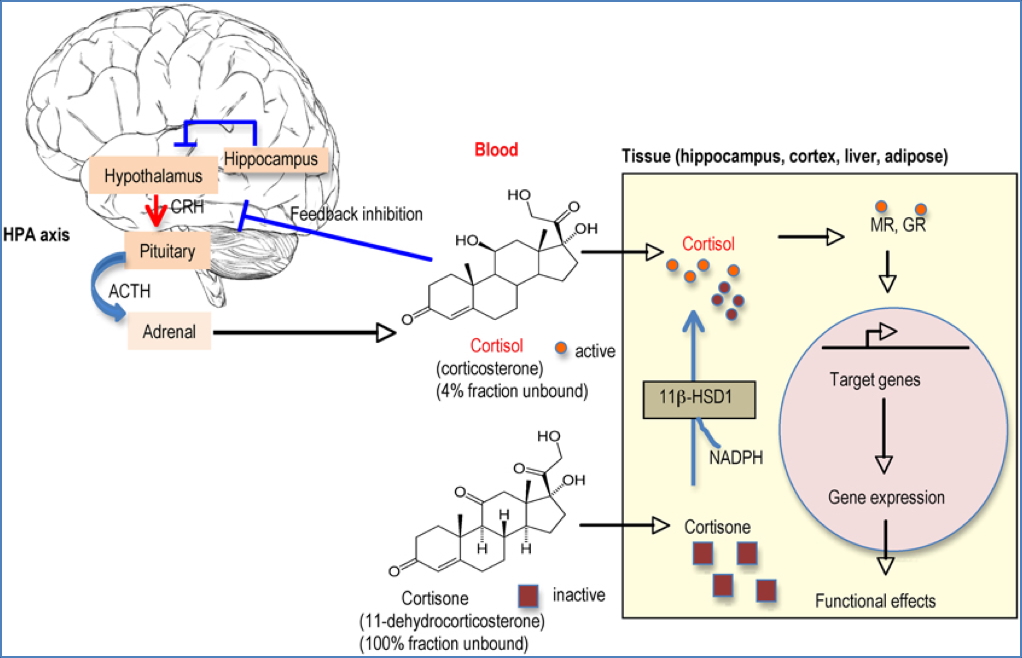
- Hypothalamus → CRH → Anterior Pituitary → ACTH → Adrenal cortex.
- Negative feedback via circulating cortisol levels.
Aldosterone
Secreted by
- Zona glomerulosa cells.
Actions
- Sodium homeostasis: Increases Na+ reabsorption in distal tubules and collecting ducts.
- Potassium homeostasis: Increases K+ secretion.
- Water balance: Increases extracellular fluid volume via sodium retention.
Mechanism
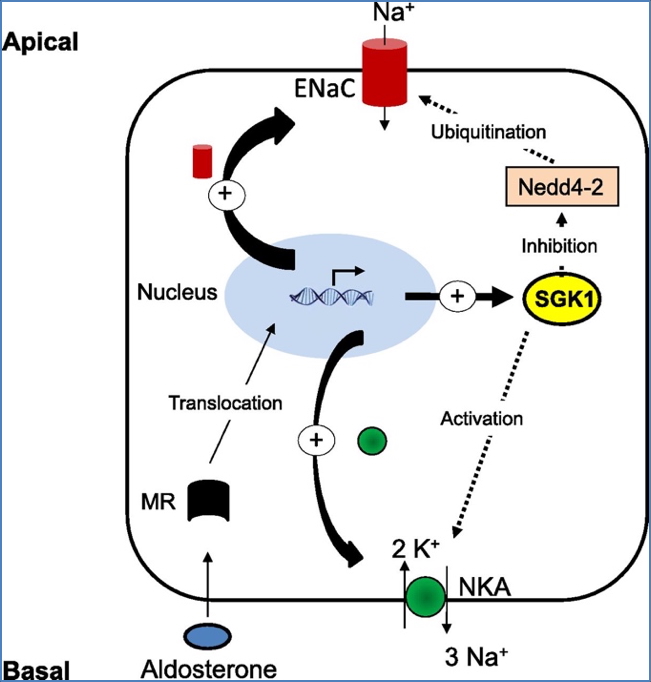
- Activates Na/K-ATPase pumps in principal cells.
- Increases ENaC (epithelial sodium channel) synthesis and insertion into luminal membranes.
Regulation
- Stimulated by:
- Angiotensin II (renin-angiotensin system activation).
- Hyponatremia.
- Hyperkalemia.
- Stress.
- Controlled by: Renin-angiotensin-aldosterone system (RAAS).
Summary – Adrenal Glands
The adrenal glands, situated atop the kidneys, regulate essential processes including stress response, fluid balance, metabolism, and immunity via coordinated hormone secretion from the cortex and medulla. For a broader context, see our Endocrine Overview page.