
Table of Contents
Overview – Diphtheria
Diphtheria is a potentially serious bacterial infection caused by Corynebacterium diphtheriae. Although rare in developed countries due to widespread vaccination, it remains a global public health concern. The disease primarily affects the mucous membranes of the respiratory tract, and its hallmark is the formation of a thick pseudomembrane that can obstruct the airway. Additionally, systemic absorption of the exotoxin may lead to life-threatening complications like myocarditis and neuropathy. Prompt diagnosis and antitoxin therapy are key to preventing serious outcomes.
Definition
Diphtheria is an acute bacterial infection primarily affecting the upper respiratory tract, characterised by formation of an adherent pseudomembrane and systemic toxin-mediated complications.
Aetiology
- Caused by Corynebacterium diphtheriae (gram-positive, non-motile, club-shaped bacillus)
- Only toxigenic strains (infected with a bacteriophage encoding the diphtheria toxin) cause disease
Pathogenesis
- Transmission: Respiratory droplets (aerosol) or direct contact with skin lesions
- Colonisation of mucous membranes → local tissue destruction
- Pseudomembrane formation: Fibrin, necrotic epithelium, leukocytes, and bacteria
- Exotoxin enters bloodstream → inhibits protein synthesis by inactivating EF-2 (elongation factor 2)
- Targets: Myocardium, nerves, kidneys
Morphology
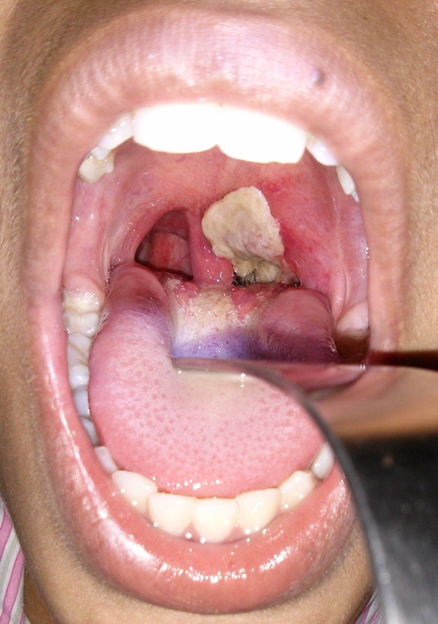
- Greyish-white pseudomembrane over the pharynx, tonsils, or nasal mucosa
- Firmly adherent, may bleed when removed
- Surrounding tissue often erythematous and oedematous
Clinical Features of Diphtheria
- High-grade fever
- Severe sore throat
- Fatigue, malaise
- Nausea and vomiting
- Pseudomembrane on tonsils/pharynx – classic hallmark
- Dysphagia
- Airway obstruction from large or extensive pseudomembrane
Investigations
- Throat/nasal swab for MCS (microscopy, culture, and sensitivity)
- Toxin detection test (e.g. Elek test or PCR for toxin gene)
- ECG and cardiac enzymes if myocarditis suspected
- LFTs and renal function tests may also be abnormal in systemic disease
Management of Diphtheria
Medical Therapy
- Prompt administration of diphtheria antitoxin (from CDC/WHO stockpiles)
- Neutralises unbound circulating toxin
- Antibiotics:
- Penicillin G (first-line)
- Or Erythromycin (for penicillin-allergic patients)
- Duration: 14 days
Supportive Measures
- Airway monitoring
- Hospital isolation (droplet precautions)
- Notify public health authorities (notifiable disease)
Complications of Diphtheria
- Cardiac:
- Myocarditis – arrhythmias, heart failure
- Neurological:
- Peripheral neuritis – cranial nerve palsies (especially CN IX, X)
- Diaphragmatic paralysis
- Renal failure
- Chronic non-healing skin ulcers (in cutaneous diphtheria)
- Death (if untreated, case fatality may exceed 10%)
Differential Diagnosis
- Streptococcal pharyngitis
- Infectious mononucleosis
- Vincent’s angina
- Candidiasis (white oral plaques)
- Tonsillar malignancy (rare)
Summary – Diphtheria
Diphtheria is a serious bacterial infection characterised by pseudomembrane formation and life-threatening systemic effects of exotoxin. Early recognition, isolation, and antitoxin therapy are critical for reducing morbidity and mortality. While rare in vaccinated populations, it remains an important consideration in unvaccinated or immigrant populations. For broader context, visit our Respiratory Overview page.