
Table of Contents
Overview – Prostate Adenocarcinoma
Prostate adenocarcinoma is the most common cancer in elderly males, with incidence rising significantly after the age of 50. Although often asymptomatic in early stages, it can progress silently and present with urinary obstruction or systemic symptoms due to metastasis. Understanding its pathogenesis, detection methods, and treatment options is essential for timely diagnosis and effective management in clinical practice.
Definition
Prostate adenocarcinoma is a malignant tumour arising from the glandular epithelium of the prostate, commonly affecting the posterior lobe, and typically presenting in older men.
Aetiology
- Exact cause unknown
- Likely multifactorial:
- Hormonal factors (androgens)
- Genetic predisposition
- Environmental influences
- Not caused by benign prostatic hyperplasia (BPH)
Pathogenesis
- Begins as Prostatic Intraepithelial Neoplasia (PIN):
- Premalignant lesion with multilayered epithelium
- Progresses to adenocarcinoma:
- Invasive, single-layered malignant epithelium
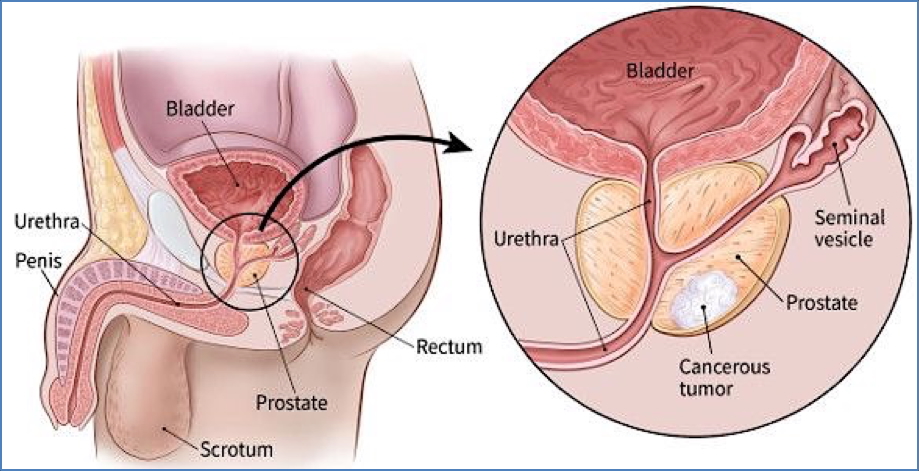
- Originates predominantly in the lateral/posterior prostate lobe
Morphology
- Affects lateral/posterior prostate lobe → No early urinary obstruction
- On digital rectal examination (DRE):
- Hard, stony, irregular, and fixed mass
- Loss of normal median sulcus
Clinical Features
Symptoms
- Often asymptomatic in early stages
- May develop:
- Urinary voiding difficulties (late)
- Weight loss
- Bone pain or other metastatic complications
Investigations
Screening & Diagnostic Tests
- Prostate-Specific Antigen (PSA):
- Upper limit of normal = 4.0 ng/mL
- Not specific: Elevated with prostate damage, ejaculation, DRE, infection, or malignancy
- Digital Rectal Exam (DRE):
- Malignant prostate feels hard, irregular, and fixed
- Reasonable sensitivity and specificity
- Biopsy:
- Confirmatory with high specificity
- Imaging:
- Transrectal ultrasound (TRUS), MRI, or CT for staging
- Good sensitivity for macroscopic disease
Grading – Gleason Score
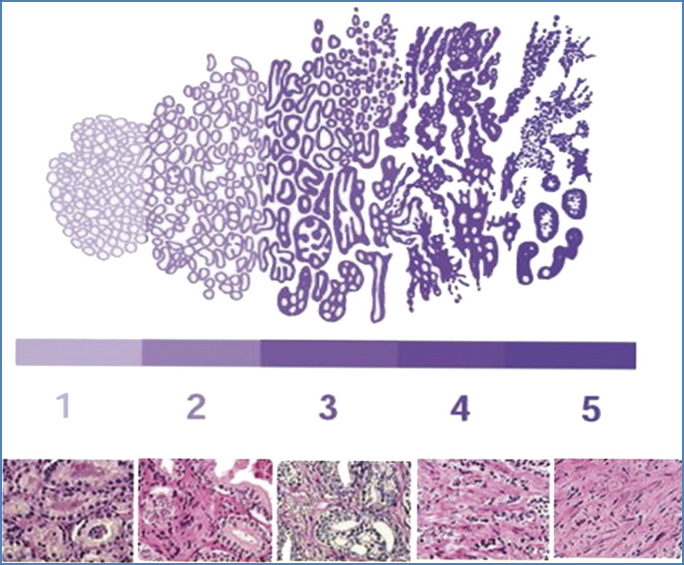
- Histological grading system (1–5 for each of the two most predominant patterns; score out of 10)
- Higher scores = more aggressive cancer
Management
- Watchful waiting / Active surveillance:
- Suitable for elderly men with significant comorbidities
- Surgery:
- Radical or partial prostatectomy
- Risks: Erectile dysfunction, urinary incontinence
- Radiotherapy:
- External beam or brachytherapy
- Hormonal therapy:
- Anti-androgens or luteinising hormone-releasing hormone (LHRH) agonists
- Chemotherapy and palliative care:
- For metastatic or advanced disease
Prevention
- Screening recommended every 2 years from age 50
- PSA testing
- Digital rectal examination
Summary – Prostate Adenocarcinoma
Prostate adenocarcinoma is the most prevalent malignancy in older men, with risk increasing significantly beyond the age of 50. It often progresses silently until late-stage complications develop. Diagnosis involves PSA testing, DRE, biopsy, and imaging. Management ranges from surveillance to surgery and radiotherapy, depending on the patient’s age, health, and cancer stage. For a broader context, see our Reproductive Health Overview page.