
Table of Contents
Overview – Toxicity of Common Drugs
Toxicity of common drugs is a high-yield topic in clinical toxicology, especially for emergency and general medicine. It includes the identification of toxidromes, initial management of poisoned patients, and understanding the mechanisms, symptoms, and treatments for common toxic agents like paracetamol, antidepressants, and digoxin. Early recognition and appropriate intervention can be lifesaving in overdose scenarios.
Initial Approach to the Poisoned Patient
Key Steps:
- Resuscitation & Stabilization
- History & Physical Examination
- Look for toxidromes (symptom patterns indicating specific toxins)
- Decontamination
- GI, skin, eye decontamination as appropriate
- Investigations
- Labs, ECG, radiology
- Antidotes
- Use if specific agent identified
- Enhanced Elimination
- Only for selected drugs (e.g., dialysis, multiple charcoal doses)
Decontamination
- Activated Charcoal (PO)
- Most effective if given within 1 hour
- Multiple doses for drugs with enterohepatic circulation:
- Carbamazepine, Phenobarbitone, Quinine, Theophylline
Toxidromes
Anticholinergic Toxidrome
- Symptoms: Blurred vision, choreoathetosis, dilated pupils, flushing, urinary retention
- Complications: Hypertension, hyperthermia, tachycardia
- Common drugs: Atropine, Tricyclic antidepressants
Cholinergic Toxidrome
- Symptoms: Lacrimation, salivation, defecation, diarrhoea, vomiting
- Complications: Bradycardia
- Common drugs: Organophosphate pesticides (AChE inhibitors)
Hallucinogenic Toxidrome
- Symptoms: Hallucinations, disorientation, panic, seizures
- Complications: Hypertension, tachycardia, tachypnea
- Common drugs: Amphetamines, Cocaine, Phencyclidine (PCP)
Opiate Toxidrome
- Symptoms: Altered consciousness, dysphoria, unresponsiveness
- Complications: Bradycardia, hypotension, hypothermia, respiratory depression
- Common drugs: Morphine, Fentanyl, Oxycodone
Sedative/Hypnotic Toxidrome
- Symptoms: Confusion, delirium, ataxia, coma
- Complications: Apnoea
- Common drugs: Benzodiazepines, Barbiturates, Antiepileptics, Ethanol
Sympathomimetic Toxidrome
- Symptoms: Sweating, hyperreflexia, anxiety
- Complications: Hypertension, tachycardia
- Common drugs: Amphetamines, Cocaine, Ephedrine, Tyramine (with MAOIs)
Common Drug Toxicities
Paracetamol Poisoning
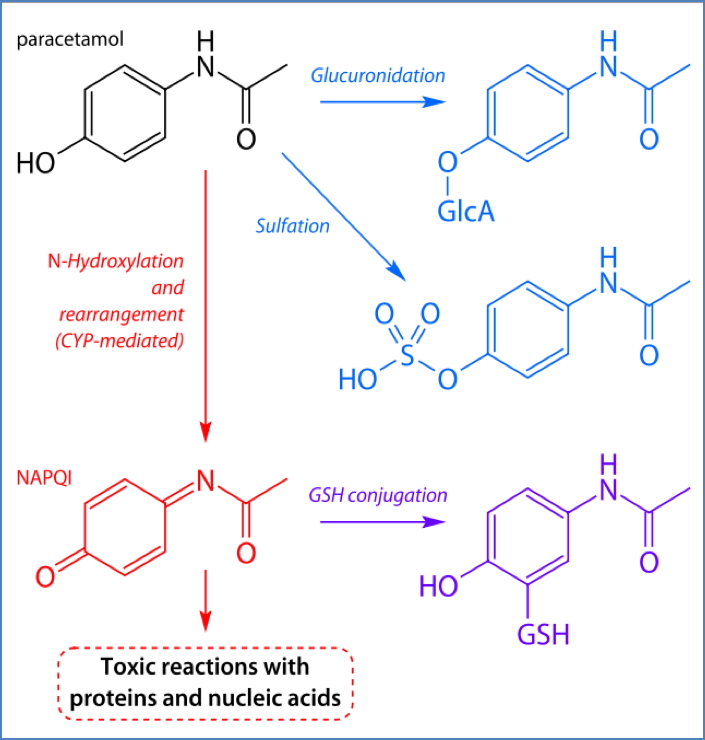
- Toxic Mechanism: NAPQI metabolite → hepatotoxic when glutathione depleted
- Investigations: Paracetamol levels, LFTs
- Management:
- Activated charcoal (if early)
- N-acetylcysteine or Methionine (glutathione precursors)
Digoxin Toxicity
- Used for: CHF, SVT
- Toxic Effects:
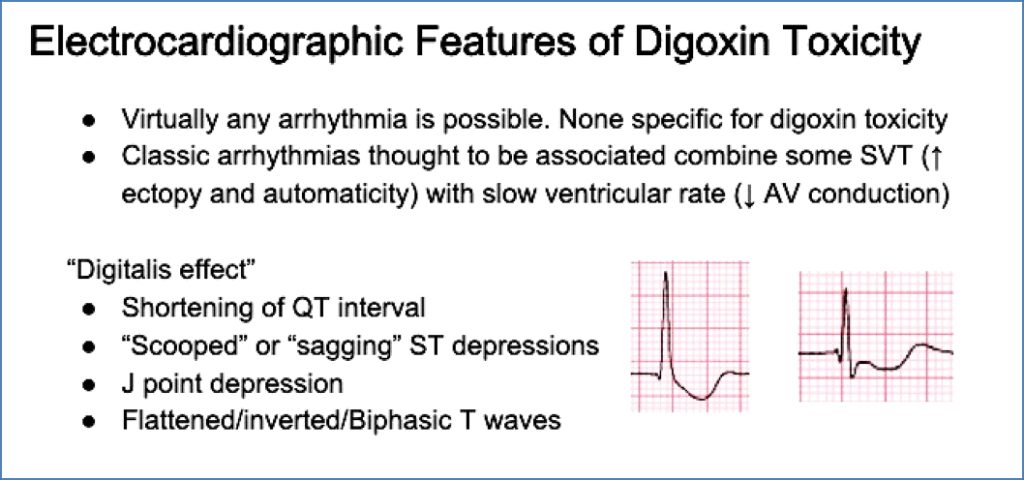
- Cardiac: Arrhythmias, syncope
- CNS: Confusion, hallucinations
- GI: Vomiting, anorexia
- Risk Factors: Renal failure, hypokalaemia, drug interactions
- Management:
- Activated charcoal
- Digoxin-specific Fab antibodies
- Electrolyte correction (K+, Mg2+)
- Manage arrhythmias: Atropine, pacing, defibrillation as needed
Aspirin (Salicylate) Poisoning
- Complications:
- Reye’s syndrome in infants
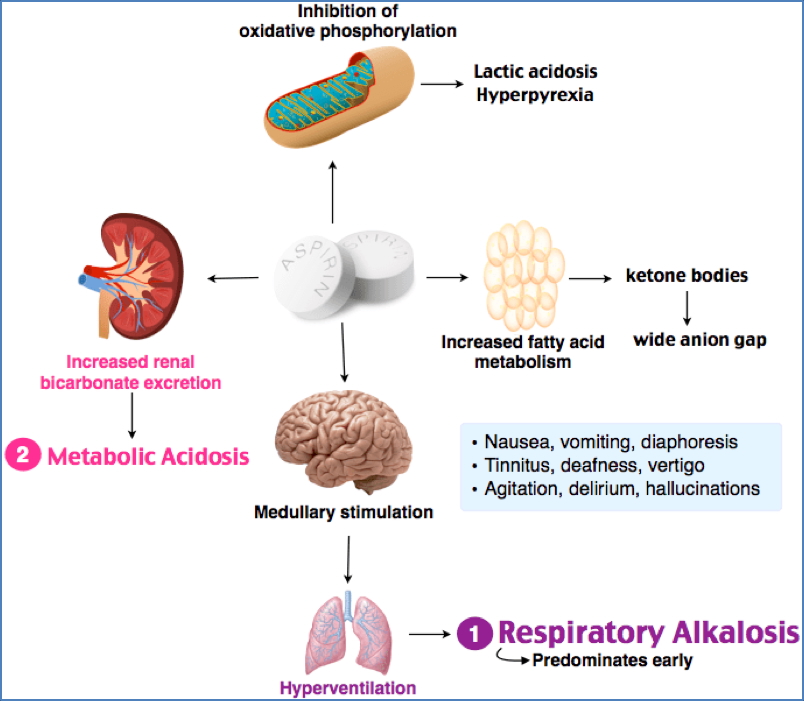
- Chronic toxicity in elderly: Encephalopathy, hyperventilation, pulmonary oedema
- Salicylism Symptoms: Tinnitus, vomiting, delirium, seizures
- Management:
- Activated charcoal
- Whole-bowel irrigation (enteric-coated)
- Sedation, intubation, and mechanical ventilation for CNS symptoms
Laxative Toxicity
- At-risk groups: Children, eating disorder patients, elderly
- Stimulant Laxatives:
- Acute: Vomiting, diarrhoea, shock (severe)
- Chronic: Electrolyte imbalance, hypokalaemia, GI dysfunction
- Osmotic Laxatives: Hypocalcaemia → lethargy, carpopedal spasm
- Herbal/Mineral oil laxatives: Risk of lipoid pneumonia
- Management:
- Activated charcoal
- Correct fluids/electrolytes
- Fibre and fluid intake
- Psychiatric referral if abuse suspected
Antidepressant Toxicity
Tricyclic Antidepressants (TCAs)
- Symptoms: Delirium, arrhythmias, seizures, hypotension
- Management:
- Activated charcoal
- Ventilation, diazepam
- Avoid Class IA/IB antiarrhythmics
SSRIs (Selective Serotonin Reuptake Inhibitors)
- Acute Toxicity: Drowsiness
- Serotonin Syndrome:
- Agitation, myoclonus, hyperreflexia, hyperthermia, GI upset
- Management:
- Activated charcoal
- Benzodiazepines
- IV fluids and cooling
Summary – Toxicity of Common Drugs
Toxicity of common drugs encompasses a spectrum of overdose presentations including toxidromes, metabolic derangements, and organ damage. Key agents such as paracetamol, digoxin, aspirin, antidepressants, and laxatives all have distinct clinical features and treatments. Recognising these patterns quickly can prevent complications and save lives. For a broader context, see our Pharmacology & Toxicology Overview page.