
Table of Contents
Overview – Sex Hormone Modifying Drugs
Sex hormone modifying drugs include natural and synthetic agents that mimic or block the actions of oestrogens, progestogens, and androgens. These drugs are central to reproductive health, cancer therapy, contraception, and hormone replacement. Understanding their mechanisms and side effects is essential for prescribing safely and preparing for exams.
Female Sex Hormones
Oestrogen (Natural and Synthetic)
- Clinical Uses:
- Hormone replacement therapy (HRT) in post-menopausal women
- Contraception
- Delayed menarche
- Mechanism of Action:
- Inhibits ovulation by suppressing luteinising hormone (LH) secretion
- Steroid hormone → binds intranuclear receptors → modulates gene transcription
- Side Effects:
- Increased blood coagulability
- Nausea
- Gynecomastia (in males)
- Raised HDL cholesterol
- Weight gain, fluid retention, oedema, hypertension
Progesterone (Natural and Synthetic)
- Synthetics: Progestogens, Progestins
- Clinical Uses:
- Contraception (alone or combined with oestrogens)
- Mechanism of Action:
- Thickens cervical mucus to impede sperm penetration
- Steroid hormone → binds intranuclear receptors → modulates gene transcription
- Side Effects:
- Acne and masculinisation in women
- Nausea
- Breast tenderness
- Weight gain, fluid retention, oedema, hypertension
Male Sex Hormones
Androgens and Anabolic Steroids
- Clinical Uses:
- Androgens:
- Hormone replacement in androgen deficiency
- Libido enhancement
- Previously used in anaemia management
- Anabolic Steroids:
- Reverse protein loss post-surgery
- Enhance protein synthesis (performance enhancement)
- Increase strength, aggressiveness, and performance
- Androgens:
- Mechanism of Action:
- Bind intranuclear receptors → stimulate gene transcription in target tissues
- Side Effects:
- Aggression (“roid rage”)
- Baldness, increased body hair
- Acne
- Testicular atrophy and infertility
- Gynecomastia
- Liver disease
- Masculinisation in women, feminisation in men (dose-dependent)
Sex Hormone Antagonists
Anti-Oestrogens
- Clinical Uses:
- Treatment of oestrogen receptor-positive cancers (e.g. breast cancer)
- Ovulation induction
- Osteoporosis management
- Mechanisms of Action:
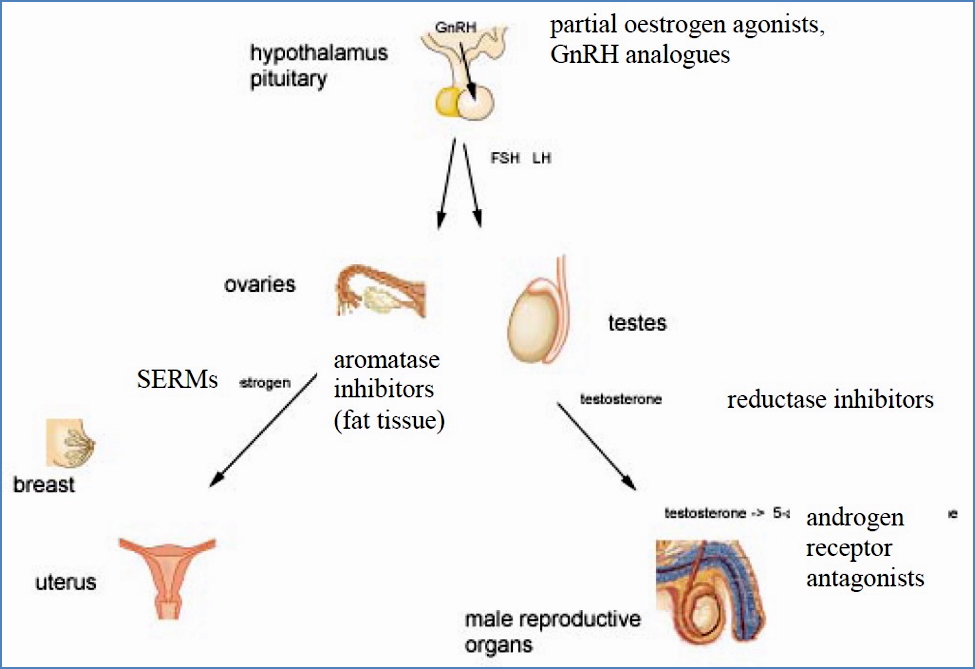
- SERMs (Selective Estrogen Receptor Modulators): Competitive partial agonists/antagonists that modulate receptor conformation
- SERDs (Selective Estrogen Receptor Downregulators): Bind and trigger receptor degradation via endocytosis
- Aromatase Inhibitors: Inhibit conversion of androgens (androstenedione/testosterone) to oestrogen → ↓ oestrogen levels
- Side Effects:
- Menopausal symptoms: flushing, vaginal dryness, mood swings, sweating
- Irregular menstruation
Anti-Androgens
- Clinical Uses:
- Prostate cancer
- Chemical castration (e.g. sex offenders)
- Treatment of undesired masculinisation in women
- Mechanisms of Action:
- Androgen receptor antagonists
- 5α-reductase inhibitors (block conversion of testosterone to active dihydrotestosterone)
- GnRH receptor antagonists → ↓ LH/FSH → ↓ testosterone production
- Side Effects:
- Reduced sperm count and fertility
- Loss of libido
- Erectile dysfunction
Summary – Sex Hormone Modifying Drugs
Sex hormone modifying drugs regulate or inhibit the actions of oestrogens, progestogens, and androgens for therapeutic use in contraception, hormone replacement, cancer treatment, and endocrine disorders. These steroid hormones act via intranuclear receptors, and their antagonists offer versatile clinical options. For a broader context, see our Pharmacology & Toxicology Overview page.