
Table of Contents
Overview – Immunity to Viruses
Immunity to viruses refers to the body’s coordinated innate and adaptive immune responses that identify, contain, and eliminate viral infections. Because viruses are obligate intracellular pathogens that often evade immune detection, effective antiviral defence requires rapid innate mechanisms (e.g. interferons and natural killer cells) and antigen-specific adaptive immunity (e.g. cytotoxic T-cells and antibodies). Understanding these defence layers is critical for managing viral diseases, from the common cold to chronic infections like HIV.
Definition
- Viruses are small, intracellular pathogens that replicate within host cells using host-derived enzymes.
- Viral antigens may be:
- Structural: Envelope glycoproteins, capsid proteins
- Non-structural: Nucleoproteins, replication intermediates
Innate Immune Response
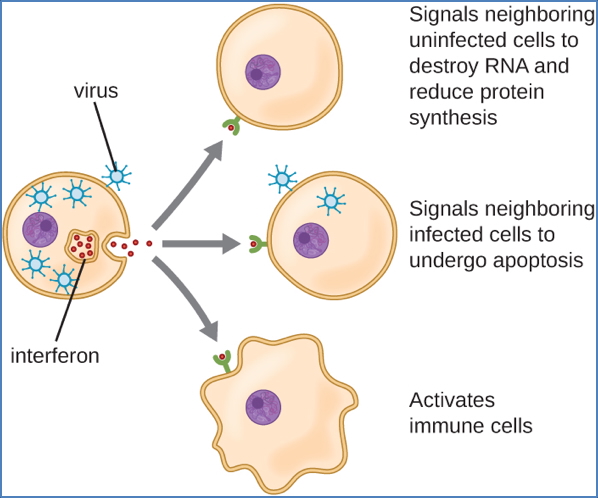
Interferons (IFNs)
- Early, non-specific antiviral cytokines secreted by infected cells
- Types:
- IFN-α (from WBCs), IFN-β (from fibroblasts)
- IFN-γ (from activated T-cells)
- IFN-ω (from trophoblasts)
- Induce antiviral proteins:
- Ribonuclease → Degrades viral mRNA
- Nitric oxide synthase → Inhibits viral replication
- Protein kinase → Blocks viral dsRNA synthesis
- Mx protein → Inhibits viral mRNA translation
- Also activate Natural Killer (NK) cells
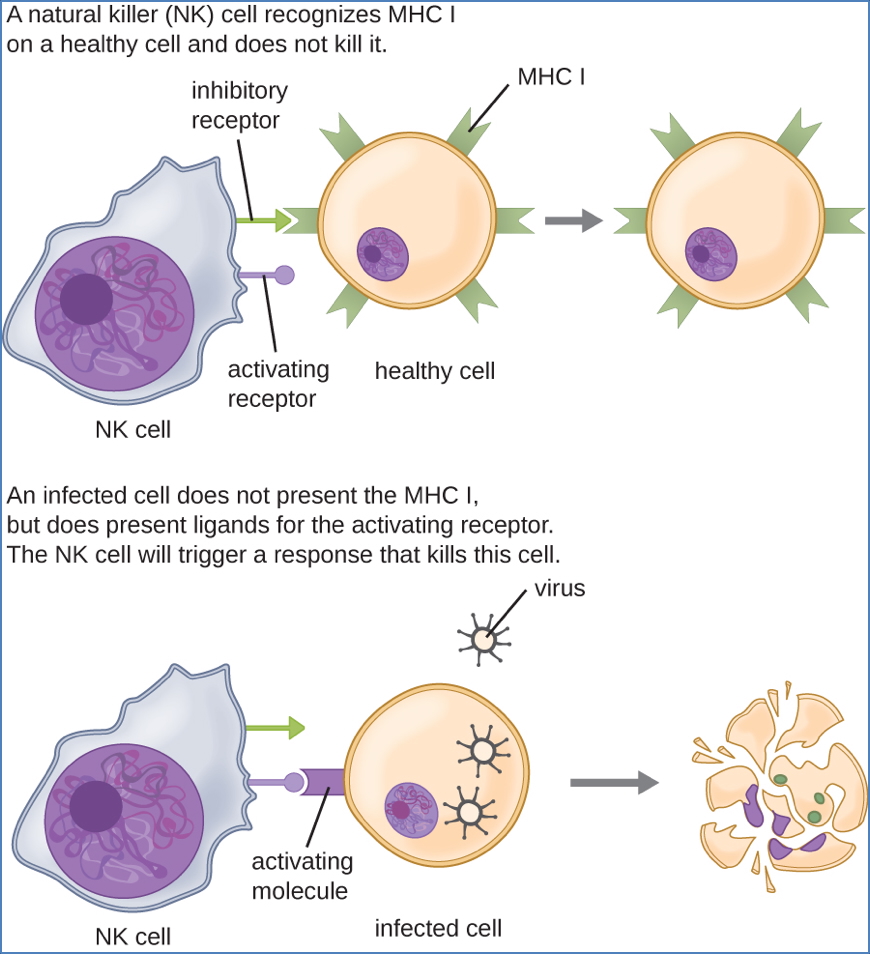
Natural Killer Cells
- Recognise infected cells with reduced MHC-I
- Kill via cytotoxic granules
- Activated by IFN-γ
Complement System
- Activated via the alternative pathway
- Promotes:
- C3b opsonisation
- Phagocytosis of extracellular viruses
Other Physical and Chemical Barriers
- Lysozyme in secretions
- Gastric acid → Denatures viruses
- Digestive enzymes → Degrade viral particles
Adaptive Immune Response
CD4+ Helper T-Cells
- Secrete IFN-γ → Enhances NK and macrophage function
- Activate CD8+ T-cells and B-cells
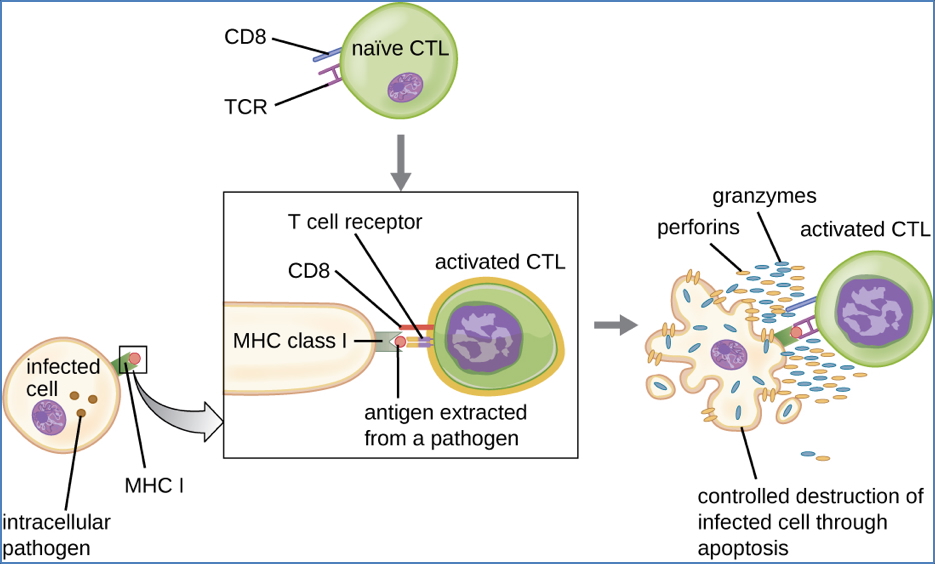
CD8+ Cytotoxic T-Cells
- Recognise viral peptides presented on MHC-I
- Induce apoptosis in infected cells
- Also secrete IFN-γ → Further immune activation
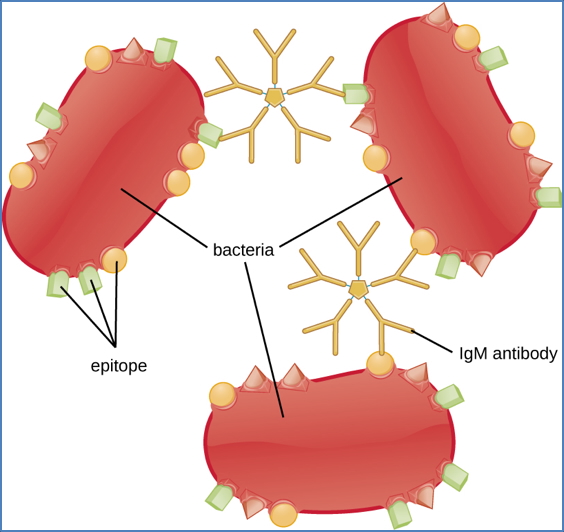
Antibodies
- Neutralise viruses:
- Prevent cell entry
- Cause viral agglutination
- Mediate:
- Opsonisation for phagocytosis
- Complement activation → Virus lysis
- Antibody-dependent cell-mediated cytotoxicity (ADCC)
- Fc receptor-bearing cells bind to antibody-virus complexes → Lysis
- Target virally infected cells for destruction



2. Opsonisation
3. Agglutination
4. Antibody-dependent cell-mediated cytotoxicity (ADCC)
CNX OpenStax, CC BY 4.0 <https://creativecommons.org/licenses/by/4.0>, via Wikimedia Commons
Activated Macrophages
- Engulf opsonised viruses
- Activated by CD4+ Th1 cells
Immunopathology in Viral Infection
While protective, the immune response can also cause host tissue damage:
- Destruction of cells expressing viral antigens:
- Neurons → Brain damage
- Schwann cells → Demyelination
- CD4+ T-cells → Immunodeficiency in HIV
- Deposition of immune complexes (Ag:Ab):
- → Glomerulonephritis
- → Vasculitis
Summary – Immunity to Viruses
Immunity to viruses involves a complex interplay between innate mechanisms like interferons and NK cells, and adaptive responses including T-cell cytotoxicity and virus-neutralising antibodies. While effective at controlling viral spread, immune responses can sometimes contribute to pathology. For a broader context, see our Immune & Rheumatology Overview page.