
Table of Contents
Overview – Immunity to Parasites
Immunity to parasites involves a combination of innate and adaptive immune responses targeted at protozoa, helminths, and arthropods that exploit the host for survival. These infections are typically chronic and require a distinct immunological approach, with eosinophils, IgE, and Th2-dominant responses playing key roles in resistance and containment.
Definition
- Parasites: Organisms that live at the host’s expense, gaining nutrients without offering reciprocal benefit
- Successful parasites: Cause minimal disturbance and avoid immune recognition
- Parasite types:
- Protozoa (unicellular)
- Metazoa (helminths/worms)
- Arthropods (ectoparasites)
- Tend to cause long-term infections, unlike viruses and bacteria
- Often utilise host growth factors to promote survival and reproduction
Innate Immunity
Lysozyme
- Found in tears, saliva, mucus, neutrophils
- Some parasites are susceptible to enzymatic lysis
Eosinophils
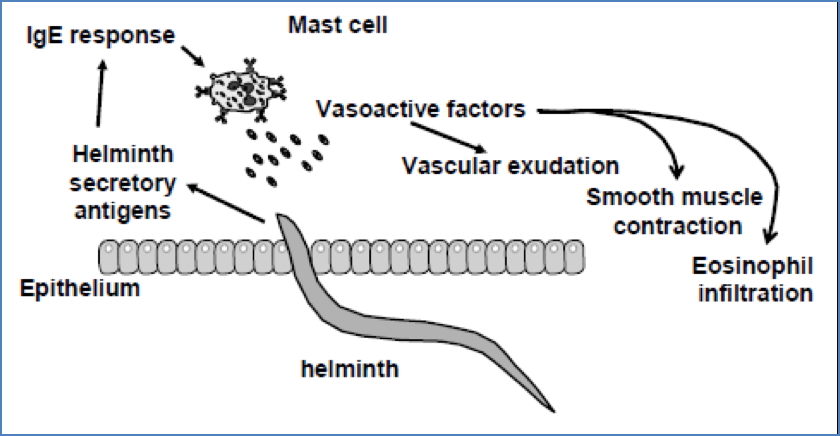
- Specialised granulocytes targeting multicellular parasites (e.g. helminths)
- Activated by:
- T-helper cells (via IL-5)
- Macrophages (via TNF-α, IFN-β, IL-3)

- Mechanism:
- Fc receptors bind to parasite-bound IgE → Degranulation
- Granule contents include:
- Major basic protein – damages helminth cuticle
- Eosinophil-cationic protein – toxic RNase
- Phospholipase D, lysophospholipase
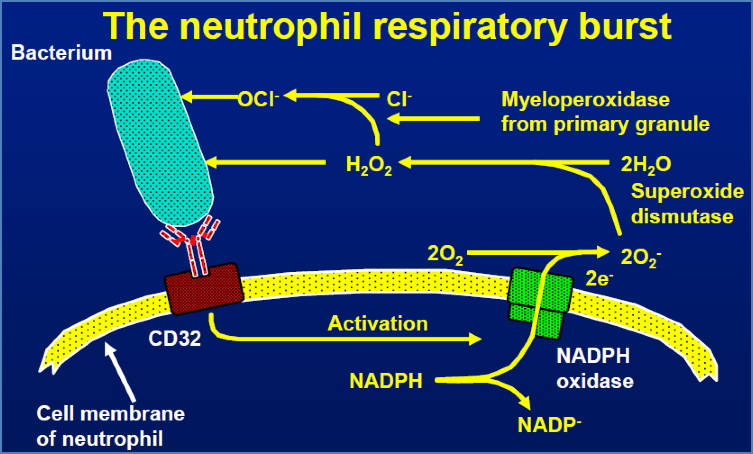
- Respiratory burst: Generates superoxide, H₂O₂, chloride ions
Complement Activation
- Alternative & MBL (mannose-binding lectin) pathways
- Initiated by direct recognition of parasite surface molecules
Splenic Phagocytes
- Infected red blood cells displaying parasite antigens → Opsonised by antibody/complement
- Cleared by macrophages in the spleen
Adaptive Immunity
Antibodies (B-Cell Mediated)
- Most effective for extracellular stages
- IgE is the key isotype (important in helminth clearance)
- Functions include:
- Neutralising parasite proteases
- Blocking parasite entry routes (e.g. anal pores)
- Inhibiting reproductive enzymes
- Mediating Type I hypersensitivity (e.g. urticaria, asthma)
Complement Activation (Classical Pathway)
- Triggered by antigen-bound antibodies
- Can kill tachyzoites and other circulating forms
Cell-Mediated Immunity
Th1-Cell Dominant
- Targets intracellular parasites (mostly protozoa)
- Activates macrophages → Enhanced phagocytosis and intracellular killing
Th2-Cell Dominant
- Drives B-cell activation and IgE production
- The predominant response in helminth infection
Cytotoxic CD8 T-Cells
- Destroy host cells infected with intracellular parasites
- May also directly lyse larvae
Summary – Immunity to Parasites
Immunity to parasites relies on a mix of innate effectors like eosinophils and lysozymes, and adaptive mechanisms dominated by IgE and Th2 cells. Because parasites often persist chronically and employ immune-evasive strategies, the immune system must respond in both tissue-specific and systemic ways. For a broader context, see our Immune & Rheumatology Overview page.