
Table of Contents
Overview – Environmental Genetics
Environmental genetics explains how organisms evolve through genetic changes in response to environmental pressures. It brings together Darwin’s theory of natural selection with modern population genetics to describe how traits become more or less common over time. By examining changes in allele frequencies, reproductive fitness, and evolutionary forces like mutation, drift, and migration, this topic provides critical insight into how species — including humans — adapt to changing environments.
Darwin’s Theory of Evolution
- Observation: Species change in appearance and behaviour over time.
- Darwin proposed a mechanism for evolution: natural selection.
- This process acts on genetic variation within populations, favouring traits that improve survival and reproduction.
Principles of Natural Selection
Natural selection is based on three key principles:
- Variation exists between individuals in a population.
- This variation is heritable (passed to offspring).
- More offspring are produced than the environment can support → leads to competition for survival.
Consequences:
- Individuals with traits best suited to the environment have higher reproductive fitness.
- Over generations, favourable traits increase in frequency.
- Harmful mutations → selected against.
- Neutral mutations → change randomly (genetic drift).
Evolution by Natural Selection
When Fitness is Equal
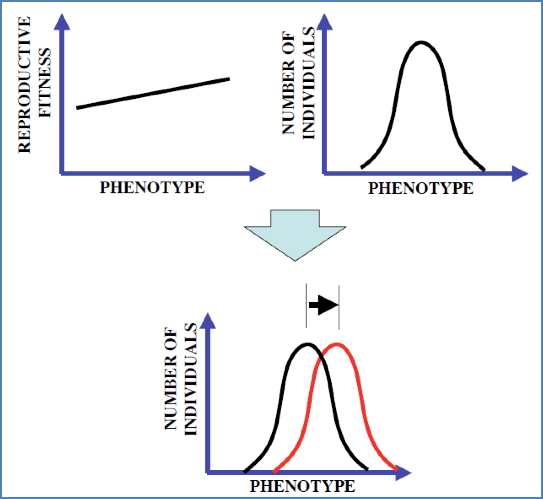
- If all phenotypes have equal reproductive fitness → no change in trait distribution over time.

When Fitness is Unequal
- If certain phenotypes have higher fitness → population shifts toward those traits.

Classic Example: Peppered Moths
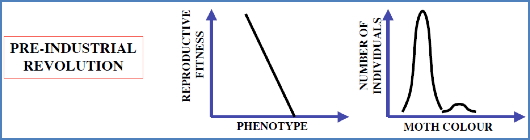
- Pre-Industrial Era:
- Pale trees → light moths better camouflaged → increased survival.
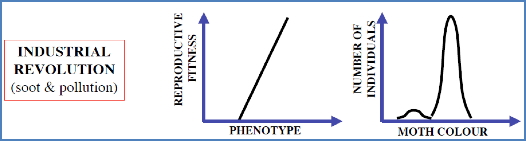
- Post-Industrial Era:
- Soot-covered trees → dark moths now favoured → dark moth population rose.
Antibiotic Resistance in Bacteria
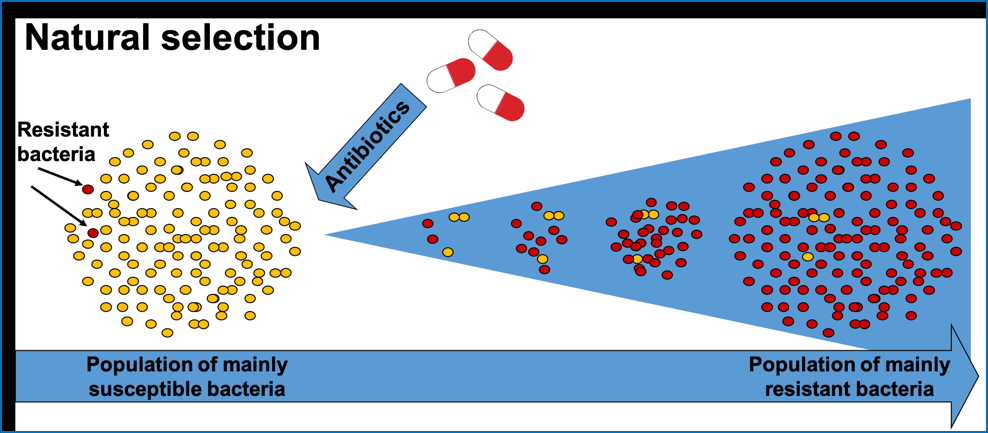
- Infections contain both resistant and susceptible strains.
- Antibiotics kill susceptible bacteria, leaving resistant ones to repopulate.
- Incomplete treatment = resistant strains dominate → harder-to-treat future infections.
Genetic Mapping of Evolution
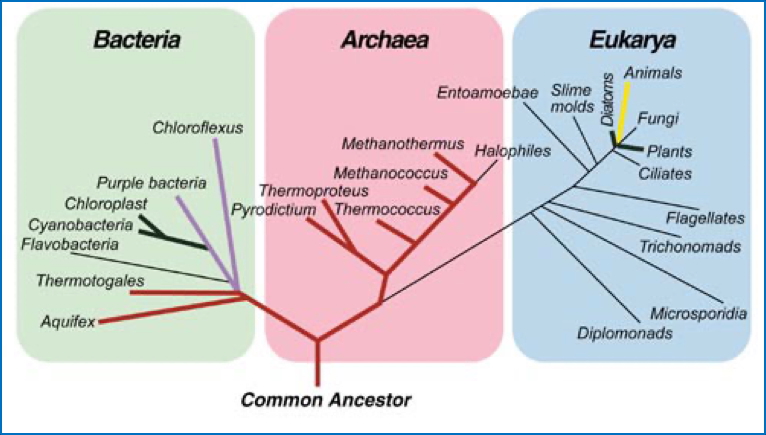
- Today, DNA analysis allows us to compare gene sequences instead of visible traits.
- Closely related species share similar genetic sequences.
- These relationships are used to build phylogenetic gene trees to track evolutionary history.
Population Genetics and Allele Frequencies
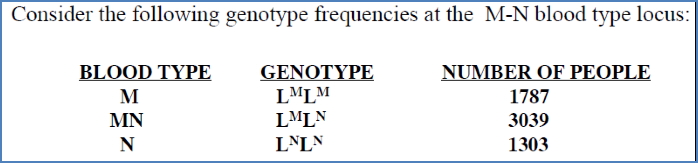
- Evolutionary change is measured as a change in allele frequencies in a population.
- Influenced by:
- Systematic forces (e.g. natural selection)
- Random forces (e.g. mutation, drift)
- Selection acts on phenotypes, but allele frequencies (genotypes) reflect population change.
Hardy Weinberg Principle
Core Equation
Let:
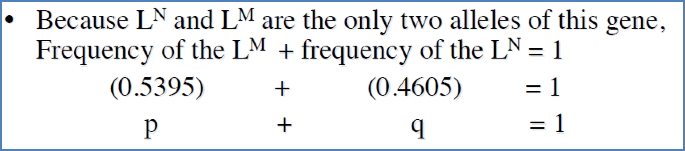
- p = frequency of allele T
- q = frequency of allele t
Then:
- p + q = 1
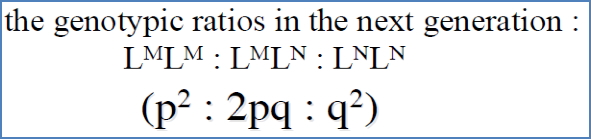
- Genotype frequencies:
- TT = p²
- Tt = 2pq
- tt = q²
→ (p + q)² = p² + 2pq + q² = 1

Extension to Three Alleles
- p + q + r = 1
- (p + q + r)² = p² + q² + r² + 2pq + 2pr + 2qr = 1
Assumptions
Hardy Weinberg Equilibrium assumes:
- Large population size
- Random mating
- No mutation
- No migration
- No selection
→ Under these conditions, allele frequencies remain stable across generations.






Exceptions to Hardy Weinberg Equilibrium
1. Non-Random Mating
- Assortative mating: Preference for similar traits (e.g. height, intelligence).
- Consanguineous mating: Mating between relatives narrows the gene pool.
2. Unequal Survival (Natural Selection)
- Not all genotypes confer equal survival.
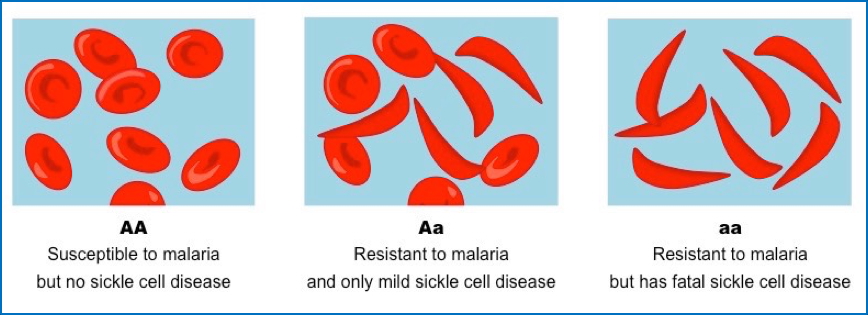
- Heterozygote advantage:
- Sickle cell trait provides malaria resistance:
- Homozygous (SS): Sickle cell disease → disadvantage.
- Heterozygous (AS): Resistance to malaria → advantage.
- Sickle cell trait provides malaria resistance:
3. Mutation-Selection Balance
- Some harmful alleles persist due to a balance between mutation introducing them and selection removing them.

4. Population Subdivision
- Real populations are rarely panmictic (randomly mating).
- Subdivisions occur due to:
- Geography
- Ecology
- Economy
- Culture
- Age
- Social barriers
Founder Effect
- When a small group becomes isolated → reduced genetic diversity and drift.
5. Genetic Drift
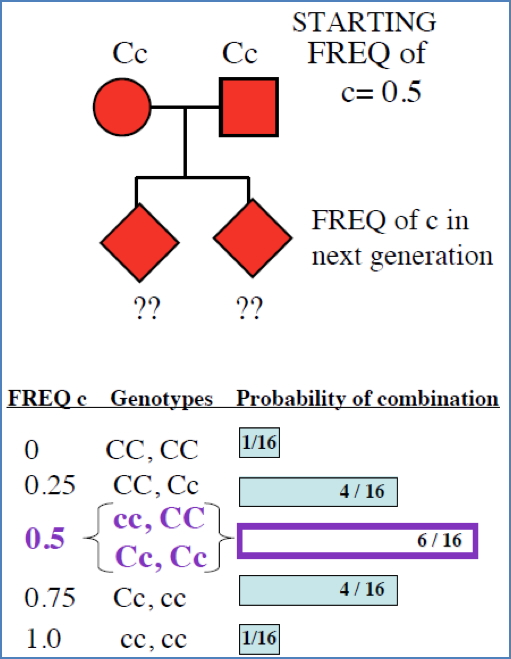
- In small populations, chance events can alter allele frequencies.
- E.g.: Two Cc individuals produce only CC or cc offspring → allele frequency shifts by chance.
6. Migration
- Migration = gene flow.
- Different allele frequencies across populations can disrupt equilibrium.
- If migration stops, equilibrium can be restored in just one generation.

Summary – Environmental Genetics
Environmental genetics combines Darwin’s theory of evolution with modern genetic principles to explain how populations change over time. Natural selection, allele frequency shifts, genetic drift, and the Hardy Weinberg principle all contribute to our understanding of how traits evolve under environmental pressure. For a broader context, see our Genetics & Cancer Overview page.