
Table of Contents
Overview
DNA (deoxyribonucleic acid) is the fundamental molecule that stores genetic information in the nucleus of every human cell. It encodes the instructions for creating all proteins required for growth, repair, and cellular function. Understanding its structure, components, replication mechanisms, and differences from RNA is essential to grasping the molecular basis of human biology and genetics.
Functions
- Acts as the master genetic blueprint for all proteins in the body
- Found within the nucleus of cells (not related to radioactivity despite the term “nuclear”)
- The sole purpose is to encode proteins, which are the building blocks of life
- Directs transcription (into RNA) and translation (into proteins)
- Must be accurately replicated before cell division to ensure continuity of genetic information
Molecular Composition
Nucleic Acids
- DNA is one of the two types of nucleic acids (the other is RNA)
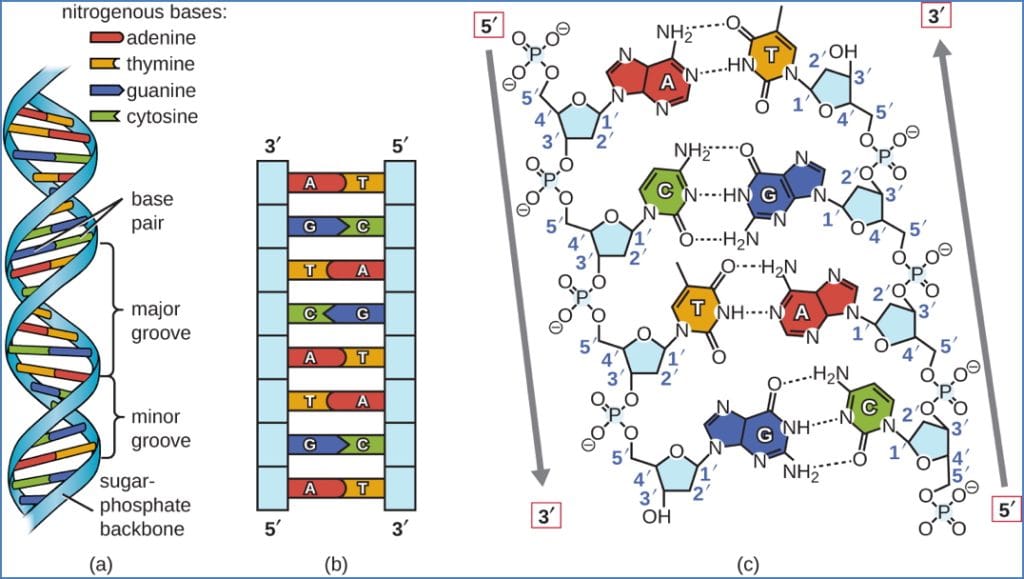
- Composed of two complementary polynucleotide strands
Nucleotides
Each nucleotide contains:
- Deoxyribose sugar (5-carbon ring with hydroxyl on 3’ carbon)
- Phosphate group (attached to the 5’ carbon of sugar)
- Nitrogenous base (one of the following):
- Purines:
- Adenine (A) → pairs with Thymine (T)
- Guanine (G) → pairs with Cytosine (C)
- Pyrimidines:
- Thymine (T) → pairs with Adenine (A)
- Cytosine (C) → pairs with Guanine (G)
- Purines:
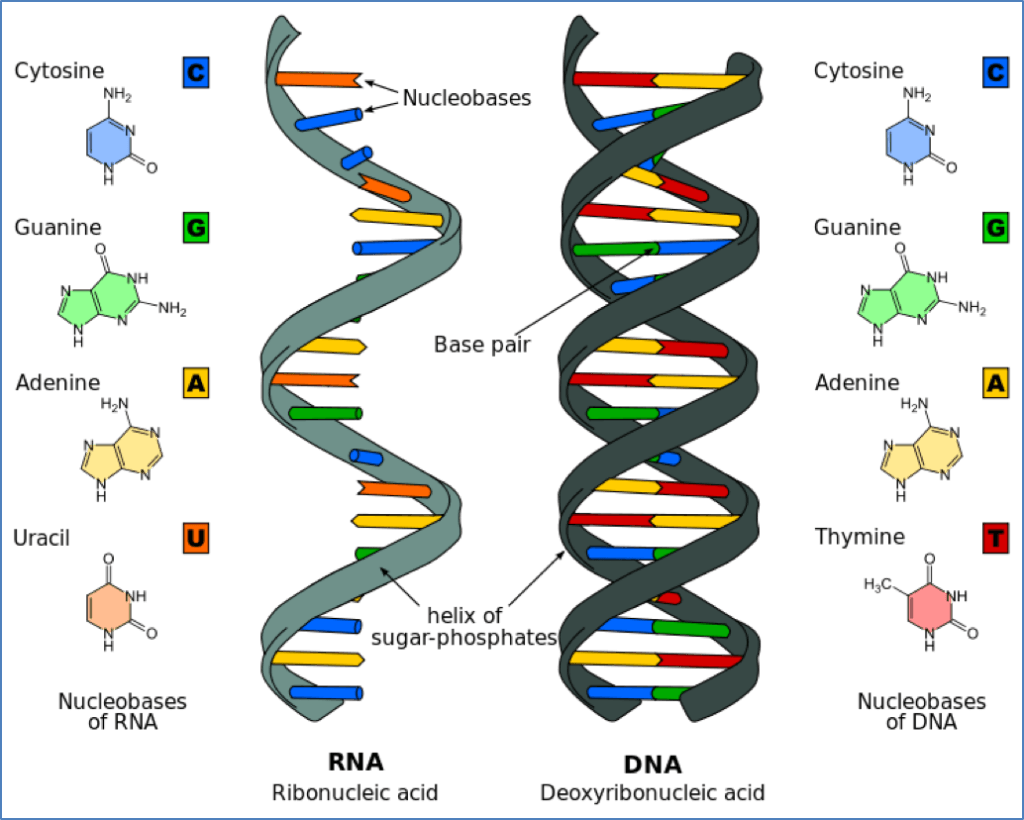
- RNA uses Uracil (U) in place of Thymine
- Strands are held together by hydrogen bonds between complementary base pairs


Structure
Polarity and Antiparallel Orientation
- Each strand has directionality (polarity):
- 5’ end = Phosphate group
- 3’ end = Hydroxyl group
- Antiparallel Orientation: the two strands run in opposite directions
- The strands are twisted into a double helix, providing stability and compactness
DNA vs RNA
| Feature | DNA | RNA |
|---|---|---|
| Sugar | Deoxyribose | Ribose |
| Bases | A, T, G, C | A, U, G, C |
| Strandedness | Double-stranded | Single-stranded |
| Stability | More stable | Less stable |
| Function | Long-term genetic storage | Temporary messenger in protein synthesis |
| Location | Nucleus | Cytoplasm (after transcription) |
- DNA remains in the nucleus, serving as the permanent genetic record
- RNA is a temporary transcript used in protein synthesis, transporting genetic messages to ribosomes
Packaging
Why Packaging is Necessary
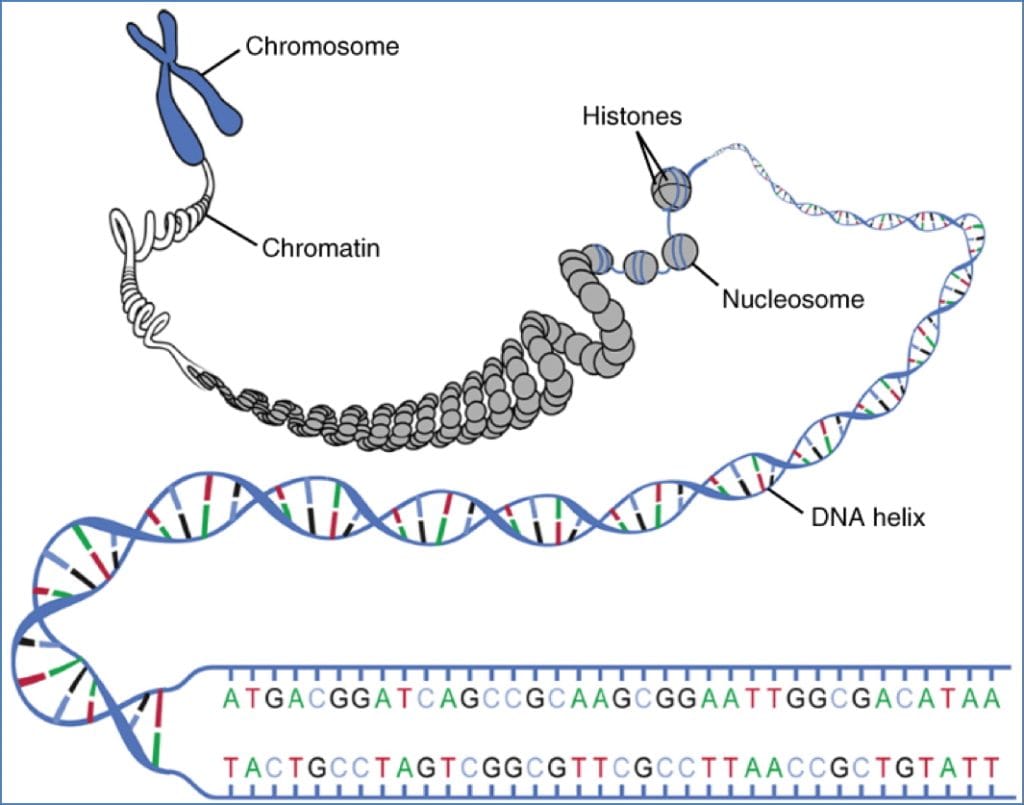
- Uncoiled, DNA molecules would stretch several meters in length per cell
- Packaging is essential to fit it into the nuclear space and regulate gene expression
Levels of Packaging
- Primary coiling: DNA exists as a double helix
- Secondary coiling: The double helix wraps around histone proteins, forming nucleosomes
- Tertiary coiling: Nucleosomes coil into a chromatin fibre
- Further condensation: Chromatin folds into visible chromosomes during cell division
Replication
Purpose and Timing
- Replication occurs during interphase (S phase) of the cell cycle
- Required for cell division and transmission of genetic information
Enzymes and Components Required
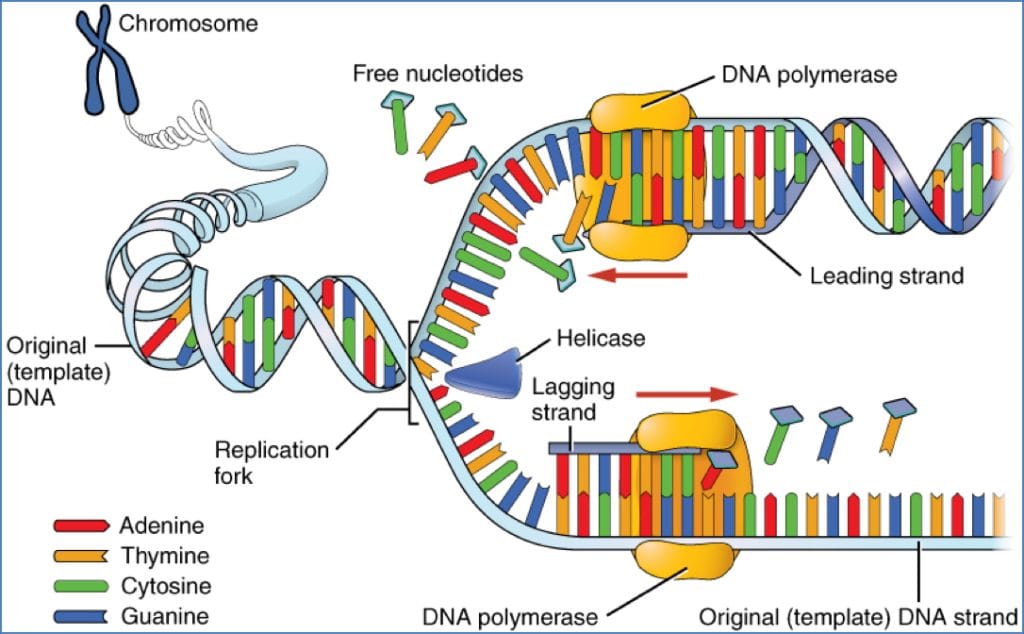
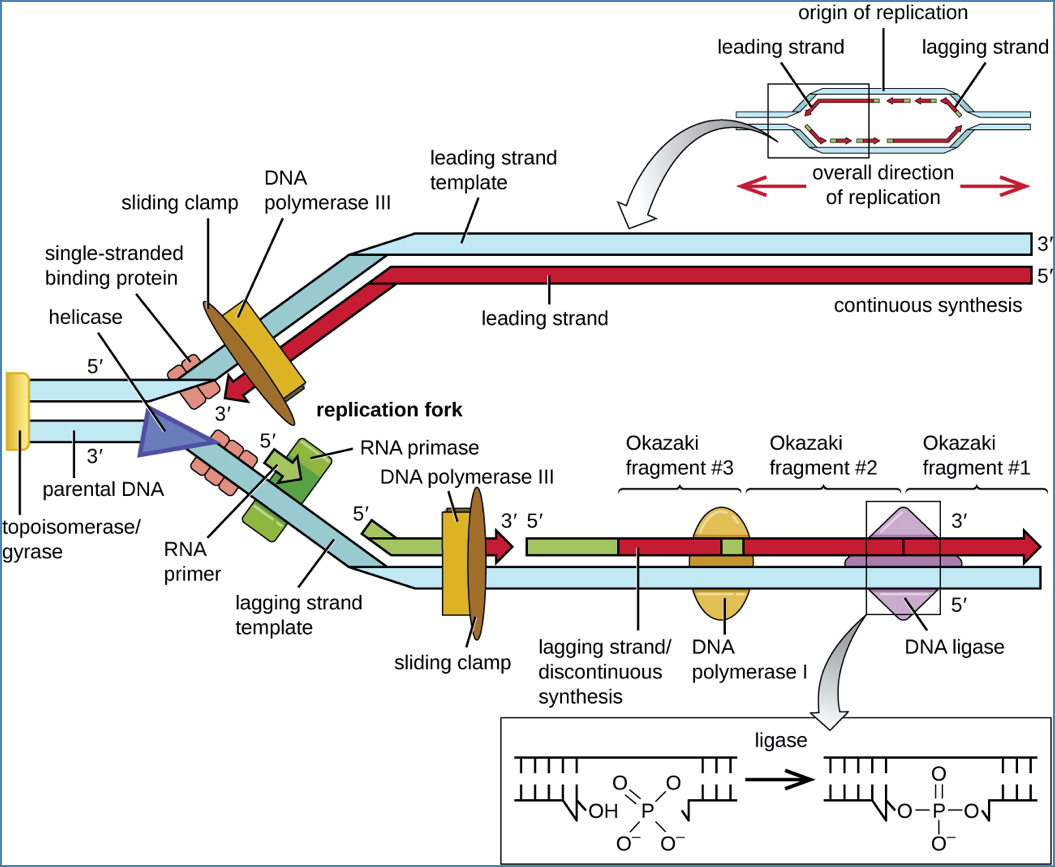
- DNA helicase
- RNA primase
- DNA polymerase III & I
- DNA ligase
- Free nucleotides
- Single-stranded DNA binding proteins
Steps in Replication
- Origins of Replication (ORIs) form at multiple points along the DNA
- DNA helicase unwinds the strands, forming replication forks
- SSB proteins bind to exposed strands to prevent re-annealing
- Leading strand (5’ → 3’, toward helicase):
- Synthesised continuously by DNA polymerase III
- Lagging strand (5’ → 3’, away from helicase):
- RNA primase lays down an RNA primer
- DNA polymerase III synthesises short Okazaki fragments
- DNA polymerase I replaces RNA primers with DNA
- DNA ligase joins Okazaki fragments
- Two helicases per ORI create a replication bubble
- Multiple ORIs create multiple replication bubbles, speeding up the process
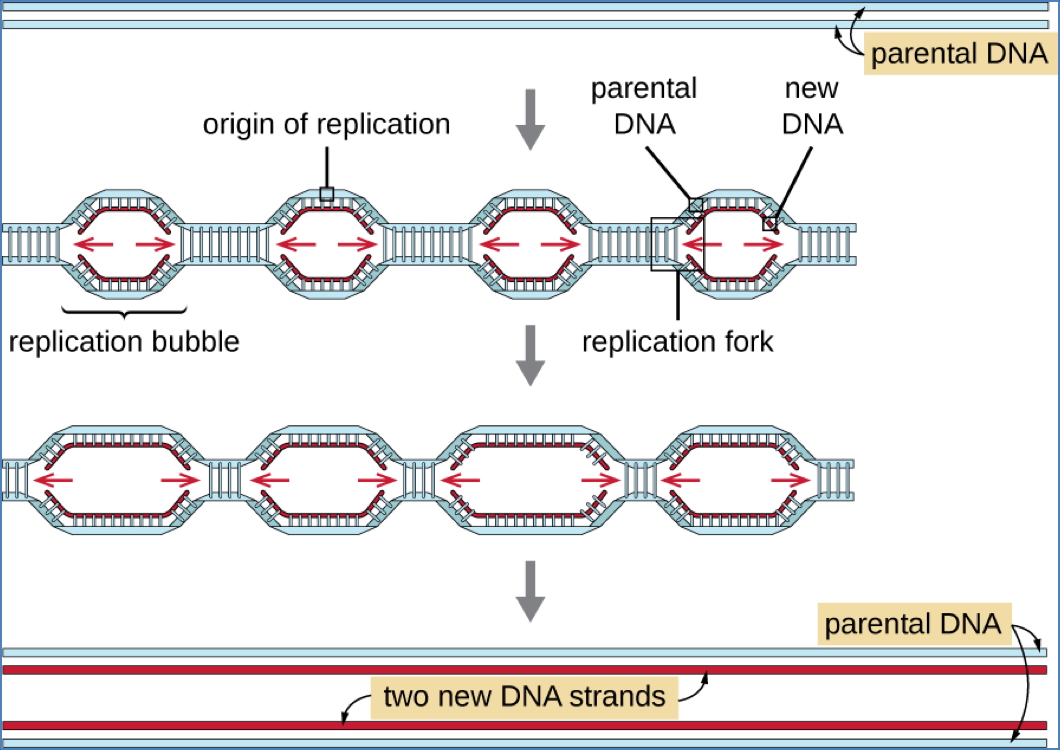
2. **There can be multiple ORIs, and therefore multiple replication bubbles (increases replication rate)**
CNX OpenStax, CC BY 4.0 <https://creativecommons.org/licenses/by/4.0>, via Wikimedia Commons
Summary
Deoxyribonucleic Acid is the double-stranded, nucleotide-based molecule that encodes the genetic instructions for protein synthesis and life processes. With its antiparallel strands, specific base pairing, and complex packaging into chromosomes, DNA is replicated precisely during interphase to maintain genomic integrity. For a broader context, see our Genetics & Cancer Overview page.