
Table of Contents
Overview – Pancreatic Cancer
Pancreatic cancer is a highly aggressive malignancy, most commonly arising from the exocrine pancreas as pancreatic ductal adenocarcinoma. It frequently presents late, with non-specific symptoms or features of biliary obstruction. Prognosis is extremely poor due to delayed diagnosis and early metastatic spread. Recognising key clinical signs like painless jaundice, Courvoisier’s sign, and weight loss is crucial for early suspicion. This page outlines the aetiology, pathophysiology, red flags, investigations, and treatment approaches for pancreatic cancer.
Definition
Pancreatic cancer refers to malignant neoplasms of the pancreas, most often ductal adenocarcinomas arising from the exocrine pancreas. It is a major cause of cancer-related death globally due to its silent progression and limited treatment options.
Aetiology
- Risk factors:
- Smoking
- Alcohol
- Chronic pancreatitis
- Diabetes mellitus
- Familial cancer syndromes (e.g. BRCA mutations, Lynch syndrome)
Pathogenesis
- Arises from the exocrine glandular ducts of the pancreas.
- Progressive dysplasia → adenocarcinoma → local invasion & metastasis.
- 60% arise in the head of the pancreas → causes common bile duct obstruction early in disease course.
Clinical Features
- Typically affects older adults (60–80 years)
- Often asymptomatic until advanced
- Common symptoms and signs:
- Epigastric pain radiating to the back
- Obstructive jaundice
- Steatorrhea
- Palpable gallbladder (Courvoisier’s sign)
- Migratory thrombophlebitis (Trousseau’s syndrome)
- Diabetes mellitus
- Constitutional symptoms:
- Anorexia & weight loss
- Extreme fatigue
- Depression
Investigations
- Imaging:
- Abdominal ultrasound or contrast-enhanced CT scan – first-line
- Tumour markers:
- CEA (Carcinoembryonic antigen) – used to monitor treatment response
- (Note: CA 19-9 also commonly used clinically)
Management
Surgical
- Only curative option, but most patients are inoperable at diagnosis
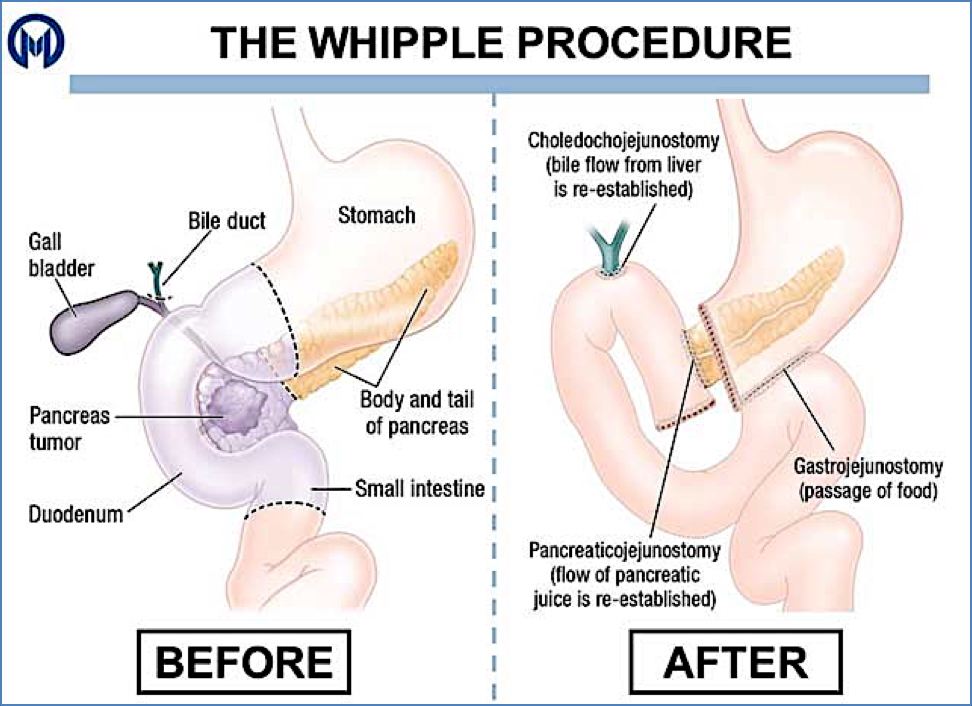
- Whipple procedure (pancreaticoduodenectomy):
- For tumours in the head of the pancreas
- Distal pancreatectomy:
- For tumours in the body or tail
Non-surgical
- Palliative chemotherapy
- Endoscopic stenting (for biliary obstruction)
- Pain management
Complications
- Metastatic disease (common at presentation):
- Liver, peritoneum, lung
- Obstructive jaundice
- Malnutrition and cachexia
Prognosis
- Very poor – typically advanced at diagnosis
- 25% 1-year survival
- <5% 5-year survival
Summary – Pancreatic Cancer
Pancreatic cancer is an aggressive exocrine malignancy with poor prognosis due to late presentation. Most cases are ductal adenocarcinomas affecting the head of the pancreas and may cause obstructive jaundice and weight loss. Early detection is rare but crucial for surgical eligibility. For related conditions, explore our Gastrointestinal Overview page.