
Table of Contents
Overview – Gastrointestinal Absorption
The gastrointestinal absorption process transforms the products of digestion into usable nutrients and transfers them into blood or lymph. Most absorption occurs in the small intestine, with water, electrolytes, and nutrients efficiently transported via specialised mechanisms. Understanding where and how different substances are absorbed is vital for managing malabsorption syndromes, fluid imbalance, and nutritional deficiencies.
Water Absorption

- Daily GI Water Load: ~9000 mL
- Secretions + oral intake
- Water Excreted: <200 mL/day
- Nearly all absorbed back into circulation
Mechanism of Absorption
- Osmosis: Movement of water toward hypertonic environments
- Follows Na⁺ ions, but can occur independently
- Aquaporins: Facilitate water transport across cell membranes
Key Absorptive Sites
Jejunum
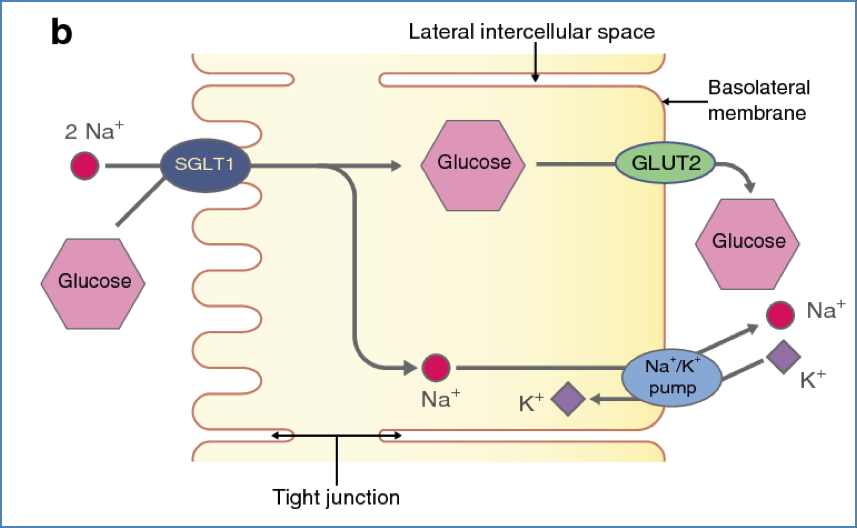
- Na⁺/K⁺ ATPase sets up low intracellular Na⁺
- Na⁺ enters via SGLT1 (with glucose)
- Glucose exits basally via GLUT2
- H₂O follows Na⁺ and glucose via osmosis
- Clinical relevance: Oral rehydration therapy uses glucose + Na⁺
Ileum
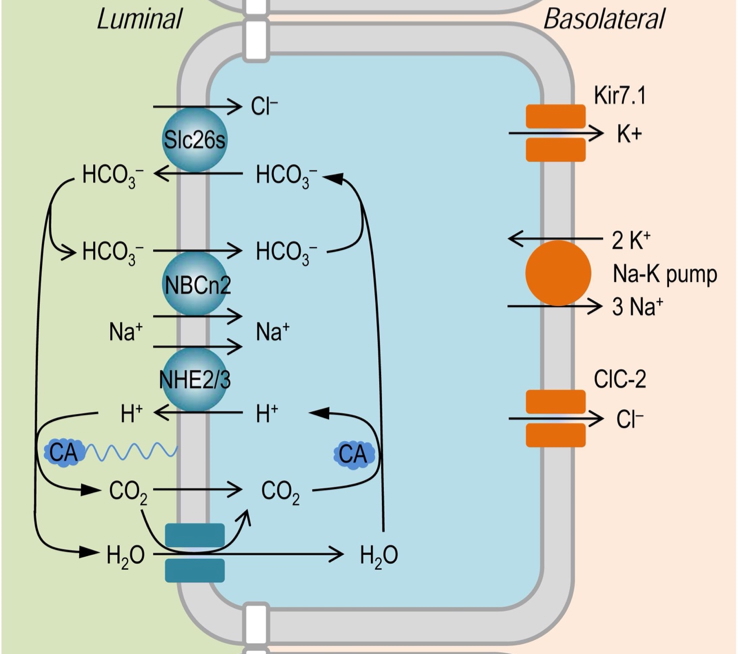
- Na⁺ enters via Na⁺/H⁺ antiporter
- H⁺ secreted to lumen; HCO₃⁻ follows to balance charge
- Cl⁻ enters and diffuses basally
- Maintains electrolyte neutrality
Colon
- Na⁺ absorbed via ion channels
- K⁺ leaks back via basolateral channels
- Net effect: fluid conservation and potassium homeostasis

Carbohydrate Absorption
Daily Intake: ~200–600 g
- Primary energy source (~50% of total calories)
- Energy content: 16 kJ/g
Digestion Sequence
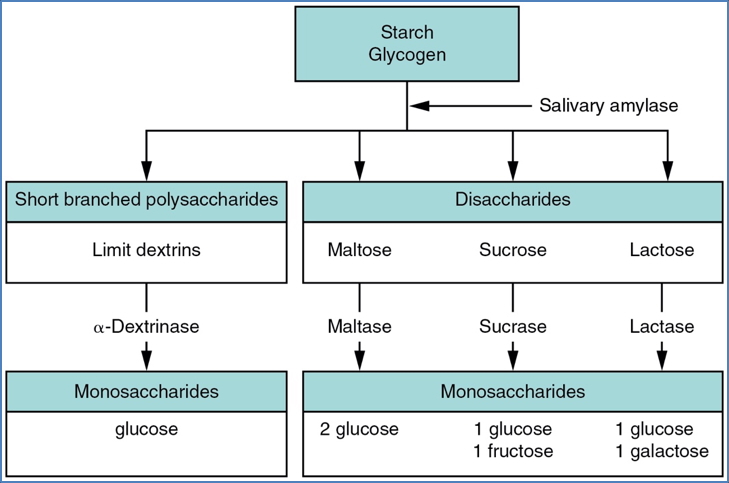
- Mouth:
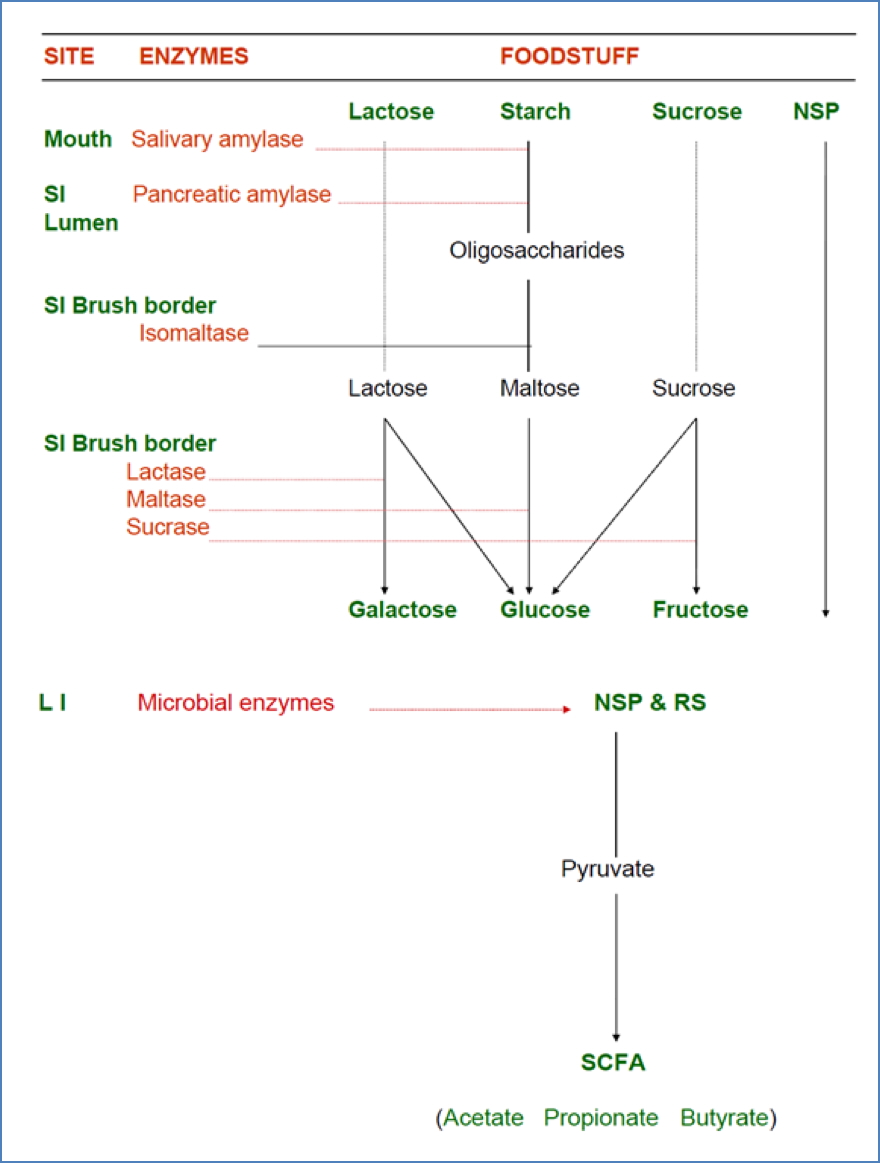
- Salivary α-Amylase → starch → oligosaccharides
- Inactivated by stomach acid
- Small Intestine Lumen:
- Pancreatic α-Amylase → oligosaccharides → disaccharides
- Stimulated by CCK, aided by bicarbonate (via secretin)
- Brush Border (SI):
- Multifunctional enzymes:
- Sucrase → Sucrose → Glucose + Fructose
- Lactase → Lactose → Glucose + Galactose
- Maltase → Maltose → Glucose
- Isomaltase → Maltriose → Glucose
- Multifunctional enzymes:

- Large Intestine:
- Fermentation of undigested NSPs/Resistant starches → SCFAs (acetate, propionate, butyrate)
- Absorbed into blood
Absorption Mechanisms
| Sugar | Apical Transporter | Basal Transporter |
|---|---|---|
| Glucose | SGLT1 | GLUT2 |
| Galactose | SGLT1 | GLUT2 |
| Fructose | GLUT5 | GLUT2 |
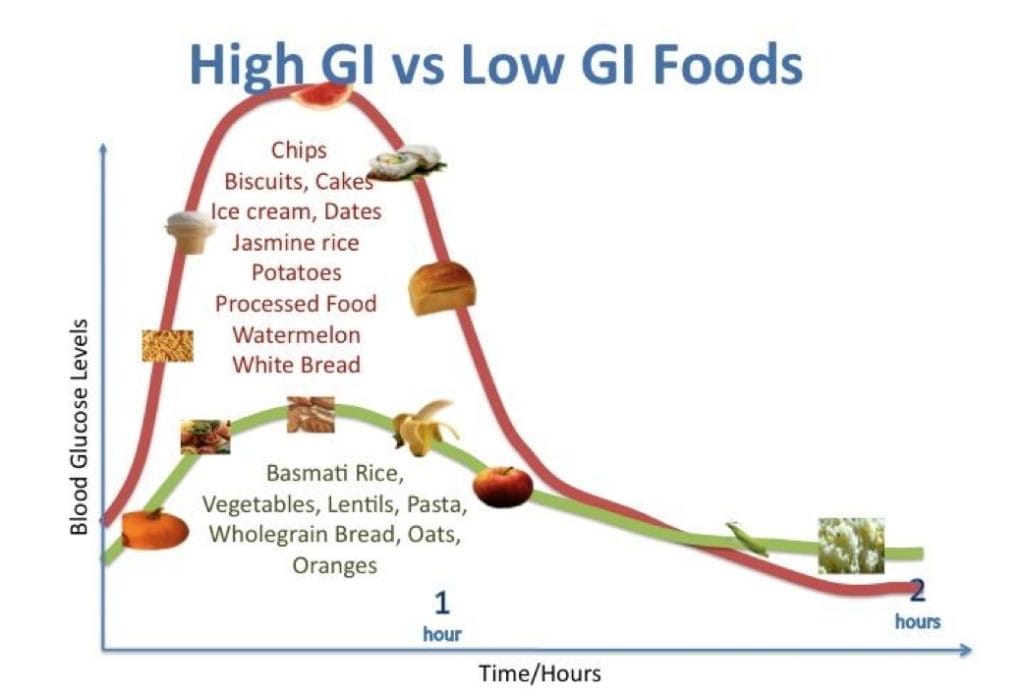
Glycaemic Index (GI)
- Measures how rapidly a carb elevates blood glucose
- High GI: Rapid release (e.g. glucose, white bread)
- Low GI: Slow release (e.g. oats, legumes)
Dietary Fibre
- Soluble Fibre: Fermented by colonic bacteria (e.g. oats, fruits)
- Insoluble Fibre: Adds bulk, resists fermentation (e.g. cellulose)
- Resistant Starch: Functions like fibre; fermented to SCFAs
Protein Absorption
Daily Intake: ~125 g
- Required for essential amino acids
- Newborns absorb intact IgA for passive immunity
Digestion
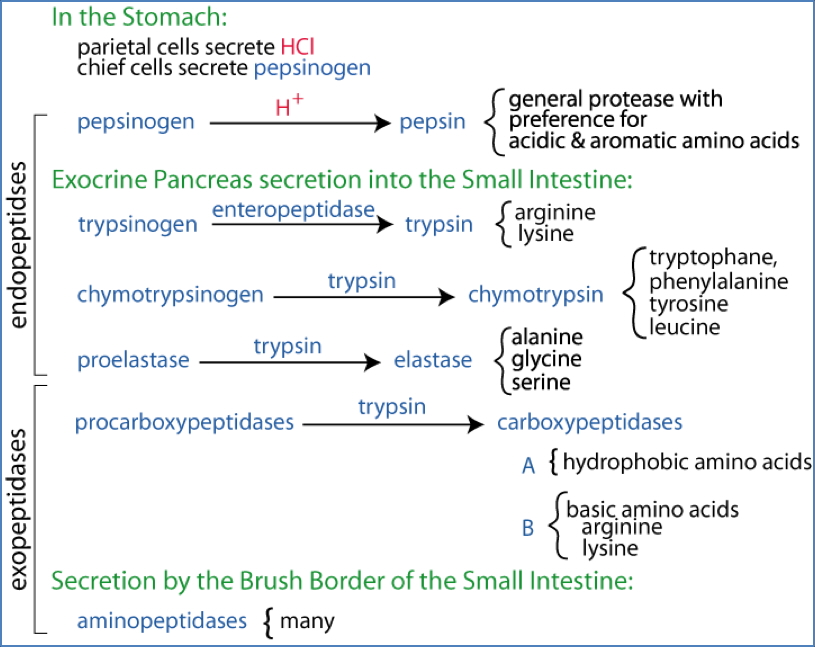
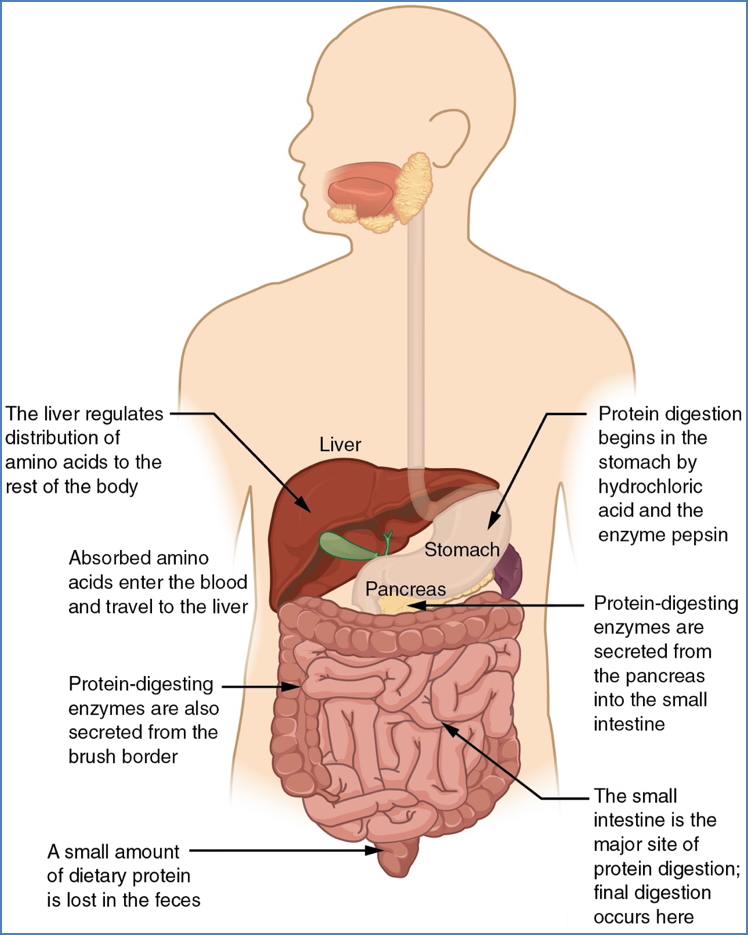
- Stomach:
- Pepsinogen (Chief cells) + HCl (Parietal cells) → Pepsin
- Pepsin = an endopeptidase – breaks peptide bonds within chains
- Secreted as a zymogen to prevent autolysis
- Small Intestine:
- Pancreatic Proteases:
- Trypsinogen → Trypsin (via brush border enzyme)
- Chymotrypsinogen → Chymotrypsin
- Procarboxypeptidase → Carboxypeptidase
- Brush Border Enzymes:
- Aminopeptidase, Dipeptidase → single amino acids
- Pancreatic Proteases:
Absorption
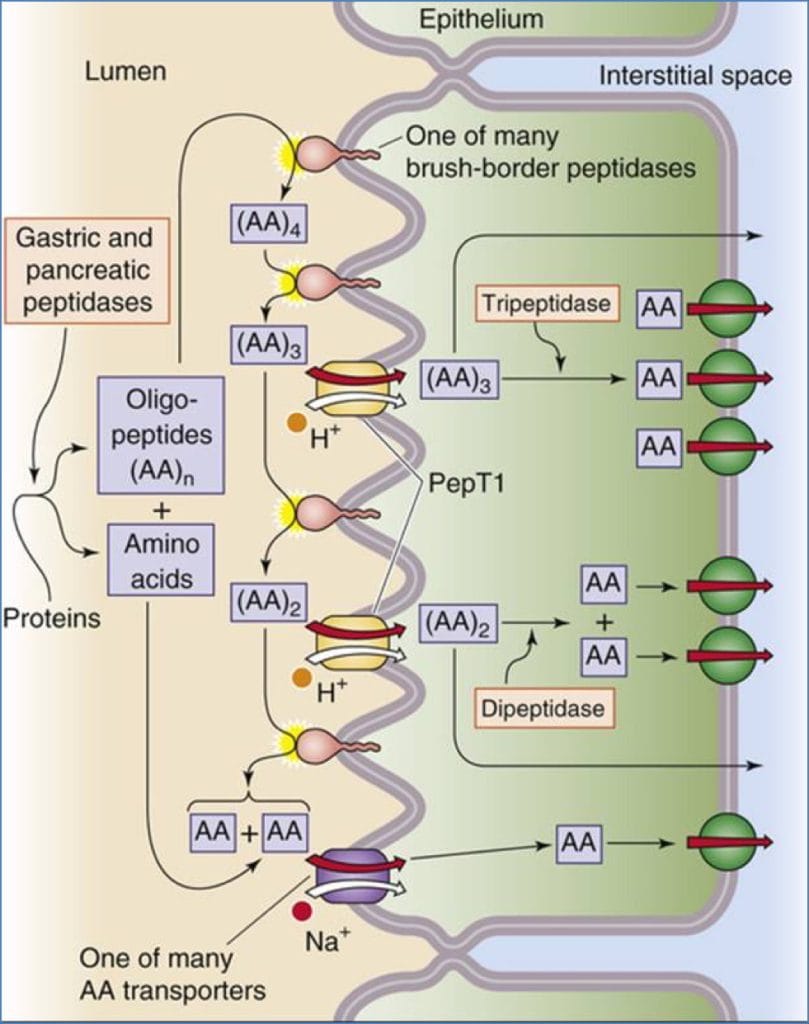
- Mostly as amino acids, dipeptides, tripeptides
- Co-transported with Na⁺ via enterocyte apical membrane
- Intracellular peptidases complete digestion
- Basolateral transport → capillaries in villi
Lipid Absorption
Average Intake: 60–100 g/day
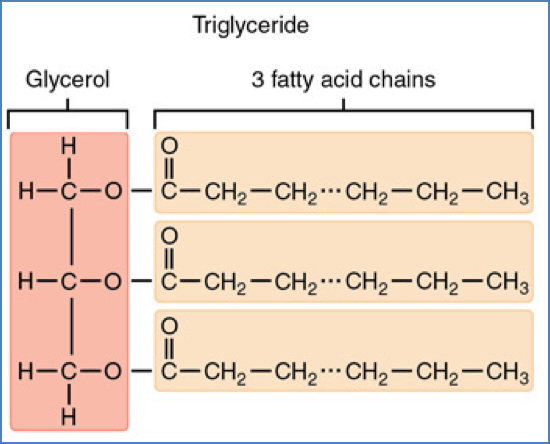
- 90% = Triglycerides, remainder = cholesterol, phospholipids, vitamins A/D/E/K
Digestion
- Emulsification:
- Begins in stomach → enhanced by bile salts in duodenum
- Bile salts = amphiphilic → ↑ surface area

- Lipases:
- Gastric lipase (chief cells)
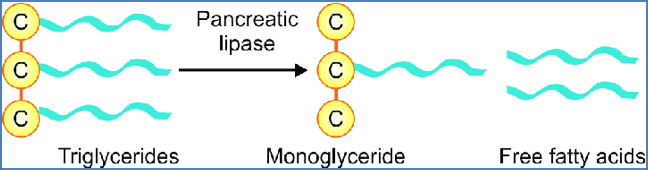
- Pancreatic lipase (secreted in active form)
- TAG → monoglyceride + 2 free fatty acids

Absorption
- Micelle formation:
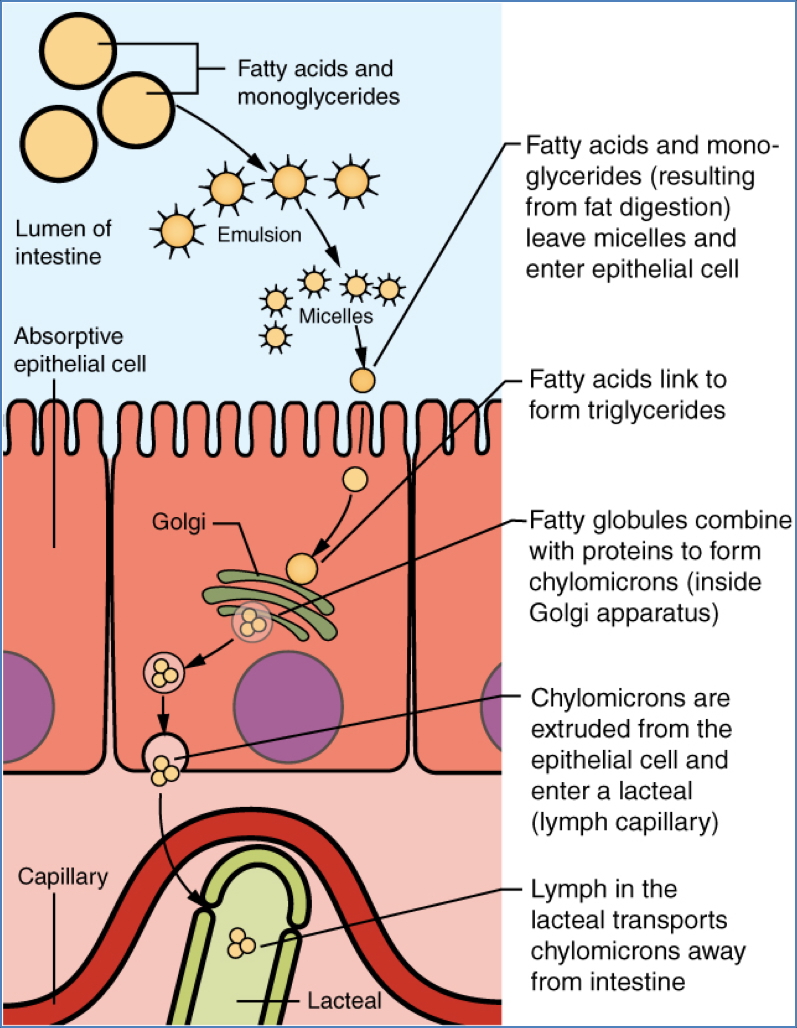
- Fatty acids + monoglycerides + bile salts → micelles
- Micelles deliver lipids to enterocyte membrane
- Inside enterocyte:
- Reassembled into triglycerides
- Packaged with cholesterol & proteins → chylomicrons
- Exocytosed into lacteals → lymph → blood
- Cholesterol:
- Absorbed via transporter
- Incorporated into chylomicrons
- Regulated by balance of absorption/synthesis/excretion

Summary – Gastrointestinal Absorption
Gastrointestinal absorption ensures the efficient uptake of water, electrolytes, carbohydrates, proteins, and lipids. Most absorption occurs in the small intestine via specialised transporters, enzymatic processes, and osmotic gradients. Carbohydrates are absorbed as monosaccharides, proteins as amino acids/peptides, and lipids via chylomicrons. For a broader context, see our Gastrointestinal Overview page.