
Table of Contents
Overview – Blood Pressure Physiology
Blood pressure physiology is essential for understanding how the cardiovascular system maintains tissue perfusion under varying physiological conditions. It encompasses the mechanisms that regulate systolic, diastolic, pulse, and mean arterial pressure, integrating neural, endocrine, and local vascular control to ensure stable circulation.
Factors Influencing Blood Pressure
BP = Cardiac Output × Total Peripheral Resistance
- Cardiac Output
- ↑ Cardiac output → ↑ Blood pressure
- Peripheral Resistance
- Backpressure in arteries opposes forward flow
- Increased in conditions like obesity
- Blood Volume
- ↑ Blood volume (with constant vessel size) → ↑ Blood pressure
- Effect depends on vessel compliance
Types of Blood Pressure
Systolic Pressure
- Peak aortic pressure during ventricular systole
- Determined by:
- Peak ejection rate
- Vessel wall compliance
- Diastolic pressure
- Normal: ~120 mmHg
Diastolic Pressure
- Lowest aortic pressure during ventricular diastole
- Determined by:
- Blood volume
- Heart rate
- Peripheral resistance
- Normal: ~80 mmHg
Pulse Pressure
Pulse Pressure = Systolic – Diastolic
- Reflects the strength of each heartbeat
- Normal: ~40 mmHg
- ↓ Pulse pressure may indicate aortic stenosis or atherosclerosis
Mean Arterial Pressure (MAP)
MAP = Diastolic + 1/3(Pulse Pressure)
- The average arterial pressure driving blood into tissues
- Critical for capillary perfusion
- Must exceed peripheral resistance to ensure flow
- Finely regulated by neural, endocrine, and local mechanisms
Regulation of Mean Arterial Pressure
1. Autoregulation (Local Tissue Control)
- Intrinsic vasodilation/constriction adapts flow to local tissue needs
Metabolic Vasodilators
- Low oxygen/nutrient levels
- Nitric oxide
- Inflammatory mediators (e.g. prostaglandins, kinins)
Myogenic Mechanism
- ↑ Vascular pressure → passive stretch → vasoconstriction
- ↓ Stretch → vasodilation → increased local flow
- Prevents excessive perfusion that could damage capillaries
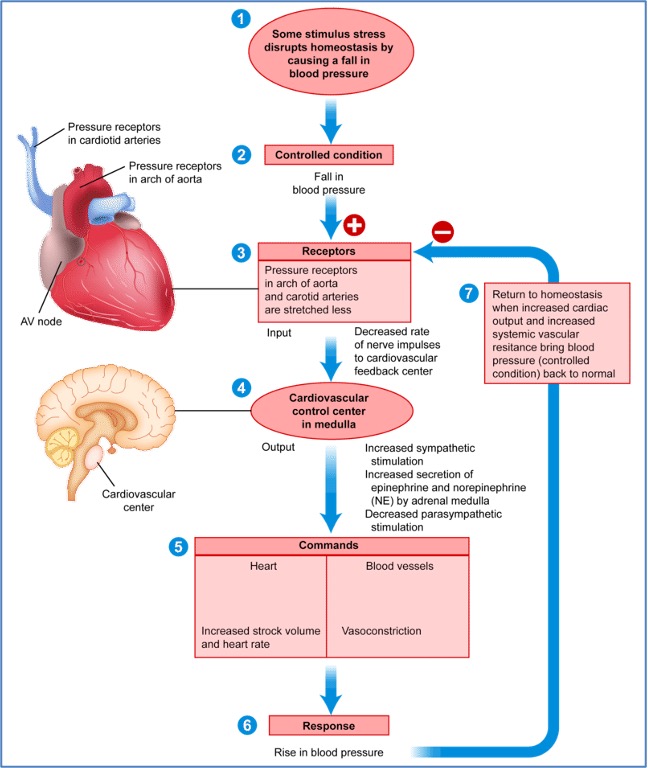
2. Neural Regulation
- Medullary vasomotor centres receive input from:
- Baroreceptors (main)
- Chemoreceptors (supportive role)
Autonomic Nervous System
- ↑ Sympathetic tone → vasoconstriction → ↑ MAP
- ↓ Sympathetic tone → vasodilation → ↓ MAP
- Sympathetic input also increases heart rate and contractility
3. Endocrine Regulation
Important for long-term BP and volume control
Antidiuretic Hormone (ADH / Vasopressin)
- Triggered by low volume
- Promotes water reabsorption → ↑ MAP
Angiotensin II
- Activated in response to hypotension
- Potent vasoconstrictor
- ↑ Cardiac output and blood volume
- Formed via ACE — target of ACE inhibitors
Erythropoietin (EPO)
- Released during hypoxia or hypotension
- Stimulates red blood cell production → ↑ Blood volume → ↑ MAP
Natriuretic Peptides (ANP, BNP)
- Released from atria/ventricles in response to stretch
- ↑ Diuresis and ↓ RAAS activity → ↓ BP and volume

Summary – Blood Pressure Physiology
Blood pressure physiology explores how pressure is generated, maintained, and regulated throughout the body via interactions between cardiac output, resistance, and blood volume. These mechanisms ensure continuous tissue perfusion and adapt to physiological demands through local, neural, and endocrine control systems. For a broader context, see our Cardiovascular Overview page.