
Table of Contents
Overview – Non-Hodgkin’s Lymphomas
Non-Hodgkin’s Lymphomas (NHLs) comprise a broad and diverse group of malignant lymphoid neoplasms, excluding Hodgkin’s Lymphoma. They can occur at any age and range from indolent to highly aggressive subtypes. NHLs often present with painless lymphadenopathy, systemic “B” symptoms, and in many cases, widespread organ involvement. Despite advances in therapy, Non-Hodgkin’s Lymphomas carry a poorer prognosis compared to Hodgkin’s Lymphoma.
Definition
- A heterogeneous group of malignant lymphoproliferative disorders
- Distinguished from Hodgkin’s Lymphoma by the absence of Reed-Sternberg cells
- Encompasses both B-cell and T-cell lymphomas
- Subtypes vary in aggressiveness and clinical behaviour
Aetiology
- Viral associations:
- HTLV-1, EBV, HHV8, HIV, H. pylori
- Environmental triggers:
- Pesticides
- Organic solvents
- Immunosuppression (e.g., post-transplant, autoimmune disease)
Pathophysiology
- Malignant transformation of B-cells or T-cells
- Leads to abnormal accumulation of lymphocytes in:
- Lymph nodes
- Peripheral blood
- Extranodal organs (e.g., brain, skin, GIT, testes)
- Often more disseminated at diagnosis compared to Hodgkin’s
Clinical Features
Prognosis
- Generally poor – median survival ≈ 5 years for treated patients
- Aggressiveness depends on lymphoma subtype (e.g., DLBCL vs follicular)
Signs & Symptoms
- Painless, asymmetrical lymphadenopathy (cervical, axillary, or inguinal)
- B symptoms:
- Fever
- Night sweats
- Weight loss
- Organomegaly:
- Hepatomegaly and splenomegaly
- Extranodal involvement (more common than Hodgkin’s):
- GI tract, lungs, CNS, skin, thyroid, testes
Investigations
- Lymph node biopsy (definitive diagnosis)
- Bone marrow biopsy (for staging and marrow involvement)
- Imaging:
- CT chest/abdo/pelvis
- PET scan – functional staging and treatment response
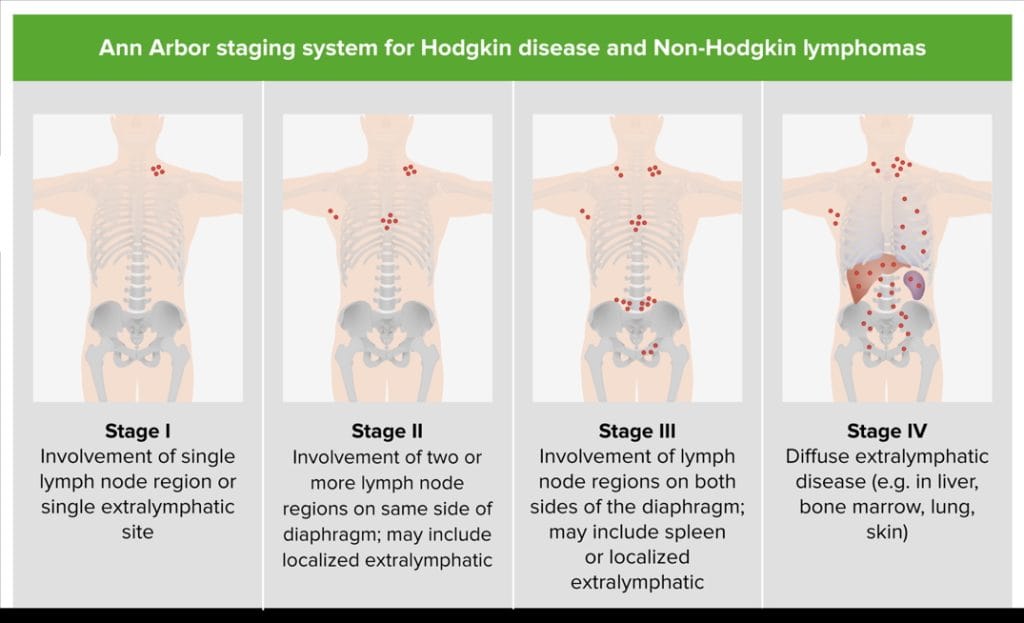
- Ann Arbor Staging System
- Stage I–IV classification with modifiers A/B (for B symptoms)
Management
- Depends on histological subtype and stage
- Radiotherapy:
- May be curative for early/localised disease
- Chemotherapy:
- Required for advanced or diffuse disease
- CHOP regimen commonly used (Cyclophosphamide, Doxorubicin, Vincristine, Prednisone)
- Monoclonal antibodies:
- E.g., Rituximab (anti-CD20) for B-cell NHLs
- Bone marrow transplant:
- Considered in aggressive or relapsed cases
Summary – Non-Hodgkin’s Lymphomas
Non-Hodgkin’s Lymphomas are a diverse group of malignant lymphoid neoplasms often presenting with painless lymphadenopathy, B symptoms, and extranodal involvement. Prognosis varies by subtype but is generally poorer than Hodgkin’s Lymphoma. For staging and treatment planning, both biopsy and imaging are essential. For more, visit our Blood & Haematology Overview page.