
Table of Contents
Overview – Myelodysplastic Syndromes
Myelodysplastic Syndromes (MDS) are a group of clonal bone marrow disorders characterised by defective differentiation of myeloid stem cells. This results in ineffective haematopoiesis, peripheral cytopaenias, and risk of progression to acute leukaemia. Most commonly seen in older adults, MDS presents with symptoms of anaemia, infection, and bleeding. Early recognition and supportive treatment are essential, with definitive therapy involving stem cell transplant in selected patients.
Definition
- A spectrum of pre-leukaemic bone marrow disorders
- Characterised by ineffective myeloid cell production → cytopaenias despite hypercellular marrow
- Associated with risk of progression to acute myeloid leukaemia (AML)
Aetiology
- Mostly idiopathic (primary MDS)
- Secondary MDS may occur following:
- Chemotherapy
- Radiotherapy
- Toxin exposure (e.g. benzene)
Pathophysiology
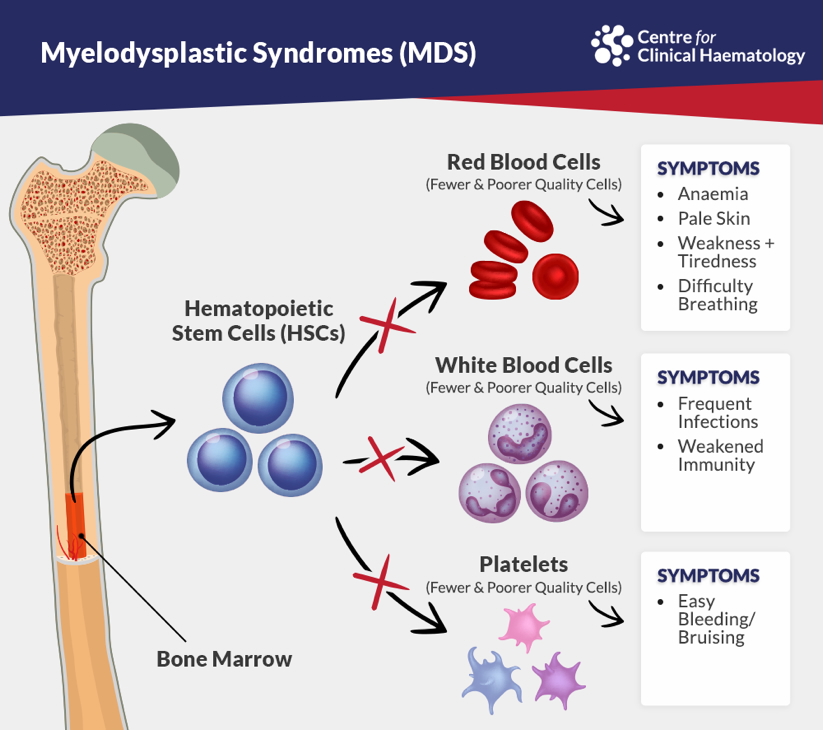
- Defective differentiation of myeloid progenitor cells
- Bone marrow becomes hypercellular, but with dysplastic cells that fail to mature
- Leads to:
- Anaemia (↓ RBCs)
- Neutropenia (↓ neutrophils)
- Thrombocytopenia (↓ platelets)
- Up to 30% progress to AML
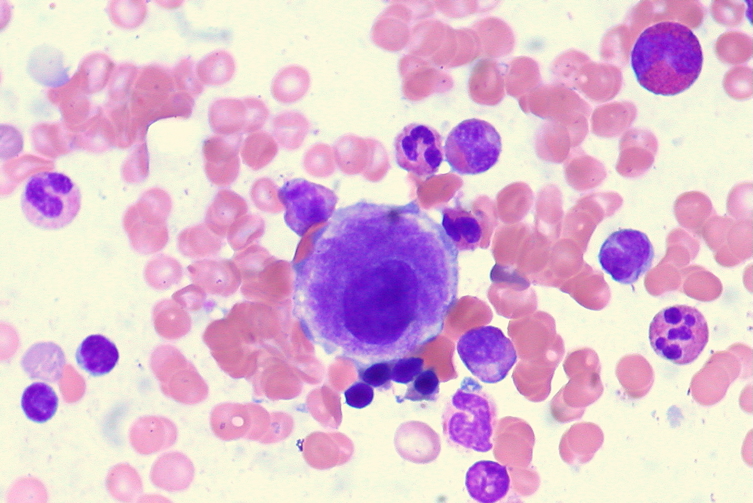
Morphology
- Bone Marrow Biopsy:
- Hypercellular marrow
- Dysplastic features in granulocytes and megakaryocytes
- Ringed sideroblasts
- Increased blast cells (but <20%, otherwise = AML)
- Peripheral Blood Smear:
- Cytopaenias
- Anisopoikilocytosis
- Occasional blasts
Clinical Features
- Most common in elderly patients (age 60–75)
- Often asymptomatic at first
- Symptoms related to pancytopenia:
- Fatigue, pallor (anaemia)
- Infections, fever (neutropenia)
- Easy bruising, bleeding gums (thrombocytopenia)
Diagnosis
Diagnostic Triad
- One or more cytopaenias (anaemia, thrombocytopenia, neutropenia)
- Hypercellular bone marrow
- Evidence of dysmyelopoiesis (dysplasia in marrow precursors)
Additional Tests
- FBC + blood film
- Bone marrow biopsy + aspirate
- Cytogenetics (e.g. 5q deletion, monosomy 7)
Management
- Supportive care:
- RBC transfusions for symptomatic anaemia
- Platelet transfusions for bleeding
- Growth factors:
- Erythropoietin (EPO)
- Granulocyte colony-stimulating factor (G-CSF)
- Low-intensity chemotherapy:
- Hypomethylating agents (e.g. azacitidine)
- Allogeneic bone marrow transplant:
- Only curative option
- Consider in younger/fit patients with high-risk disease
Summary – Myelodysplastic Syndromes
Myelodysplastic Syndromes are clonal marrow disorders characterised by ineffective myeloid cell differentiation, leading to pancytopenia and a significant risk of transformation to acute myeloid leukaemia. Common in elderly patients, symptoms include fatigue, infections, and bleeding. Diagnosis is made with marrow biopsy and cytogenetics. Treatment ranges from supportive care to curative marrow transplantation. For a broader context, see our Blood & Haematology Overview page.