
Table of Contents
Overview – Stasis Dermatitis
Stasis dermatitis, also known as venous eczema, is a chronic inflammatory skin condition affecting the lower legs due to underlying venous insufficiency. Common in older adults, it is characterised by erythematous, scaly, and itchy plaques, often with haemosiderin pigmentation and oedema. Recognising and managing stasis dermatitis is essential to prevent complications such as venous ulcers and secondary infection.
Aetiology
- Caused by venous insufficiency and prolonged hydrostatic pressure
- Gravity and poor venous return play central roles
Epidemiology
- Most common in middle-aged to elderly individuals
- Affects ~20% of people over 70 years
- Risk factors:
- Deep vein thrombosis (DVT) history
- Varicose veins
- Chronic venous leg ulcers
Pathophysiology
- Failure of calf muscle pump → venous pooling
- Leads to increased venous hydrostatic pressure
- Causes fluid leakage into interstitial tissue → triggers innate immune response
- Chronic inflammation contributes to skin breakdown and pigment deposition
Clinical Features
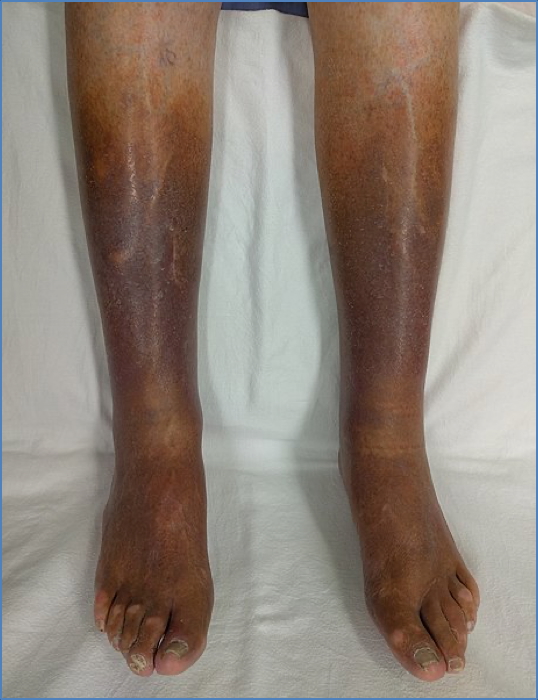
- Localised or confluent eczematous plaques on one or both lower legs
- Itchy, red, blistered, and crusted lesions
- May have:
- Haemosiderin pigmentation (orange-brown macules)
- Oedema
- “Champagne bottle-shaped” legs from chronic inflammation and fibrosis
- Can lead to venous ulcers if unmanaged
Management
1. Reduce Dependent Oedema
- Elevate legs when seated
- Elevate legs above heart level overnight
- Encourage regular ambulation
- Use graduated compression stockings long-term
2. Treat the Eczema
- Astringent soaks:
- Potassium permanganate or dilute vinegar compresses for oozing areas
- Topical steroids to reduce inflammation
- Moisturising creams to restore barrier
- Oral antibiotics if secondary bacterial infection is suspected
- Advise to avoid trauma or irritation to skin
3. Treat Underlying Venous Disease
- Referral to vascular surgery
- Consider:
- Sclerotherapy
- Endovenous laser treatment
Summary – Stasis Dermatitis
Stasis dermatitis is a common cutaneous manifestation of venous insufficiency, typically affecting older adults with risk factors like varicose veins or DVT. Management includes compression therapy, topical treatments for inflammation, and addressing underlying venous disease. Early intervention can prevent complications such as ulcers and infections. For a broader context, see our Skin & Dermatology Overview page.