
Table of Contents
Overview – Pneumoconioses
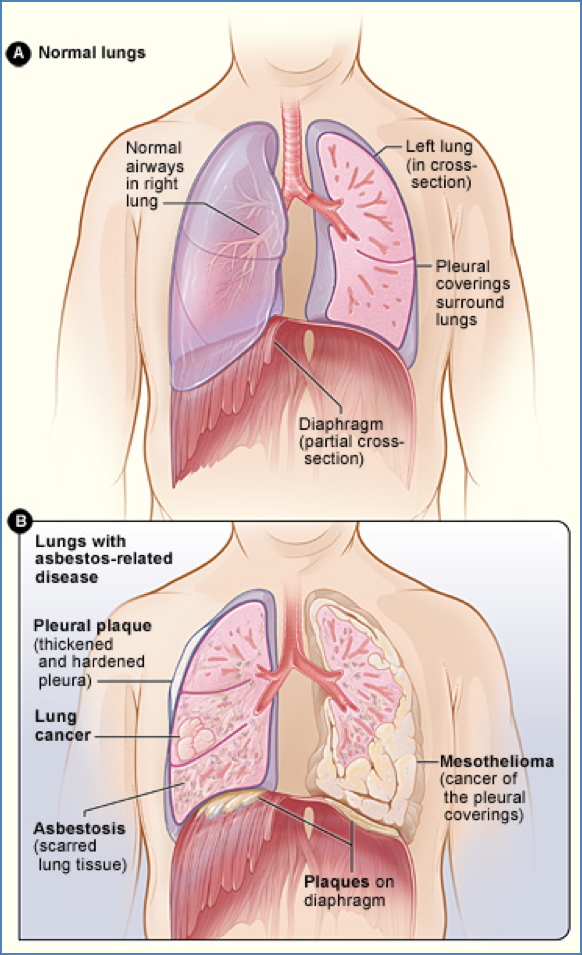
Pneumoconioses are a group of restrictive lung diseases caused by chronic inhalation of mineral dusts. These dusts trigger macrophage activation, leading to inflammation and progressive fibrosis, most commonly affecting the lung interstitium. Types include asbestosis, silicosis, and anthracosis, each linked to distinct occupational exposures. Long latency and poor reversibility make early recognition and exposure prevention critical.
Asbestosis
Aetiology
- Inhalation of asbestos micro-fibres, typically in industrial occupations (e.g. shipbuilding, insulation, construction).
Pathogenesis
- Asbestos fibres deposit in alveoli
- → Macrophage activation
- → Chronic inflammation and cytokine release
- → Interstitial fibrosis
- ↓ Elasticity and gas exchange
- Strong association with mesothelioma and bronchogenic carcinoma
Morphology
- Lower lobe predominant interstitial fibrosis
- Presence of ferruginous bodies (iron-coated asbestos fibres) on histology
Clinical Features
- Long latency period (10–30 years post-exposure)
- Progressive dyspnoea
- Chronic productive cough
- Inspiratory crackles on auscultation
Investigations
- Spirometry: Restrictive pattern (↓VC, ↓TLC)
- CT chest: Interstitial fibrosis, pleural plaques, mesothelioma
- Biopsy: Ferruginous bodies on histology
Management
- No disease-specific treatment
- Supportive care: O₂ therapy, pulmonary rehabilitation
- Surgical: Pleurectomy for mesothelioma in selected cases
Complications
- Mesothelioma
- Pleural effusion
- Cor pulmonale
- Respiratory failure
Anthracosis (Coal Miner’s Lung)
Aetiology
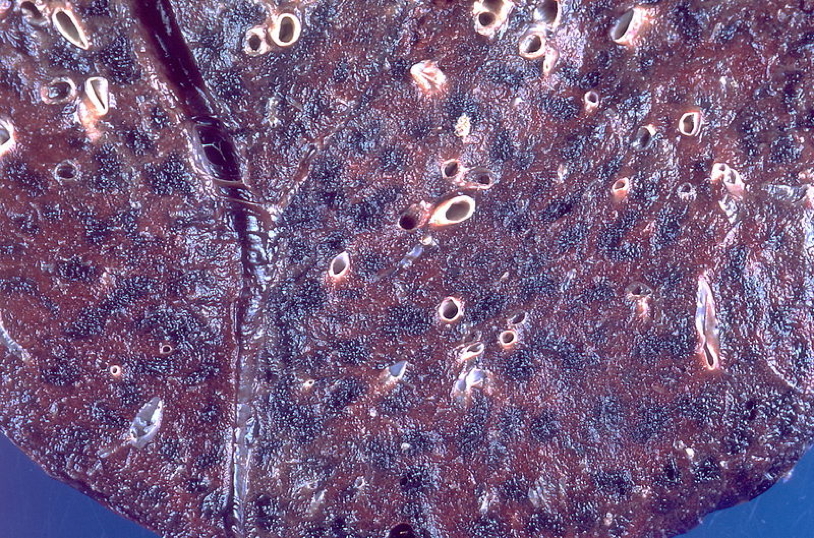
- Inhalation of carbon (coal) dust, usually in miners
Pathogenesis
- Carbon particles engulfed by alveolar macrophages
- → Chronic inflammation → Interstitial fibrosis (mild)
Clinical Features
- Often asymptomatic or mildly symptomatic
- Dyspnoea, chronic cough
- Preserved lung function in simple cases
Investigations
- CXR: Small nodular opacities
- Lung biopsy (if needed): Carbon-laden macrophages
Management
- Supportive care
- Prevent further exposure
Silicosis
Aetiology
- Inhalation of crystalline silica dust (e.g. sandblasting, stone cutting, quarry work)
Pathogenesis
- Silica particles engulfed by alveolar macrophages
- → Macrophage death and cytokine release
- → Nodular interstitial fibrosis
Clinical Features
- Often asymptomatic early on
- Later: Progressive dyspnoea, cough, cyanosis
- ↑ Susceptibility to tuberculosis
Investigations
- Spirometry: Restrictive pattern (↓VC, ↓TLC)
- CXR/CT: Upper lobe nodules, “eggshell” calcifications of lymph nodes
Management
- Supportive care
- Tuberculosis screening and management
- Avoid further silica exposure

Summary – Pneumoconioses
Pneumoconioses are chronic interstitial lung diseases caused by long-term inhalation of inorganic dusts such as asbestos, silica, and coal. While some forms like anthracosis are benign, others, such as asbestosis and silicosis, can progress to severe complications including mesothelioma, fibrosis, and respiratory failure. Management is largely supportive, with prevention through occupational safety measures being key. For broader context, visit our Respiratory Overview page.