
Table of Contents
Overview – Neonatal Adaptations
Neonatal adaptations refer to the physiological changes a newborn undergoes immediately after birth to transition from intrauterine to extrauterine life. These adaptations are critical for independent survival, enabling the baby to breathe, thermoregulate, circulate blood, and maintain homeostasis without placental support. The first moments of life involve rapid and complex responses across the respiratory, circulatory, and thermoregulatory systems. Understanding these changes is essential for interpreting neonatal clinical presentations and managing complications in the immediate postnatal period.
After Birth
- Birth ends placental life support (oxygen, nutrition, waste removal, warmth).
- The newborn must begin to:
- Breathe independently
- Regulate body temperature
- Metabolise nutrients
- Excrete waste via kidneys and gut
Respiratory Changes
- Surfactant production increases in the final weeks of gestation (stimulated by foetal cortisol).
- First breath is triggered by:
- Rising CO₂ levels → respiratory acidosis → stimulates brainstem respiratory centres
- Adrenaline surge during labour enhances surfactant release
- Surfactant function:
- Reduces alveolar surface tension
- Prevents alveolar collapse
- Aids effective lung inflation
- Premature infants may lack surfactant → respiratory distress
- Treated with exogenous surfactant or stimulation of endogenous production via:
- Cortisol
- ACTH → Adrenal cortex → Glucocorticoids → Surfactant production
- Treated with exogenous surfactant or stimulation of endogenous production via:
Circulatory Changes
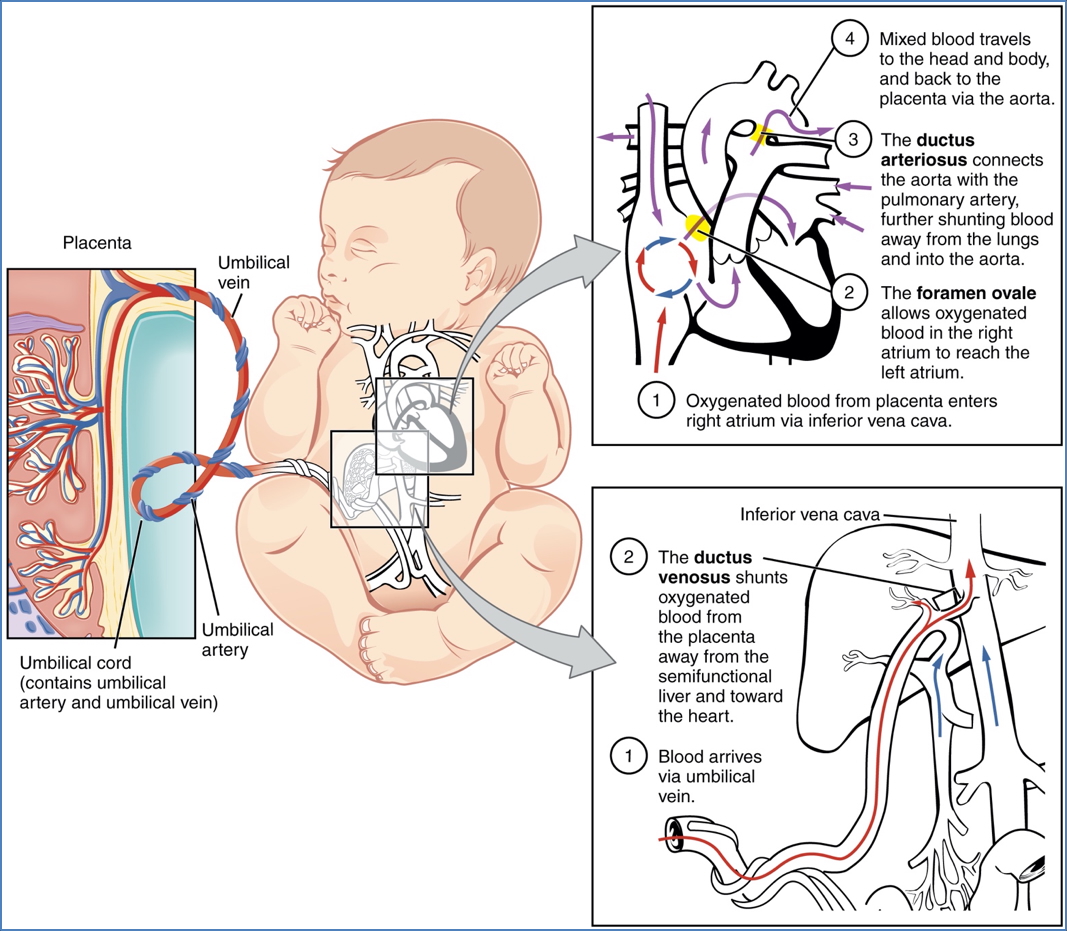
- Foetal circulation includes three shunts to bypass underdeveloped lungs and liver:
- Ductus venosus: Placenta → umbilical vein → bypasses liver → inferior vena cava
- Foramen ovale: Right atrium → left atrium → bypasses pulmonary circulation
- Ductus arteriosus: Pulmonary artery → aorta → bypasses lungs
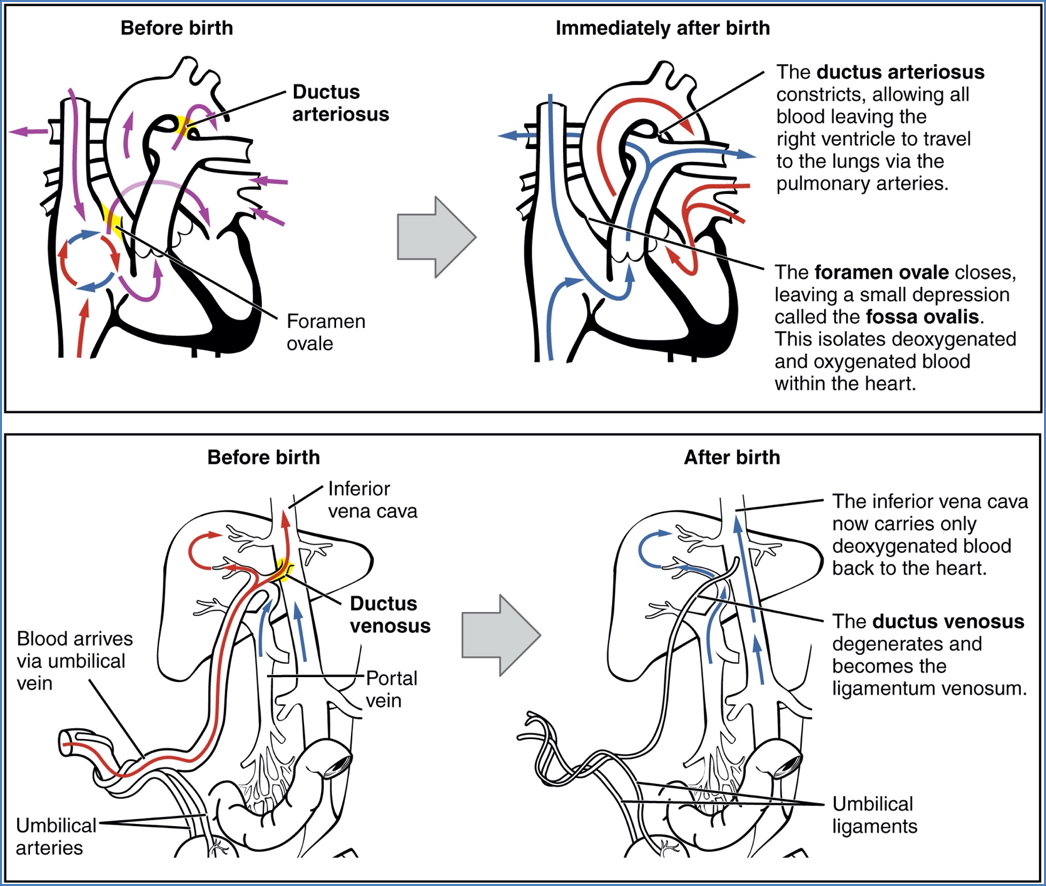
- After birth:
- Placenta detachment eliminates low-resistance circuit
- Increased pulmonary blood flow raises left atrial pressure
- Shunts close due to pressure changes and oxygen exposure
Thermoregulatory Changes
- Newborns are prone to heat loss due to:
- Large surface area-to-body mass ratio (esp. head)
- Limited subcutaneous fat
- Unable to shiver → rely on:
- Non-shivering thermogenesis via brown adipose tissue
- Mitochondrial uncoupling proteins generate heat without ATP
- Non-shivering thermogenesis via brown adipose tissue
Apgar Score
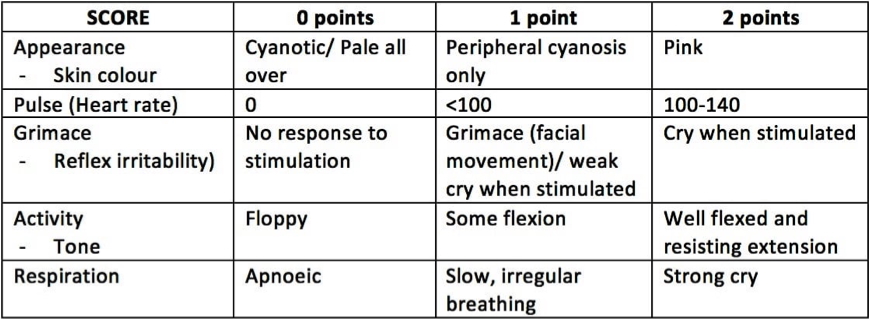
- A rapid scoring system used to assess neonatal wellbeing at 1 and 5 minutes after birth
- Components (each scored 0–2):
- Appearance (skin colour)
- Pulse (heart rate)
- Grimace (reflex irritability)
- Activity (muscle tone)
- Respiration (effort)
- Total out of 10; a score ≥7 is generally reassuring
Summary – Neonatal Adaptations
Neonatal adaptations encompass vital physiological shifts that allow newborns to survive outside the womb. These include establishing independent respiration, thermoregulation, and circulatory changes like closure of foetal shunts. Premature infants may struggle with some of these transitions, particularly in lung function. For more information on newborn care and obstetric physiology, visit our Obstetrics Overview page.