
Table of Contents
Overview – Red Eye Differentials
The term “red eye” refers to ocular redness caused by dilation of conjunctival or episcleral vessels in response to inflammation, infection, trauma, or increased intraocular pressure. Although most cases are benign and self-limiting, red eye can also signal sight-threatening pathology. Distinguishing between common and emergent causes is a key clinical skill for final-year medical students and junior doctors.
History Taking in Red Eye
Key questions to ask:
- History of trauma or exposure?
- Welding, contact lens use, exposure to chemicals or dust
- Laterality?
- Bilateral: Conjunctivitis (usually viral or allergic)
- Unilateral: More concerning – think uveitis, acute glaucoma
- Discharge?
- Watery: Suggests viral causes, uveitis, or corneal ulcer
- Sticky: Suggests bacterial conjunctivitis
- Pain severity?
- Mild discomfort = conjunctivitis
- Severe pain or photophobia = uveitis, glaucoma, ulcer
- Blurred vision or haloes?
- Indicates more serious pathology
Red Flags
- Unilateral red eye
- Severe pain or photophobia
- Visual disturbance or haloes
- Pupillary abnormalities
- History of contact lens use
Causes of Red Eye
Foreign Body
- Mechanism: Trauma from metal, wood, or dust particles
- Findings: Visible foreign object, conjunctival injection, tearing
- Treatment:
- Removal (e.g. drill-burr under topical anaesthesia)
- Topical antibiotics post-removal

Subconjunctival Haemorrhage
- Cause: Rupture of small conjunctival vessels
- Triggers: Coughing, vomiting, hypertension, anticoagulants
- Findings: Bright red patch under the conjunctiva
- Treatment: None required – self-resolves in 1–2 weeks
- Important: Check BP and anticoagulant history

Conjunctivitis
- Definition: Inflammation of the conjunctiva
- Types:
- Bacterial: Sticky, purulent discharge; common pathogens include Staph aureus, Strep spp.
- Viral: Watery discharge, often with preauricular lymphadenopathy
- Allergic: Itchy, watery eyes with conjunctival swelling
- Treatment: Lubricants, antihistamines (allergic), topical antibiotics (bacterial)

Corneal Abrasion
- Cause: Scratch from contact lens, fingernail, dust
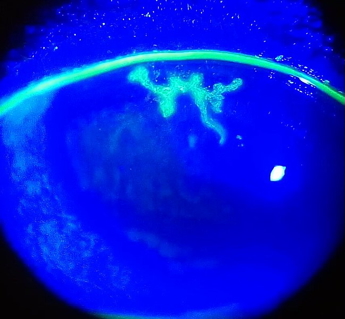
- Diagnosis: Fluorescein staining under cobalt blue light
- Findings: Linear epithelial defect
- Treatment: Lubricating or antibiotic drops
- Prognosis: Most heal within 24 hours

Corneal Ulcer
- Urgency: Ophthalmological emergency
- Viral Causes:
- Herpes Simplex → Dendritic ulcer pattern
- Varicella Zoster
- Bacterial Causes:
- Contact lens wearers at high risk
- Pseudomonas and Neisseria are most aggressive

- Treatment:
- Intensive topical antibiotics (e.g. fluoroquinolones)
- Antivirals for HSV
- Refer urgently
Uveitis
- Definition: Inflammation of the uveal tract (iris, ciliary body, choroid)
- Symptoms:
- Pain, photophobia, blurred vision
- Watery eyes
- Possible hypopyon (pus in anterior chamber)
- Causes: Idiopathic, autoimmune (e.g. HLA-B27), infections
- Treatment:
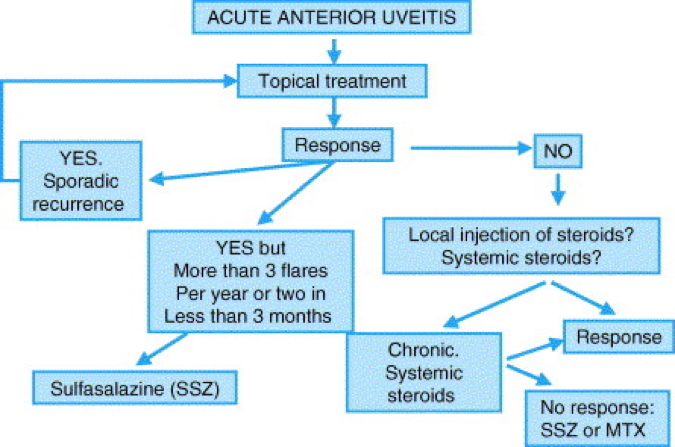
- Steroid eye drops
- Systemic immunosuppressants if recurrent

Summary – Red Eye Differentials
Red eye can stem from a broad spectrum of pathologies — ranging from benign conjunctivitis to vision-threatening glaucoma or corneal ulceration. A focused history and examination, with attention to red flags like pain, photophobia, and visual disturbance, is essential. For related conditions, visit our Nervous System Overview page.