
Table of Contents
Overview – Epilepsy
Epilepsy is a chronic neurological disorder marked by recurrent, unprovoked seizures due to abnormal electrical activity in the brain. It affects around 0.5–1% of the adult population and typically begins before the age of 20. Understanding seizure types, diagnosis criteria, and treatment options—including medications, surgical approaches, and dietary interventions—is essential for final-year medical students. This article provides a high-yield summary of epilepsy, its clinical features, and management.
Definition
- Epilepsy: A condition with ≥2 unprovoked seizures, not attributable to a reversible cause.
- Seizure: A transient occurrence of abnormal excessive or synchronous neuronal activity in the brain.
Aetiology
- Idiopathic (≈70%): Often familial
- Secondary causes:
- Head trauma
- Tumours
- Stroke
- CNS infections
- Developmental anomalies
- Metabolic/electrolyte disturbances
- Alcohol/drug withdrawal
Common Triggers
Among Epileptics
- Strobe lights
- Sleep deprivation
- Alcohol intake
- Stress
Among Non-Epileptics (Provoked Seizures – must be excluded before diagnosis)
- Drug overdose
- Fever
- Hypoglycaemia
- Head injury
- Electrolyte imbalances
- Toxins
Pathophysiology
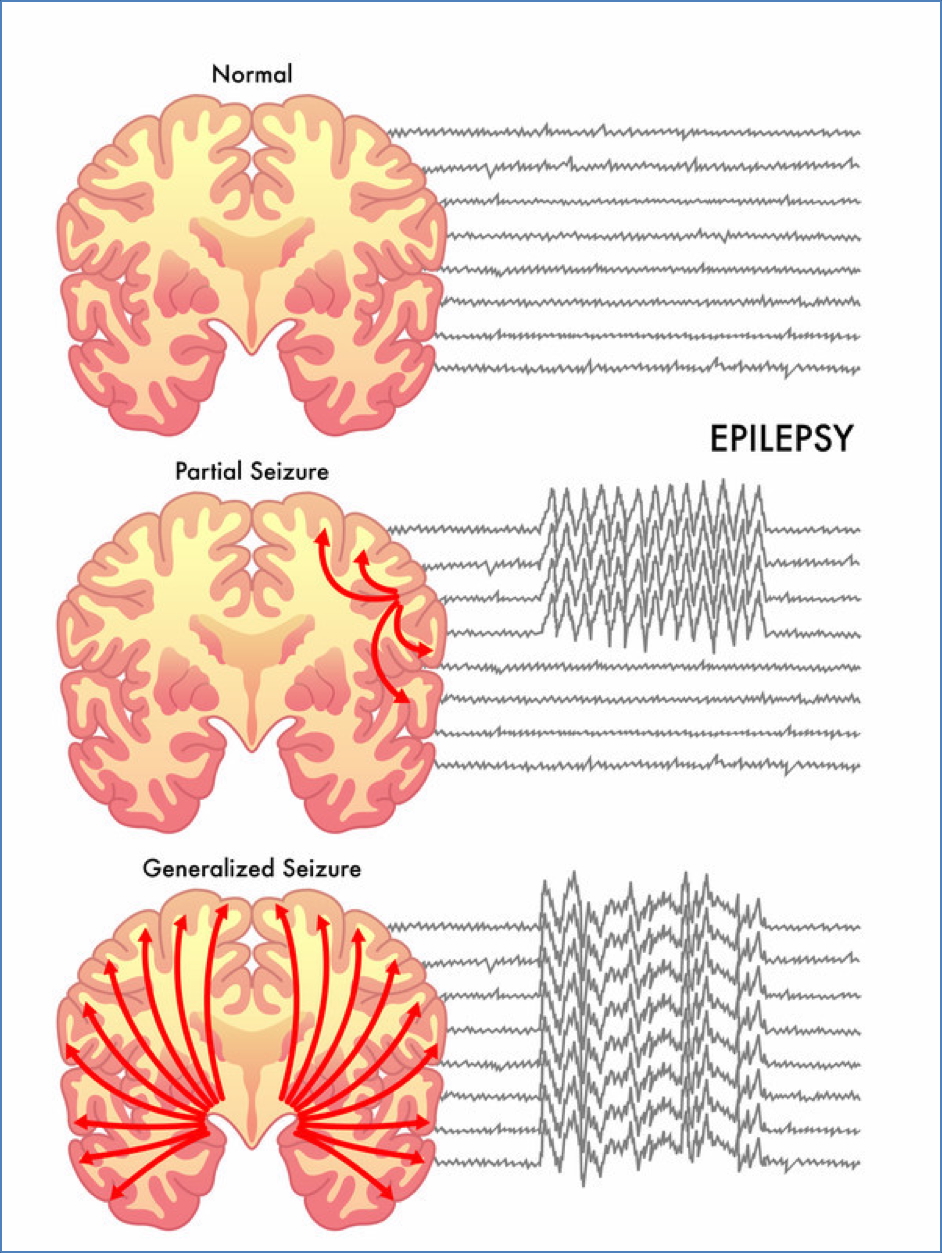
Hyperexcitable neurons (due to ion channel dysfunction or neurotransmitter imbalance) → spontaneous and uncontrolled electrical discharges → seizure.
Clinical Features
- Onset: Usually <20 years old
- Phases:
- Aura: Sensory or psychic disturbance (e.g. déjà vu, smells, flashing lights)
- Ictal phase: Seizure activity
- Post-ictal phase: Confusion, headache, weakness, fatigue
Diagnosis
- Clinical diagnosis based on:
- ≥2 unprovoked seizures
- Positive EEG
- Exclusion of reversible causes
- Seizure description (preferably video)
- Seizure induction testing
Note: One isolated seizure ≠ Epilepsy
Seizure Classification (ICES System)
Simple Partial
- Focal motor/sensory/autonomic symptoms
- Consciousness preserved
- Duration: <1 min
Complex Partial
- Impaired consciousness
- Purposeless automatisms (e.g. hand-wringing)
- Duration: <2 mins
Secondary Generalised (Tonic-Clonic)
- Progression from focal to generalised seizure
- 4 phases: Aura → Tonic → Clonic → Post-ictal
Absence (Petit Mal)
- Sudden impaired consciousness
- Eye blinking/lip smacking
- Rapid recovery, no memory of event
- Duration: Up to 30 sec
Myoclonic
- Sudden, brief jerks
- Typically bilateral, upper limbs
- Duration: 1–5 sec
Temporal Lobe Epilepsy
- Behavioural changes (e.g. aggression, religiosity)
- Automatic activity without awareness
- Can last for hours
- Treatment: Carbamazepine

Status Epilepticus
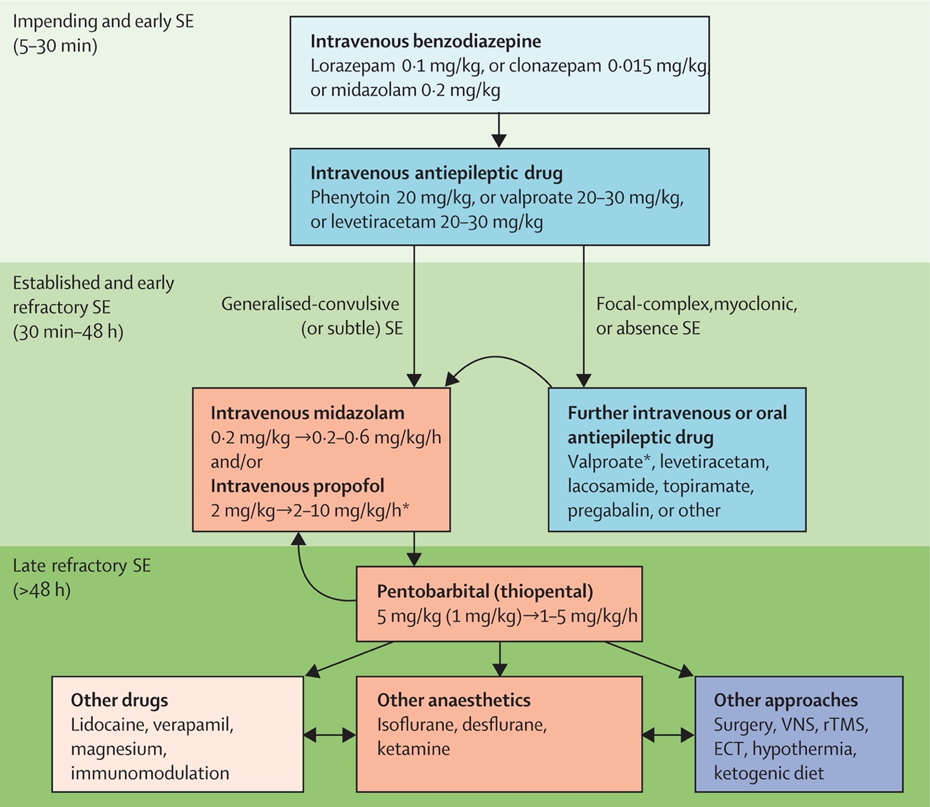
- Unremitting seizure or multiple seizures without recovery
- Neurological emergency
- Risks: Cerebral hypoxia, neuronal apoptosis, hippocampal damage
- Treatment:
- 1st line: Benzodiazepines (Lorazepam, Diazepam, Midazolam)
- Adjunct: Phenytoin (not for absence or TLE)
- Refractory cases: ICU, anaesthesia
Medical Treatment – Anticonvulsants
| Seizure Type | First-Line Drugs |
|---|---|
| Generalised or focal onset | Lamotrigine, Sodium valproate (avoid in pregnancy) |
| Absence | Ethosuximide, Sodium valproate |
| Temporal lobe | Carbamazepine, Phenobarbitone |
| Status epilepticus | Lorazepam, Diazepam |
Drug Mechanisms
- Valproate: Na+, Ca2+ blockade + GABA activation
- Carbamazepine/Lamotrigine: VG-Na+ channel blockers
- Ethosuximide: VG-Ca2+ T-channel blocker (thalamus)
- Benzodiazepines: GABA channel modulators
- Gabapentin: GABA analogue (useful in partial seizures)
Surgical Interventions
- Indicated in drug-resistant epilepsy (~30%)
- Options:
- Resections: Anteromedial temporal lobectomy, hemispherectomy
- Disconnections: Corpus callosotomy, sub-pial transections
- Prognosis: ~80% seizure-free at 10 years with proper focus mapping
Dietary Interventions – Ketogenic Diet
- High fat, low carb (<10g/day), adequate protein
- Mechanisms:
- ↑GABA synthesis from ketones → neuronal inhibition
- ↓Glutamate via altered metabolism
- ↑Na/K ATPase activity → neuron hyperpolarisation
- Side effect: constipation, bloating
Complications
- Cognitive decline
- Injury during seizures
- SUDEP (Sudden Unexpected Death in Epilepsy)
- Social stigma
- Medication side effects
Summary – Epilepsy
Epilepsy is a chronic neurological condition involving recurrent seizures due to abnormal brain activity. Diagnosis is clinical, supported by EEG and the exclusion of provoked causes. Treatment includes anticonvulsants, surgical options, and dietary strategies such as the ketogenic diet. Understanding seizure types is critical for appropriate management. For a broader context, see our Nervous System Overview page.