
Table of Contents
Overview – Upper Limb Bones
The upper limb bones form the structural basis for human manipulation and fine motor skills. Comprising the shoulder girdle, arm, forearm, and hand, these bones facilitate a wide range of motion and dexterity — though at the cost of reduced stability compared to the lower limb. This article outlines the key anatomical landmarks, attachments, and clinical features relevant to the bones of the upper limb, essential for any final-year medical student preparing for exams or clinical practice.
Bones of the Shoulder Girdle
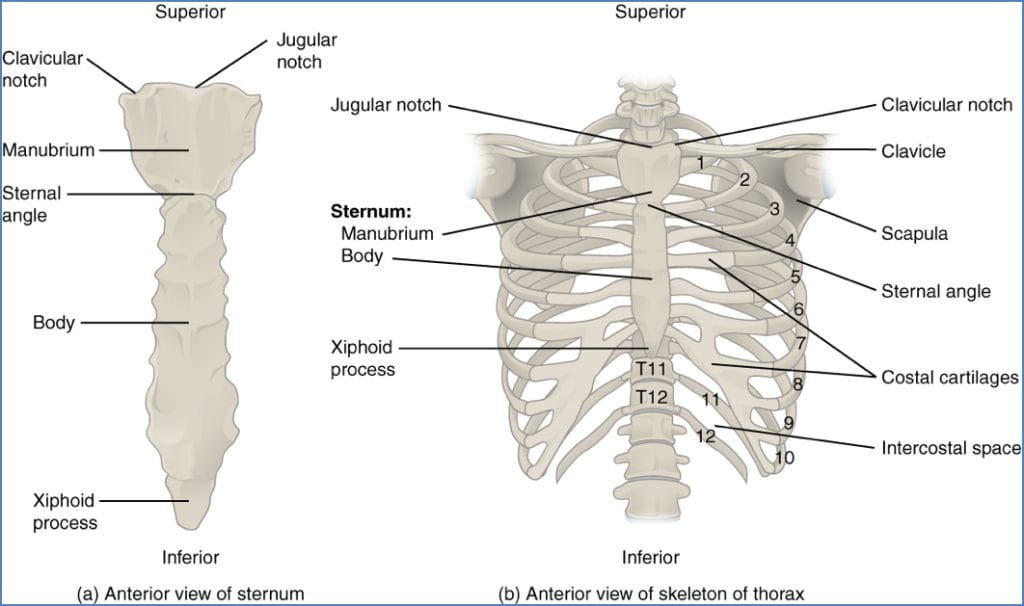
Manubrium of Sternum
- Flat, quadrangular bone
- Articulations:
- Synchondrosis of 1st rib
- Sternocostal joint of 2nd rib
- Muscular attachments:
- Pectoralis major (origin)
- Sternocleidomastoid (one head)
Clavicle
- Long, S-shaped bone
- Surfaces:
- Superior: smooth
- Inferior: rough
- Key landmarks:
- Sternal end, acromial end
- Impression for costoclavicular ligament
- Deltoid tubercle, conoid tubercle, trapezoid line
- Subclavian groove
- Articulations:
- Manubrium
- Acromion of scapula
- Muscular attachments:
- Deltoid, trapezius, subclavius, pectoralis major, sternocleidomastoid

Scapula
- Connects humerus to clavicle
- Landmarks:
- Borders: lateral, medial, superior
- Angles: inferior, superior, lateral
- Spine, acromion, coracoid process
- Fossae: supraspinous, infraspinous, subscapular
- Glenoid cavity, suprascapular notch
- Articulations:
- Clavicle
- Head of humerus
- Muscular attachments:
- Multiple origins (supraspinatus, infraspinatus, subscapularis, etc.)
- Multiple insertions (trapezius, rhomboids, serratus anterior, etc.)

Bones of the Arm and Forearm
Humerus
- Long bone of upper arm
- Landmarks:
- Head, greater/lesser tubercles, intertubercular groove
- Deltoid tuberosity
- Medial/lateral epicondyles, capitulum, trochlea
- Olecranon fossa, radial groove
- Articulations:
- Glenoid cavity of scapula
- Radius and ulna
- Muscular attachments:
- Includes deltoid, pectoralis major, brachialis, triceps, flexor/extensor groups, etc.

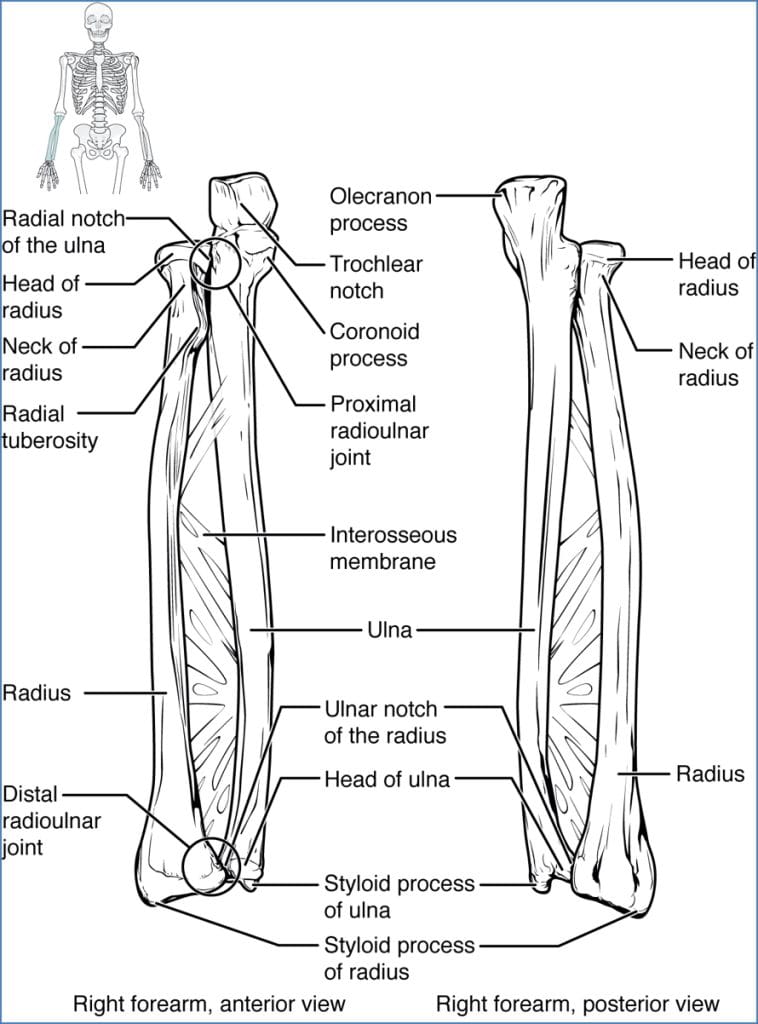
Ulna
- Medial bone of forearm (elbow)
- Wide proximally, narrow distally
- Landmarks:
- Olecranon process, trochlear notch, radial notch
- Head of ulna, styloid process
- Articulations:
- Trochlea of humerus
- Radius (via interosseous membrane)
- Wrist (via fibrocartilaginous disc)
- Muscular attachments:
- Extensive; includes origins for flexor digitorum profundus, pronator teres, supinator, etc.
Radius
- Lateral bone of forearm (thumb side)
- Narrow proximally, broad distally
- Landmarks:
- Head (articulates with capitulum)
- Ulnar notch, styloid process
- Articulations:
- Humerus
- Ulna (via interosseous membrane)
- Carpal bones of wrist
- Muscular attachments:
- Biceps brachii, pronator teres/quadratus, supinator, flexor pollicis longus, etc.
Bones of the Hand
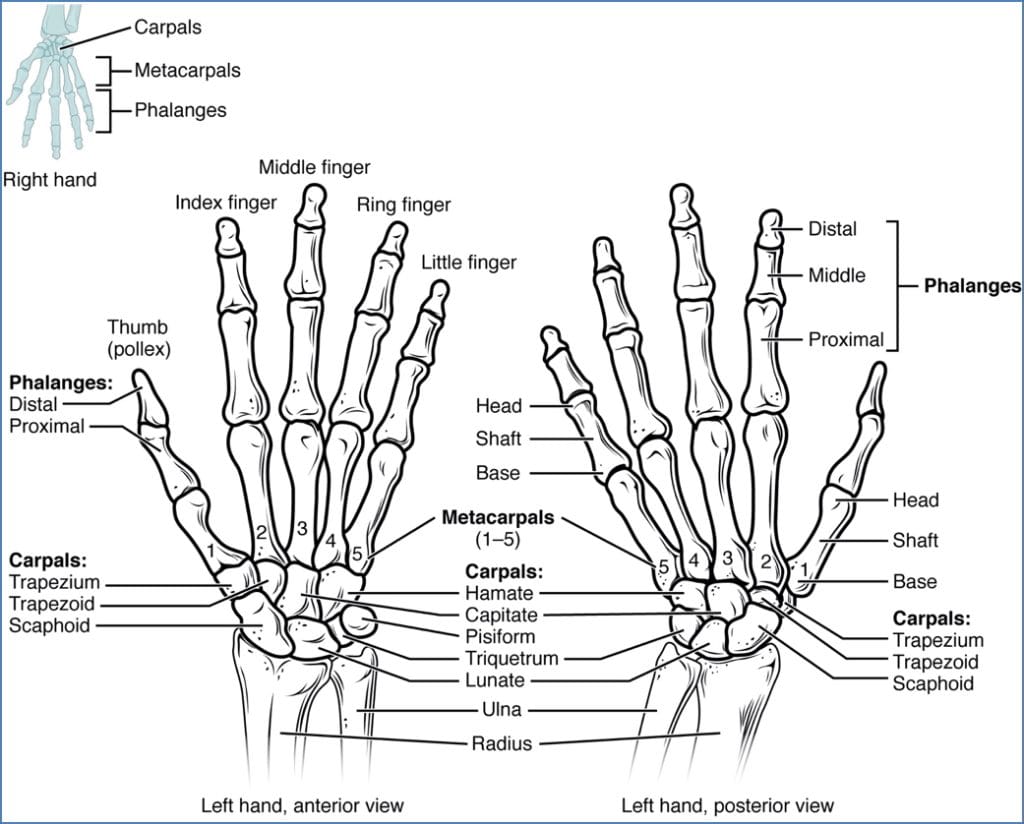
Carpals (Wrist Bones)
- Proximal row: Scaphoid, lunate, triquetral, pisiform
- Distal row: Trapezium, trapezoid, capitate, hamate
- Mnemonic: Some Lovers Try Positions That They Can’t Handle
Metacarpals
- Bones of the palm
- Numbered 1–5 from thumb to little finger
Phalanges
- 14 bones per hand
- Each finger (except thumb) has 3: proximal, middle, distal
- Thumb has 2: proximal and distal
Summary – Upper Limb Bones
The upper limb bones encompass the shoulder girdle, arm, forearm, and hand, providing the anatomical framework for complex movement and fine motor control. Their varied articulations and muscular attachments underpin both stability and precision. Understanding their anatomy is crucial for interpreting trauma, planning interventions, and guiding clinical examination. For a broader context, see our Musculoskeletal Overview page.