
Table of Contents
Overview – Principles of Biomechanics
Biomechanics is the study of mechanical principles relating to the movement and structure of living organisms. In clinical medicine, it underpins our understanding of muscular activation, joint motion, lever systems, and specialised tasks such as hand function. This foundational knowledge informs rehabilitation, prosthetic design, and orthopaedic decision-making.
Types of Muscle Activation
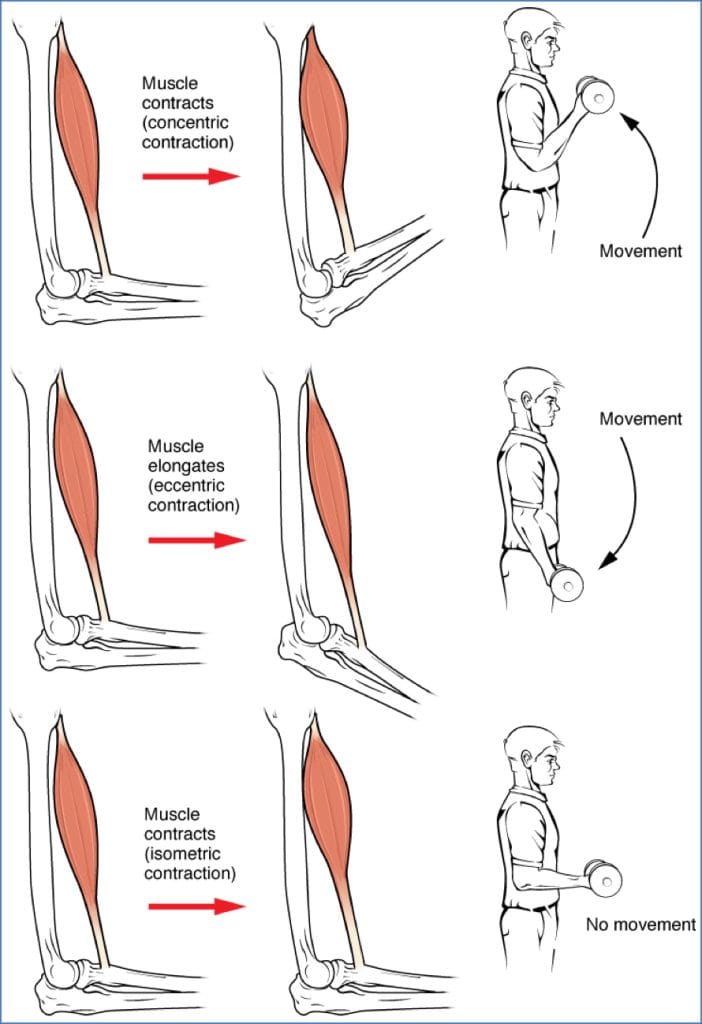
- Isometric Contraction
- Muscle length remains unchanged
- Force is generated without movement
- Example: Static hold during compression
- Isotonic Contraction
- Muscle changes length while maintaining tension
- Two subtypes:
- Concentric: Muscle shortens (e.g. upward phase of a bicep curl)
- Eccentric: Muscle lengthens under tension (e.g. lowering phase of a bicep curl)
Muscle Attachments
- Direct Attachments
- Muscle fibres attach directly to bone
- Allows powerful contractions
- Less space-efficient; more prone to injury
- Indirect Attachments
- Muscle connects to bone via a tendon
- Requires less space
- Enhances dexterity (e.g. fingers and hand muscles)
Lever Systems in the Body
Key Components:
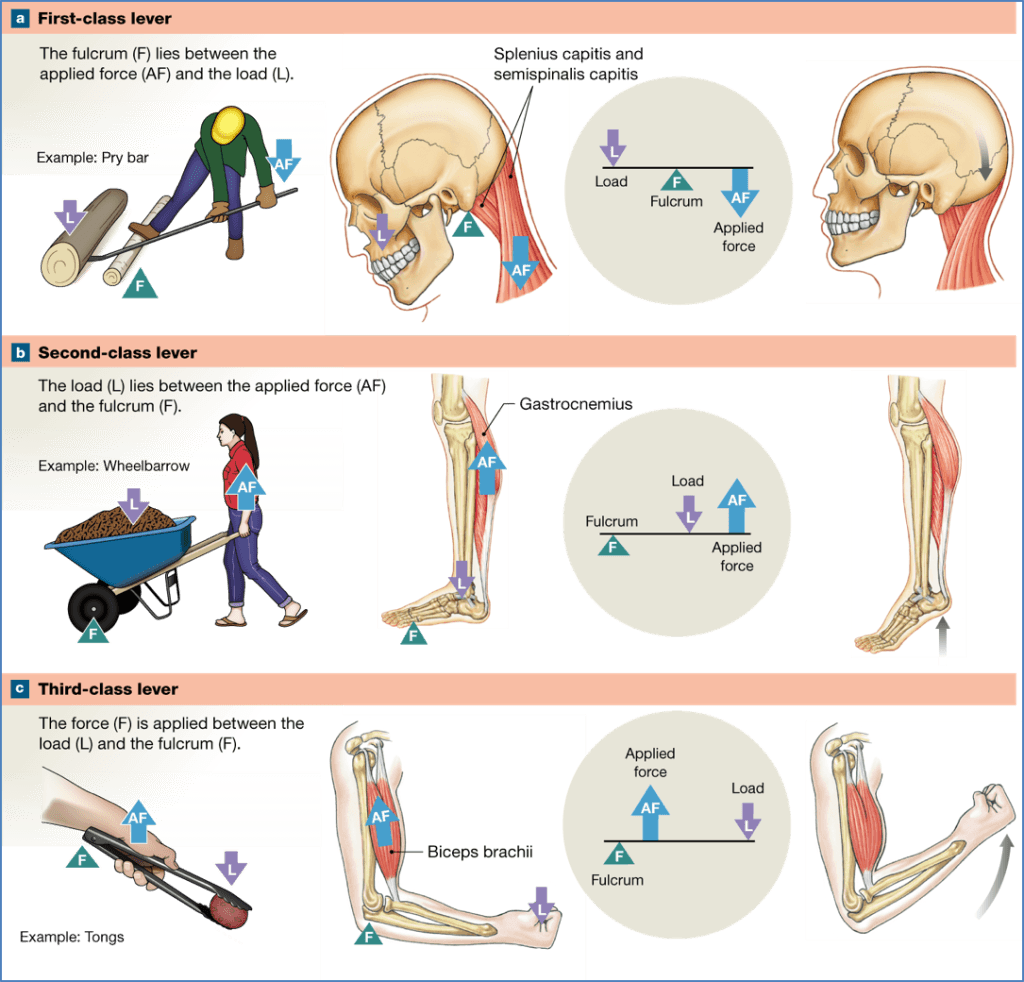
- Lever – The bone
- Fulcrum – The joint
- Effort – Muscle contraction force
- Load – Body part or resistance to movement
Functional Classifications:
- Power Advantage – Levers that favour strength (less speed)
- Speed Advantage – Levers that favour speed (less strength)
Classes of Levers:
- First-Class Lever – Fulcrum between effort and load
- Example: Neck extension
- No mechanical advantage
- Second-Class Lever – Load between fulcrum and effort
- Example: Standing on tiptoes
- Mechanical advantage
- Third-Class Lever – Effort between load and fulcrum
- Example: Bicep curl
- Mechanical disadvantage (favours speed over strength)
Biomechanics of the Hand
Movements
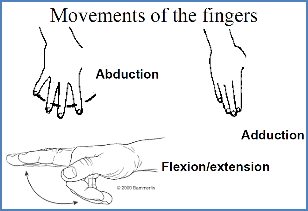
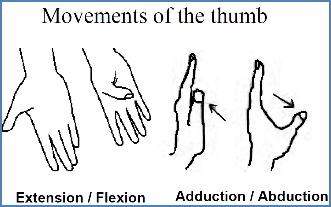
- Complex coordination of flexion, extension, opposition, and abduction
- Essential for grip, dexterity, and tactile function
Types of Grip:
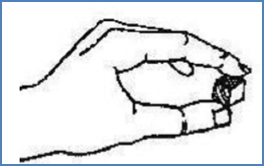
- Precision Grip
- Involves fine control of digits (especially MCP joints)
- Short intrinsic muscles activated
- Thumb opposition crucial
- Optimised when the wrist is extended
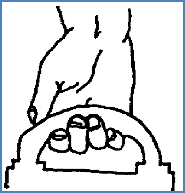
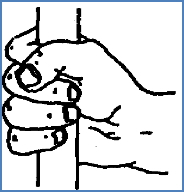
- Power Grip
- Involves full flexion at MCP and IP joints
- Utilises powerful extrinsic flexor muscles
- Optimised with wrist extension
- Examples: Palmar grip, hook grip
Innervation of Hand Muscles
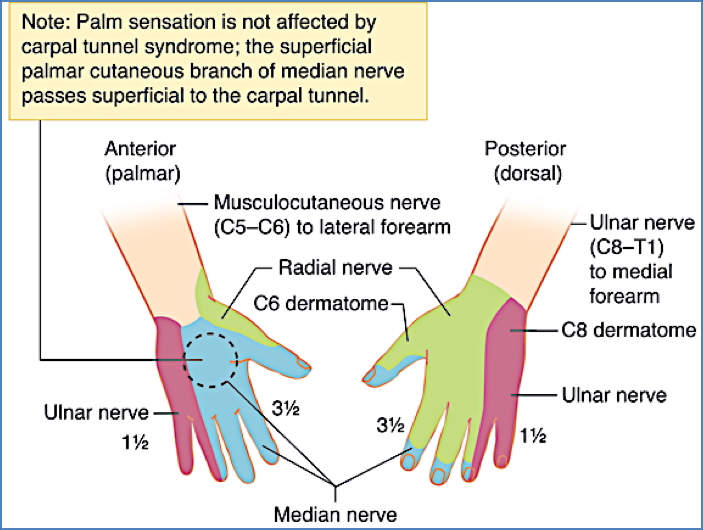
- Motor Supply:
- Ulnar Nerve:
- Hypothenar muscles
- Lumbricals 3 & 4
- Interossei
- Crosses over carpal tunnel
- Median Nerve:
- Thenar muscles
- Lumbricals 1 & 2
- Passes through carpal tunnel
- Ulnar Nerve:
- Note: A ‘communicating nerve’ in the palm links ulnar and median territories
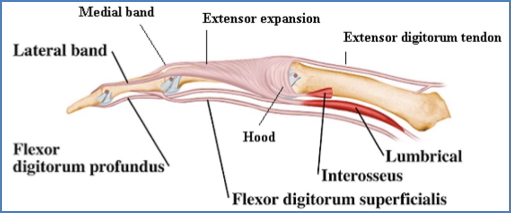
Extensor Expansion
- A complex connective tissue structure formed by the flattening of extensor tendons
- Enables coordinated flexion at MCP joints and extension at IP joints via lumbricals and interossei
- Structure:
- Median Band – Inserts into middle phalanx
- Two Lateral Bands – Insert into distal phalanx
Body Movements and Joint Mechanics
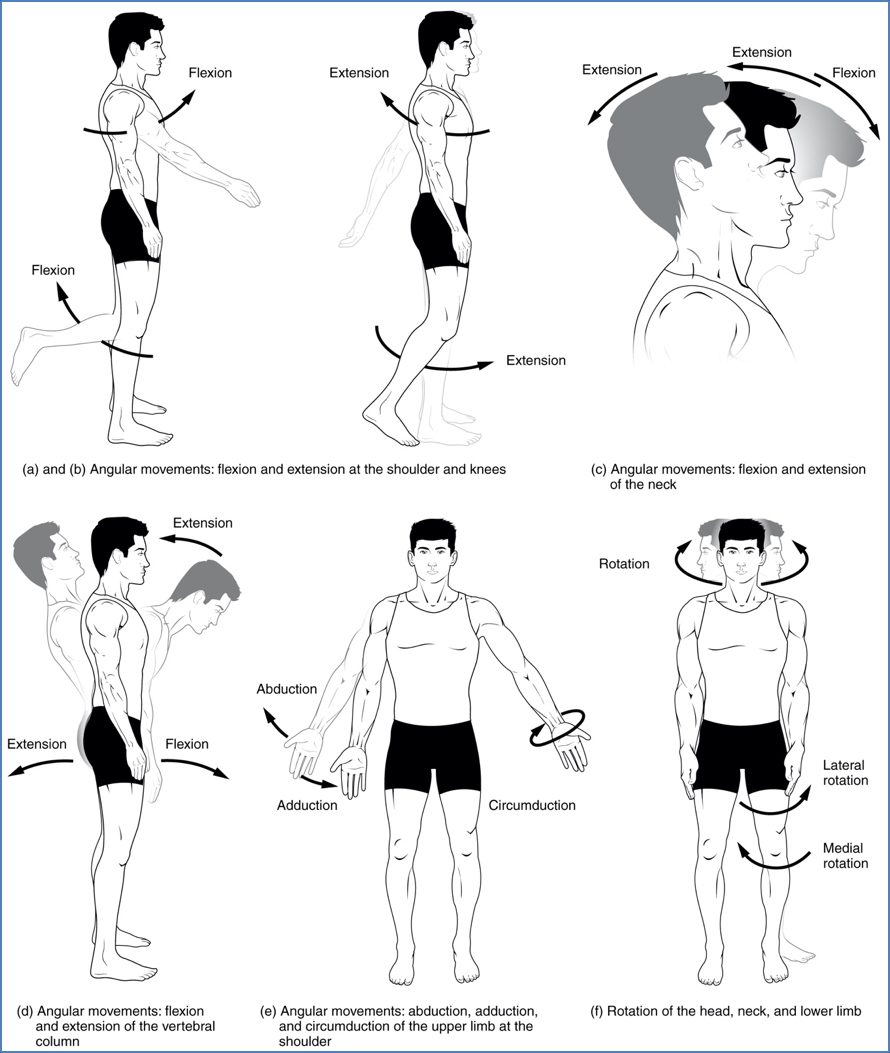
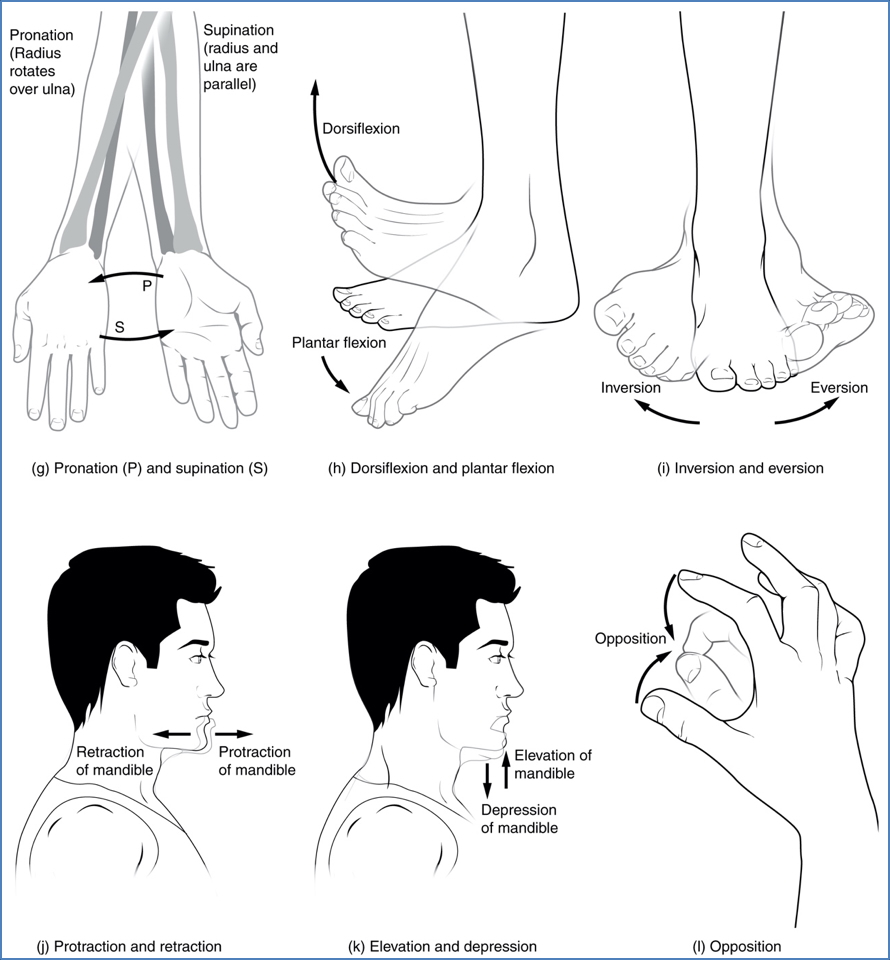
- Biomechanical terminology includes:
- Flexion, extension, abduction, adduction
- Circumduction, rotation
- Pronation, supination, opposition
- These terms describe the motion of limbs relative to anatomical planes and are critical for clinical documentation and diagnosis.
Summary – Principles of Biomechanics
The principles of biomechanics explain how muscle activation, lever systems, and anatomical design produce efficient movement and force. From isometric and isotonic contractions to the complex function of the human hand, these fundamentals underpin movement science in clinical practice. For a broader context, see our Musculoskeletal Overview page.