
Table of Contents
Overview – Microbiology of Viruses
Microbiology of viruses explores the structure, classification, replication strategies, and pathogenic mechanisms of these unique, acellular infectious agents. As obligate intracellular parasites, viruses lack metabolic machinery and must hijack host cellular processes to reproduce. This topic is foundational in understanding infectious disease, immunity, and antiviral drug targets.
Definition and Nomenclature
- Virion: Complete viral particle
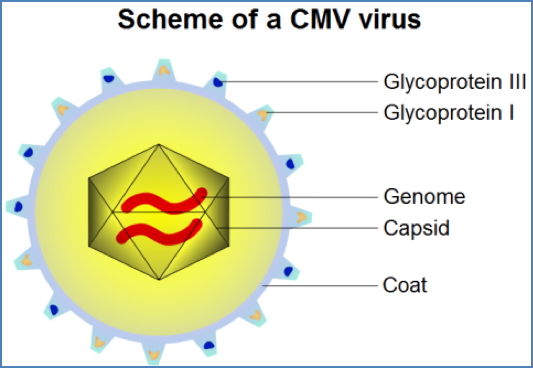
- Capsid: Protein coat made of repeating subunits called capsomeres
- Nucleocapsid: Capsid + viral nucleic acid + associated proteins
- Envelope: Lipid bilayer of host origin, studded with viral glycoproteins

Key Features of Viruses
- Acellular and metabolically inert outside host cells
- No cell membrane, cytoplasm, or cellular organelles
- Can carry either DNA or RNA (unlike all other organisms which have only DNA)
- Obligate intracellular replication — cannot grow outside living cells
Viral Envelopes
- Derived from host membranes (plasma or organelle)
- Contain viral glycoproteins essential for:
- Binding to host cell receptors
- Membrane fusion for viral entry
- Enveloped viruses are vulnerable to detergents (lipid bilayer disruption)
Viral Proteins
- Structural proteins: Form part of the mature virion
- Non-structural proteins: Expressed during replication but not incorporated into virion
Symmetry & Shapes
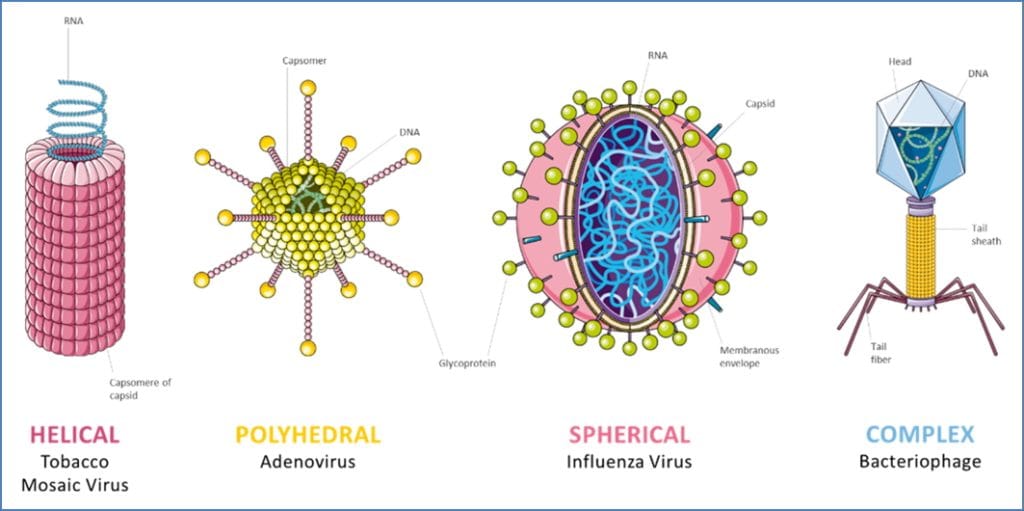
- Helical symmetry: Capsomeres form a spiral around viral nucleic acid (e.g. tobacco mosaic virus)
- Icosahedral/cubic symmetry: 20 triangular faces form a robust polyhedral shape
- Spherical symmetry: Often due to enveloped structure (e.g. influenza)
- Complex symmetry: Tail fibres, protein sheaths (e.g. bacteriophages)
Viability & Culturing
- Viability requires:
- Intact capsid and genome
- Enveloped viruses inactivated by detergents
- Culturing requires living host cells — viruses cannot replicate on artificial media
Viral Shedding & Disease
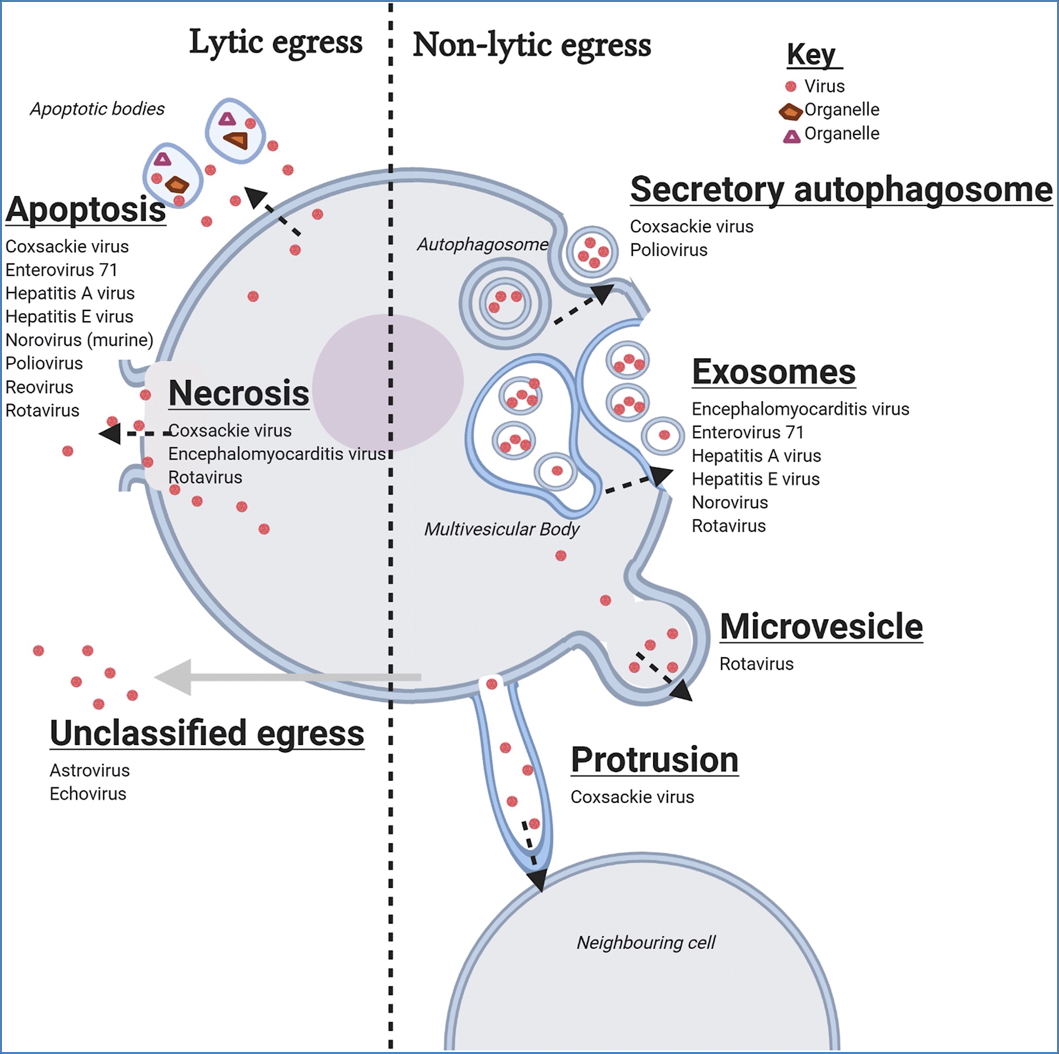
- Viral shedding: Release of progeny viruses to infect new cells or hosts
- Methods of viral shedding:
- Budding: Membrane-wrapped exit (enveloped viruses)
- Apoptosis: Cell death and engulfment by phagocytes (non-enveloped viruses)
- Exocytosis: Vesicle-mediated export (non-enveloped viruses)

Latency and Reactivation
- Latency: Viral genome remains dormant in host cell without active replication
- No symptoms or viral shedding during latency
- Latency maintenance involves:
- Suppression of apoptosis
- Downregulation of MHC-I
- Genome maintenance proteins
- Types:
- Episomal latency: Genome remains extrachromosomal (e.g. Herpesviruses)
- Proviral latency: Viral genome integrates into host DNA (e.g. HIV)
- Reactivation: Triggered by stress, sunlight, immunosuppression
Classification of Viruses
ICTV System
- Family: Ends in “-viridae”
- Genus: Ends in “-virus”
- Species: Assigned without binomial nomenclature
Baltimore Classification
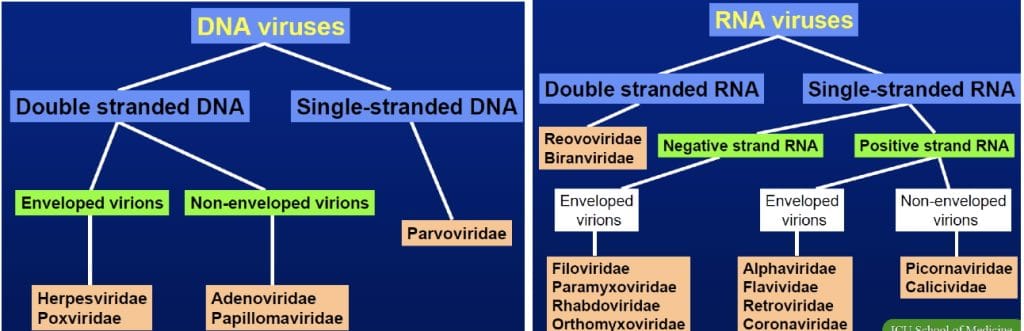
Groups viruses by genome type and replication mechanism:
- dsDNA viruses: Herpesvirus, Poxvirus
- ssDNA viruses: Parvovirus
- dsRNA viruses: Reovirus
- (+)ssRNA viruses: Picornavirus, Togavirus
- (-)ssRNA viruses: Orthomyxovirus, Rhabdovirus
- ssRNA-RT viruses: Retroviruses (e.g. HIV)
- dsDNA-RT viruses: Hepadnavirus (e.g. Hepatitis B)
Molecular Biology Refresher
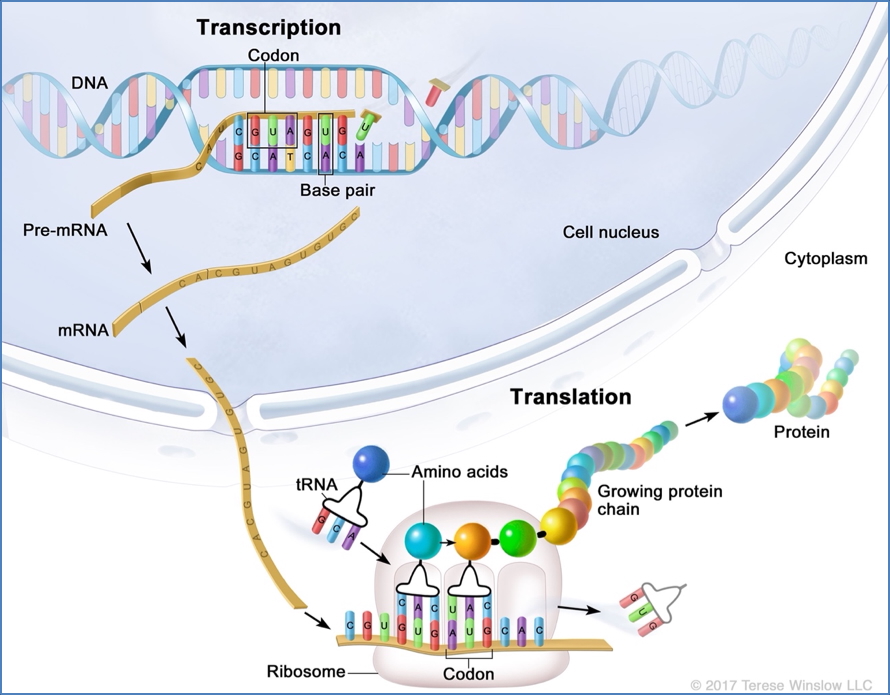
DNA Replication
- DNA → DNA via DNA polymerase

Protein Synthesis
- Transcription: DNA → mRNA via RNA polymerase
- Translation: mRNA → Protein via ribosomes in the cytoplasm
Viral Enzymes
- RNA-dependent RNA polymerase: Makes RNA from RNA (used by RNA viruses)
- RNA-dependent DNA polymerase: Reverse transcriptase
- Retroviral integrase: Inserts viral DNA into host genome
Viral Replication Cycles (By Baltimore Group)
1. dsDNA Viruses
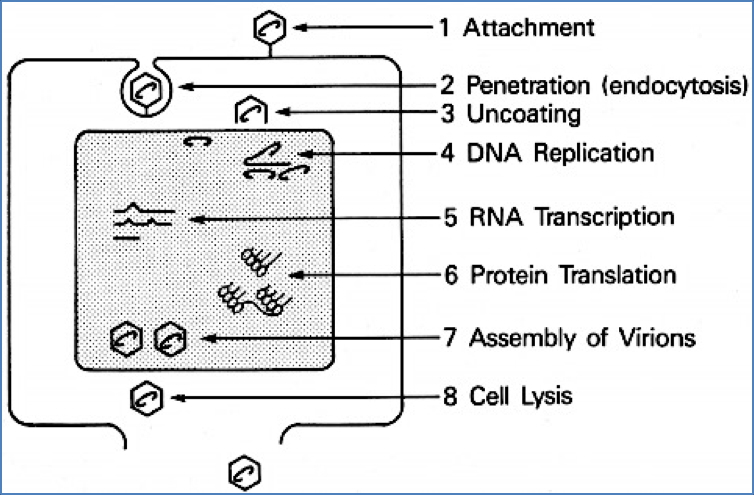
- Replication and transcription occur in the nucleus
- Depend on host cell division and enzymes
- E.g. Herpesvirus

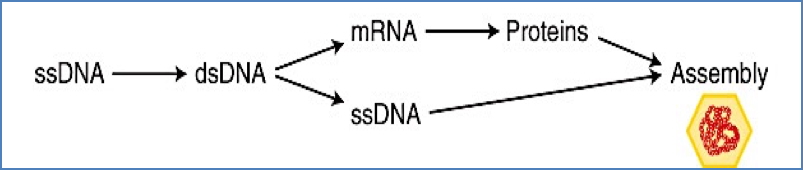
2. ssDNA Viruses
- Convert to dsDNA intermediate in nucleus
- Require host DNA polymerase
- E.g. Parvovirus
3. dsRNA Viruses
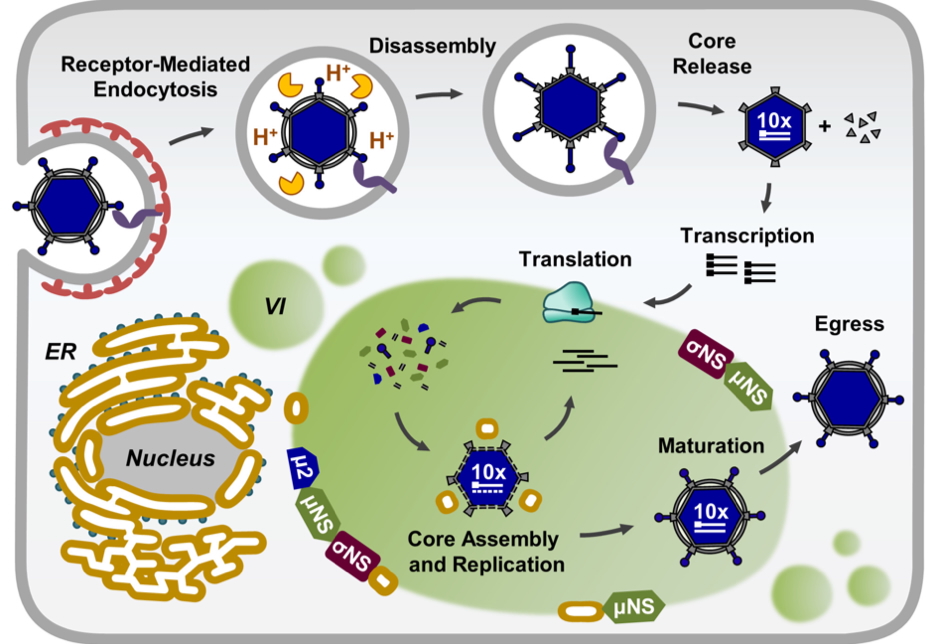
- Replicate in the cytoplasm
- Supply own RNA-dependent RNA polymerase
- E.g. Reovirus

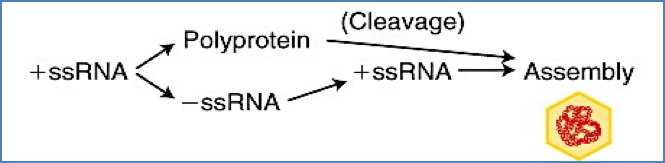
4. (+)ssRNA Viruses
- Genome functions as mRNA → direct protein synthesis
- Supply own RNA polymerase for replication
- E.g. Picornavirus

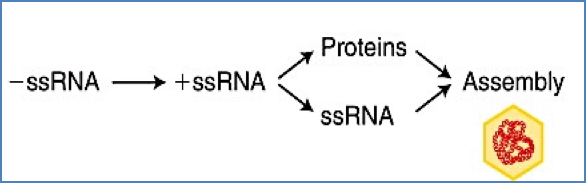
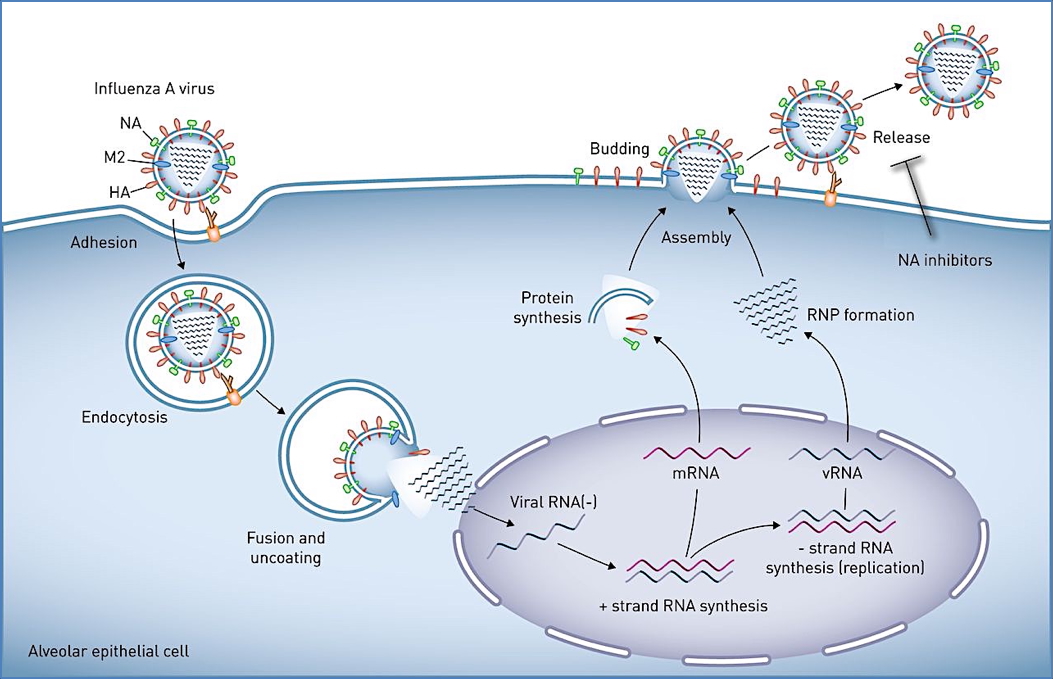
5. (-)ssRNA Viruses
- Must first be transcribed to +RNA before protein synthesis
- Use own RNA polymerase
- E.g. Rhabdovirus
6. ssRNA-RT Viruses
- Convert RNA to DNA via reverse transcriptase
- Integrate into host genome (e.g. HIV)
- Transcription from integrated DNA

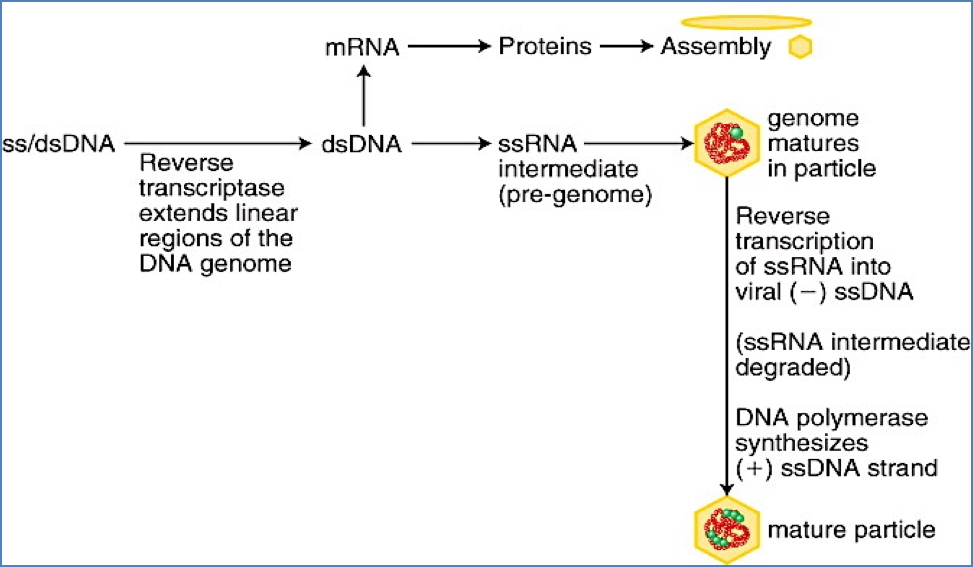
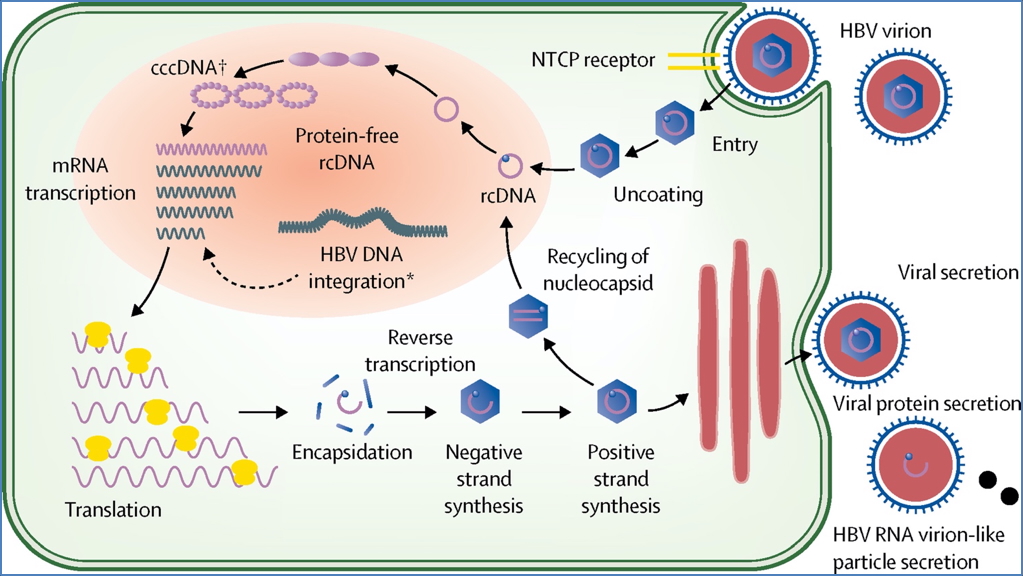
7. dsDNA-RT Viruses
- Transcribe to mRNA in nucleus → translated in cytoplasm
- mRNA then reverse transcribed to DNA for new virions
- E.g. Hepatitis B
Viral Assembly & Maturation
- Assembly: Formation of complete virions from capsid and genome components
- Maturation: Proteolytic processing of viral polyproteins into functional proteins
- Often a prerequisite for infectivity
Antiviral Therapy Targets
- Attachment
- Penetration
- Uncoating
- Replication
- Assembly
- Maturation
- Release
Quasispecies
- Genetically distinct subpopulations of viruses within a host
- Result from rapid mutation and selection
- Drive antigenic diversity, immune escape, and drug resistance
Summary – Microbiology of Viruses
Microbiology of viruses provides a foundational framework for understanding how viruses are structured, how they replicate, and how they cause disease. This knowledge supports the study of immunology, virology, and infectious diseases. For a broader context, see our Microbiology & Public Health Overview page.