
Table of Contents
Overview – Lymphatic Filariasis
Lymphatic filariasis is a parasitic disease caused by filarial worms transmitted via mosquito vectors. It affects the lymphatic system, leading to chronic disability and disfigurement, most notably elephantiasis. Though it is not usually fatal, it causes long-term morbidity, social stigma, and substantial public health burden in tropical and subtropical regions.
Definition
Lymphatic filariasis is a neglected tropical disease caused by filarial nematodes that reside in the lymphatic system. It is transmitted by mosquitos and can lead to lymphoedema, genital disease, and elephantiasis.
Aetiology
- Pathogen: Filarial worms (e.g. Wuchereria bancrofti, Brugia malayi)
- Vector: Mosquitos (e.g. Culex, Anopheles, Aedes)
- Transmission: Bite of infected mosquito deposits infective larvae into human skin
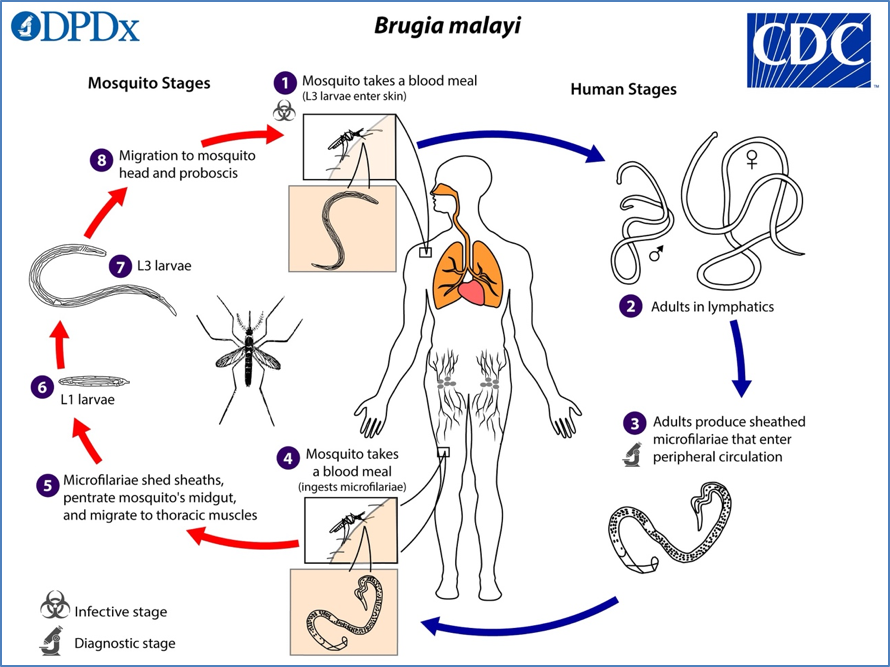
Life Cycle
- Adult worms live in lymphatic vessels and lymph nodes
- Female worms release microfilariae into the bloodstream
- Microfilariae are taken up by mosquitos during a blood meal
- Inside the mosquito, microfilariae mature into infective larvae
- Infective larvae transmitted to new host through mosquito bite
Pathogenesis
- Adult worms cause lymphatic obstruction
- Chronic inflammation → fibrosis, lymphoedema, and elephantiasis
- Worms suppress immune response → increased susceptibility to secondary bacterial infections
- Repeated attacks worsen swelling and damage
Clinical Features
- Early infection often asymptomatic
- Acute filarial attacks (often due to secondary bacterial infections):
- Sudden swelling of limbs/genitals
- Fever, lymphadenitis, sore glands, headache, nausea
- Chronic manifestations:
- Lymphoedema → Elephantiasis (gross limb enlargement)
- Genital disease (hydrocele, scrotal swelling)
- Social stigma, depression, isolation
- Recurrent bacterial infections (entry lesions become portals for pathogens)

Investigations
- Blood Smear (night samples): Demonstrates microfilariae
- Antigen Detection (ICT/ELISA): Useful in W. bancrofti infections
- Ultrasound: May show “filarial dance sign” (adult worms in lymphatics)
- PCR: For confirmatory molecular diagnosis
- Lymphoscintigraphy: Evaluates lymphatic function
Management
1. Preventive Chemotherapy
- Annual single-dose antiparasitics for 5 years
- E.g. Diethylcarbamazine (DEC), Ivermectin, Albendazole
- Mass Drug Administration (MDA) is key to community-level control
2. Hygiene and Skin Care
- Daily washing of affected limbs with soap and water
- Care of skin lesions to prevent secondary infections
3. Elevation of Limb
- Aids lymphatic drainage
- Reduces swelling and improves function
4. Exercise
- Improves lymphatic flow and reduces stagnation
- Must be gentle and sustained
Management of Acute Filarial Attacks
- Cool affected area with clean water
- Rest and hydration
- Antipyretics (e.g. paracetamol for fever)
- Continue washing and care of lesions
- Seek treatment for secondary bacterial infection if needed
Prevention
- Vector control: Mosquito nets, repellents, and habitat reduction
- Community health education
- National MDA programs as endorsed by WHO
Summary – Lymphatic Filariasis
Lymphatic filariasis is a parasitic infection transmitted by mosquitos, caused by filarial worms that damage the lymphatic system and can result in elephantiasis. Management includes antiparasitic medications, hygiene measures, limb elevation, and exercise. Preventive chemotherapy is essential to reduce transmission. For a broader context, see our Microbiology & Public Health Overview page.