
Table of Contents
Overview – Health Behaviour
Health behaviour refers to the actions individuals take that influence their health, either positively or negatively. Understanding how behaviours are shaped, modified, or reinforced is essential for effective prevention and public health strategies. This page explores models of behaviour change, roles of health professionals, and psychological theories to help final-year medical students apply behavioural science to real-world clinical care.
Health Promotion
- Aim: Promote healthy behaviours through education and guidance
- Doctor’s Role:
- Provide expert advice on healthy lifestyle choices
- Monitor and reinforce patient behaviours
- Offer skill training and role modelling
- Deliver targeted information and motivation
- Psychologist’s Role:
- Design behavioural interventions for individuals and communities
- Mass Media:
- Raise awareness of public health risks (e.g. smoking, alcohol use, HIV/AIDS)
- Legislation:
- Enforce behaviour through legal policies (e.g. seatbelt laws, smoking bans)
Behavioural Factors in Disease
- Health Behaviours:
- Promote or maintain wellness
- Examples: Exercise, healthy diet
- Can be habitual (e.g. brushing teeth) or intentional
- Risk Behaviours:
- Increase the likelihood of disease or disorder
- Examples: Smoking, excessive alcohol use, sedentary lifestyle
Primary Prevention
- Instilling good habits early and discouraging risky ones
- Strategies:
- Modify existing unhealthy behaviours
- Prevent uptake of harmful habits from the outset
Obstacles to Behaviour Change
- Pleasure-seeking behaviours (e.g. drug use)
- Addiction
- Habituation
- Relapse
- Stress and emotional factors influencing choices
Risk Perception & Optimism
- Unrealistic Optimism:
- Underestimating personal risk or disease severity
- Common beliefs:
- “It won’t happen to me”
- “It’s rare” or “not a problem yet, so never will be”
- These biases reduce motivation to change
Motivation for Change
A person must be:
- Willing → believes change is important
- Able → has self-efficacy and confidence
- Ready → sees benefits of change outweighing current behaviour
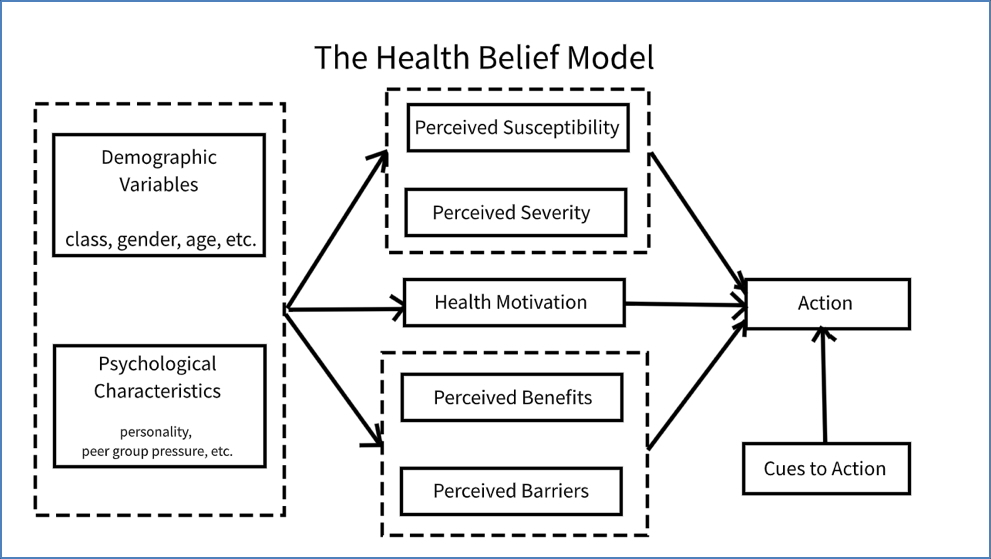
Health Belief Model
Explains how people assess health risks and make behavioural decisions:
- Perceived Threat
- Susceptibility: Personal risk perception
- Severity: Beliefs about seriousness of consequences
- Perceived Benefits
- Belief that change will help
- Perceived Barriers
- Drawbacks of taking action
- Cues to Action
- Triggers like symptoms, media, or peer influence
- Self-Efficacy
- Confidence in executing behaviour successfully
Theory of Planned Behaviour
Behaviour is driven by intention, which is shaped by:
- Attitude Toward Behaviour
- Evaluation of expected outcomes
- e.g. “If I diet, I’ll lose weight and improve my health”
- Subjective Norms
- Perceived social pressure from family, peers, etc.
- e.g. “My partner wants me to quit smoking”
- Perceived Behavioural Control
- Confidence in one’s ability to act
- e.g. “I think I can follow this diet”
→ Together, these influence the intention, which leads to the actual behaviour
Behavioural Therapies
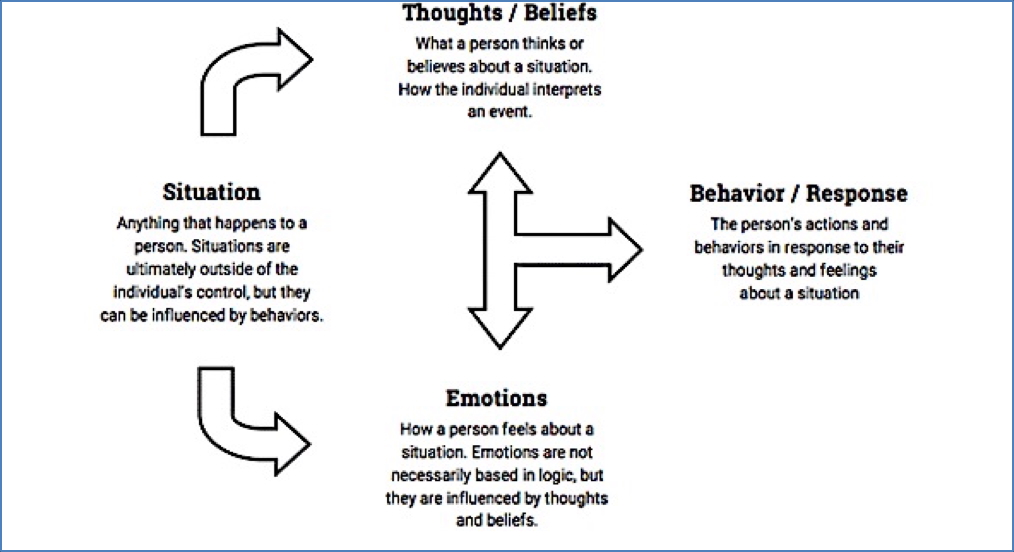
Cognitive-Behavioural Therapy (CBT)
- Focuses on the link between:
- Thoughts
- Behaviours
- Environmental triggers
- Emphasises:
- Monitoring habits
- Restructuring unhealthy beliefs (e.g. “I’ll never quit smoking”)
- Reinforcing positive changes through charting and self-monitoring
Conditioning Models
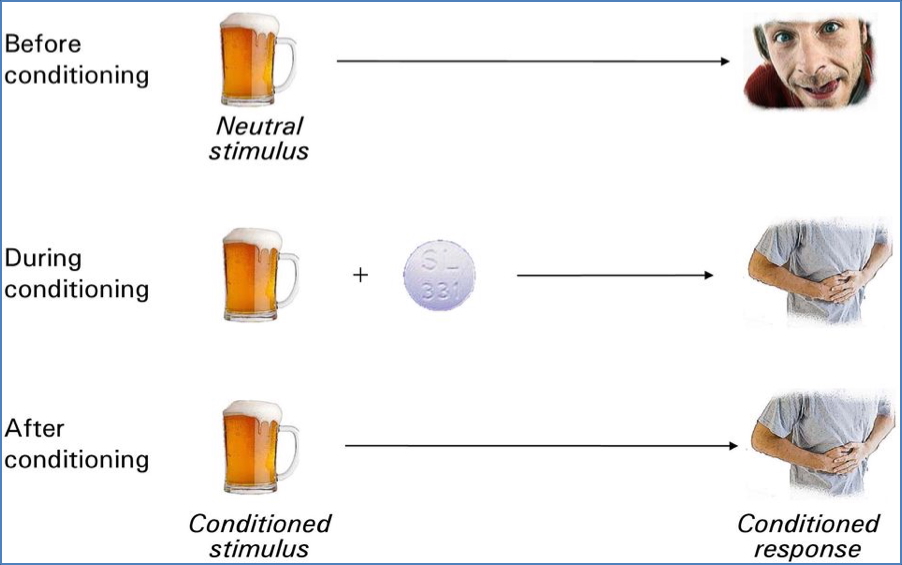
Classical Conditioning
- One stimulus becomes associated with another
- e.g. Antabuse causes nausea when alcohol is consumed → creates aversion
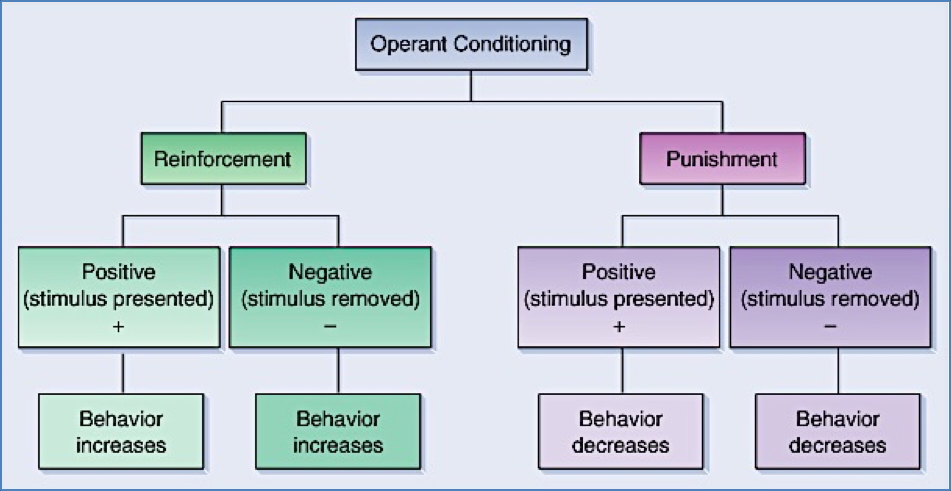
Operant Conditioning
- Behaviour shaped by reinforcement:
- Positive → rewards → increased behaviour likelihood
- Negative → punishment/loss → reduced behaviour likelihood
- Explains habit formation and resistance to change
Summary – Health Behaviour
This health behaviour guide highlights the psychological and practical components of promoting, shaping, and changing behaviour in public health. By applying models like the Health Belief Model and Theory of Planned Behaviour, clinicians can support patients in making meaningful lifestyle changes. For a broader context, see our Microbiology & Public Health Overview page.