
Table of Contents
Overview – Changing Behaviour
Changing behaviour in healthcare is not as simple as giving advice—real, lasting change is a gradual process that requires readiness, motivation, and support. This page explores models and strategies like the SNAP framework and the Stages of Change Model that help medical professionals guide patients through behavioural modification, particularly around lifestyle risk factors such as smoking, alcohol, diet, and exercise.
Understanding Behaviour Change
- Patients do not change behaviours simply because they are told to
- Ambivalence, resistance, and defence mechanisms are natural responses
- Intentional change:
- Happens over time
- Requires emotional and cognitive readiness
- Involves stepwise planning
The SNAP Framework
Used to address modifiable lifestyle risk factors:
Risk Factors:
- Smoking
- Nutrition
- Alcohol
- Physical Activity
The 5 A’s Approach
- Ask
- Identify relevant risk factors
- Examples: “Do you smoke?”, “How is your diet?”, “Do you exercise regularly?”
- Assess
- Assess risk level and relevance to the patient’s condition
- Tools:
- Behaviour history (smoking, diet, alcohol use, physical activity)
- Body Mass Index (BMI)
- Cardiovascular risk calculators
- Determine readiness to change
- Advise
- Provide:
- Written resources (e.g. brochures, factsheets)
- Lifestyle prescriptions
- Brief interventions using motivational interviewing
- Provide:
- Assist
- Help with:
- Pharmacological aids (e.g. nicotine replacement)
- Behavioural tracking (e.g. food/alcohol diaries)
- Help with:
- Arrange
- Coordinate referrals to:
- Allied health (e.g. dietitians, exercise physiologists)
- ATODs services (Alcohol, Tobacco and Other Drugs)
- Support groups, helplines, counselling
- Set up follow-up reviews
- Coordinate referrals to:

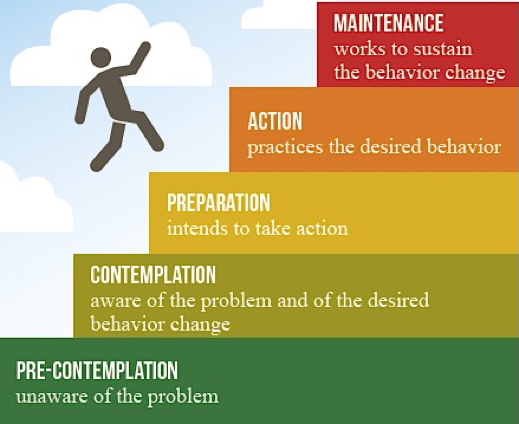
Stages of Change Model
A stepwise guide to how people change their behaviour:
- Precontemplation
- No intention to change
- Strategies:
- Raise awareness of health consequences
- Link behaviour to personal health
- Encourage ownership
- Contemplation
- Ambivalent but considering change
- Strategies:
- Explore personal impact (on self and others)
- Avoid pressuring—this can backfire
- Use motivators: health, finances, relationships
- Preparation
- Planning stage
- Actions:
- Research how to change
- Set goals and priorities
- Build necessary skills
- Action
- Behaviour change begins
- Tips:
- Encourage small, achievable steps
- Reinforce self-efficacy
- Acknowledge challenges and risk of relapse
- Maintenance
- Long-term behaviour reinforcement
- Normalise setbacks—relapse is part of the process
- Strategies to stay on track include reflection and continued support
Relapse and Its Management
- Relapse is common, especially with addiction-related behaviours (e.g. smoking, alcohol)
- Often triggered by:
- Stress
- Depression
- Anxiety
- Important points:
- Relapse doesn’t mean failure—it’s part of the cycle
- Restarting change is just as hard the second time
- Move the patient back to contemplation, not precontemplation
Summary – Changing Behaviour
This changing behaviour guide outlines key strategies like the SNAP framework and Stages of Change Model to help clinicians support patients in overcoming lifestyle risks. Recognising ambivalence and relapse as normal helps create compassionate, effective care plans. For a broader context, see our Microbiology & Public Health Overview page.