
Table of Contents
Overview – Inflammation
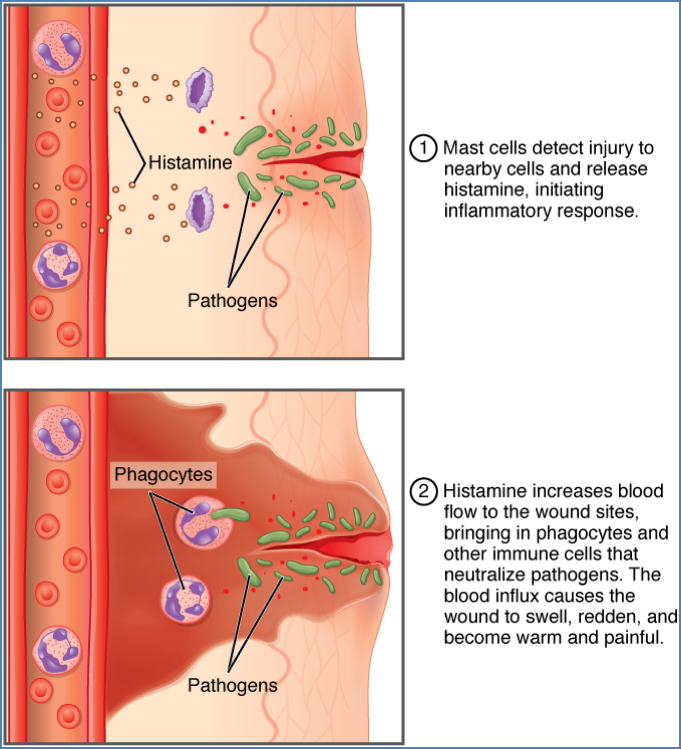
Inflammation is a complex physiological response of vascularised tissues to harmful stimuli such as pathogens, damaged cells, or irritants. It is a critical component of the body’s first line of defence and serves to eliminate the initial cause of cell injury, remove necrotic cells and tissues, and initiate tissue repair. The classic signs of inflammation—pain, redness, swelling, heat, and loss of function—are driven by vascular and cellular events designed to protect and restore tissue integrity.
Definition
Inflammation is the immune system’s response to tissue injury or infection, involving coordinated vascular, cellular, and chemical processes aimed at eliminating the source of harm and promoting healing.
Cardinal Signs of Inflammation
- Pain (Dolor)
- Redness (Rubor)
- Swelling (Tumor)
- Heat (Calor)
- Loss of function
Purpose of Inflammation
- Neutralise and eliminate invading microbes or harmful agents
- Prevent further spread of infection or injury
- Activate tissue repair mechanisms and initiate healing
Key Components Involved
Vascular Elements
- Endothelial Cells – Regulate permeability and leukocyte trafficking
Connective Tissue Cells
- Mast Cells – Release histamine to initiate vasodilation and permeability
- Fibroblasts – Key in scarring and tissue remodelling
- Macrophages – Phagocytose pathogens and secrete cytokines
- Lymphocytes – Coordinate adaptive immunity (B and T cells)
Circulating Blood Cells
- Neutrophils – Early responders for phagocytosis
- Monocytes – Differentiate into tissue macrophages
- Eosinophils – Target parasites and modulate allergic responses
- Basophils – Contribute to allergic inflammation
Acute vs Chronic Inflammation
Acute Inflammation
- Onset: Minutes to days
- Key Features:
- Vasodilation
- Exudate accumulation (plasma proteins & fluid)
- Neutrophil infiltration
Chronic Inflammation
- Onset: Weeks to years (prolonged or unresolved stimulus)
- Key Features:
- Predominant cells: Macrophages, lymphocytes
- Angiogenesis and fibrosis
- Necrosis and tissue damage
Primary Inflammatory Responses
Vasoactivity
- Vasodilation:
- ↑ vascular calibre → ↑ blood flow
- Caused by vascular smooth muscle relaxation
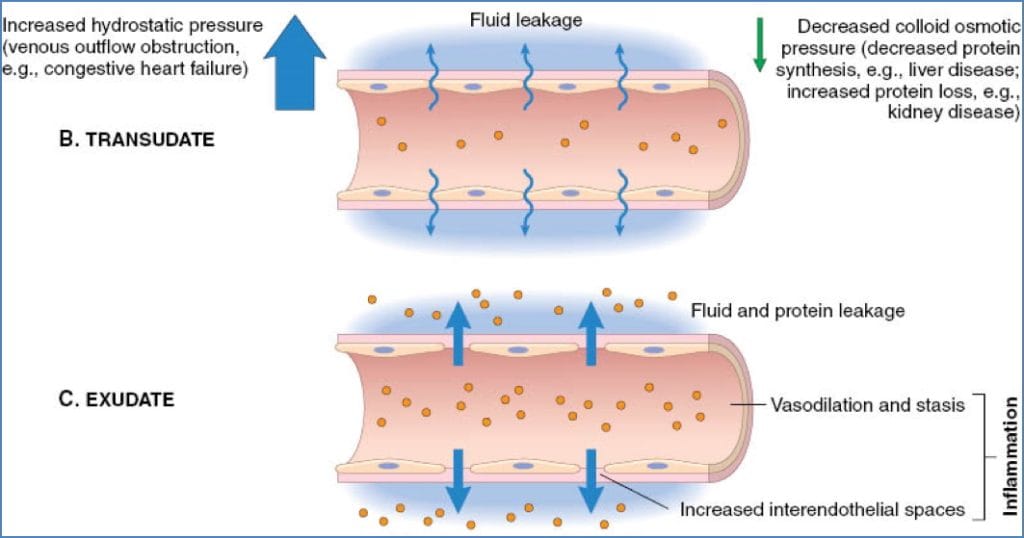
- Increased Vascular Permeability:
- Gaps between endothelial cells allow fluid and proteins to leak out
- Mediators:
- Histamine (primary)
- Platelet-Activating Factor (PAF)
- Bradykinin
- Nitric Oxide
- Effects:
- Mucus production
- Transudate (low protein fluid leakage)
- Exudate (leakage of fluid, proteins, and cells)
Leukocyte Migration
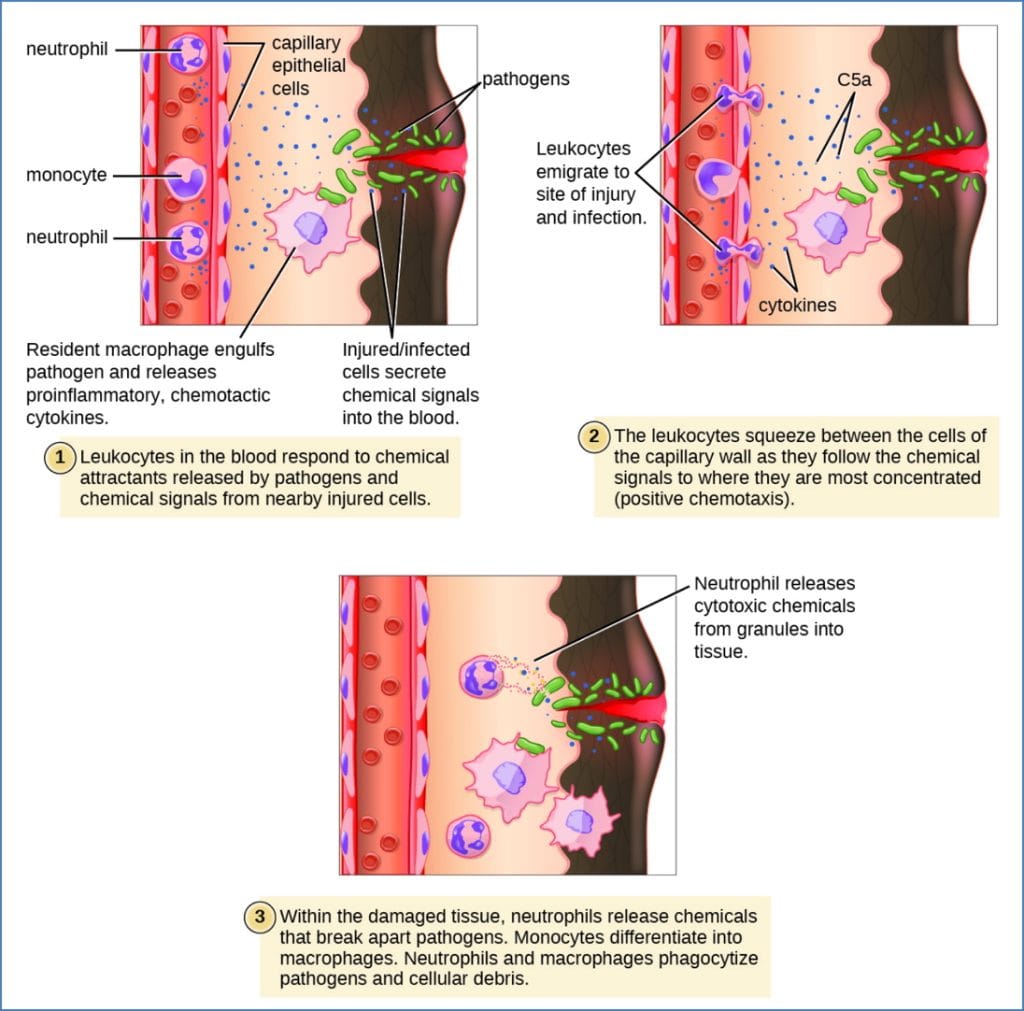
- Movement of immune cells into tissues
- Includes:
- Neutrophils, eosinophils, basophils
- Macrophages
- Lymphocytes
- Supports both:
- Innate immunity (granulocytes and macrophages)
- Adaptive immunity (B and T lymphocytes, NK cells)
Summary – Inflammation
Inflammation is a vital immune response triggered by tissue injury or infection. It functions to neutralise harmful stimuli, limit damage, and initiate tissue repair. The process involves vasoactive changes, increased vascular permeability, and immune cell recruitment. It is classified as either acute or chronic, depending on the duration and underlying cause. For a broader context, see our Immune & Rheumatology Overview page.