
Table of Contents
Overview – Oral Squamous Cell Carcinoma
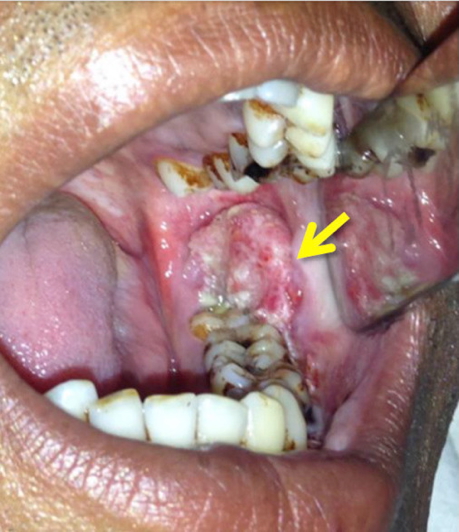
Oral squamous cell carcinoma (SCC) is a malignancy of the oral mucosal epithelium, strongly associated with tobacco, alcohol, and HPV. It frequently arises on the lower lip, floor of mouth, or lateral tongue, and may present as ulcerative or nodular lesions. Precursor lesions such as leukoplakia and erythroplakia are important warning signs. Early recognition and excision are critical, but many cases already show nodal spread at diagnosis.
Oral SCC
Aetiology
- Tobacco (smoking and chewing)
- Alcohol
- Human Papillomavirus (HPV) infection
Pathogenesis
- Malignant transformation of squamous mucosal epithelium
- Often preceded by dysplastic or keratotic changes
Clinical Features
- Begins as white-gray plaques (leukoplakia)
- Progresses to nodular masses or necrotic ulcers
- Common locations:
- Lower lip border
- Floor of mouth
- Lateral aspect of tongue
- May present with:
- Oral pain or discomfort
- Non-healing ulcers
- Weight loss, lymphadenopathy
Investigations
- Head CT for local staging
- Excisional biopsy for histopathology
- +/- Sentinel node biopsy or resection if regional metastasis suspected
Management
- Surgical excision is mainstay
- May require nodal dissection
- Radiotherapy or chemoradiation in advanced cases
Prognosis
- 50% of cases have lymph node involvement at diagnosis
- 5-year survival rate: ~30%
Precursor Lesions: Leukoplakia & Erythroplakia
Aetiology
- Most commonly associated with tobacco use
Pathogenesis
- Early epithelial changes such as:
- Hyperkeratosis
- Parakeratosis
- Possible dysplasia
Morphology
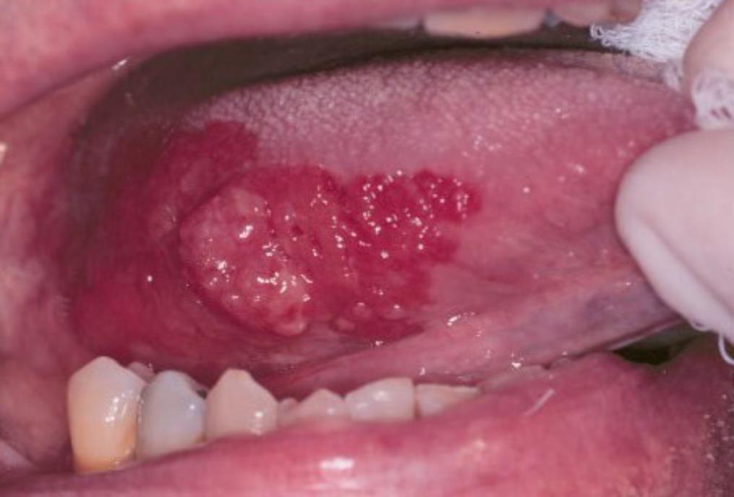
- Leukoplakia: Well-defined white plaque
- Erythroplakia: Well-defined red, velvety plaque
- May also appear as mixed lesions

Clinical Features
- Often asymptomatic and incidentally detected
- Up to 5–15% transform to invasive carcinoma
- Should be considered potentially malignant
Summary – Oral Squamous Cell Carcinoma
Oral squamous cell carcinoma is an aggressive malignancy of the oral mucosa with poor survival rates. Early signs like leukoplakia and erythroplakia are critical opportunities for intervention. Excision and node evaluation are the cornerstones of management. For broader context, visit our Head and Neck Overview page.