
Table of Contents
Overview – Supermale Syndrome
Supermale syndrome, also known as 47,XYY syndrome, is a genetic condition in which a biological male has an extra Y chromosome. Unlike other chromosomal disorders, 47,XYY is often underdiagnosed due to its subtle and variable features. While most affected individuals lead typical lives, some may experience mild developmental, learning, or behavioural differences.
Definition
47,XYY syndrome is a chromosomal anomaly where males have an extra Y chromosome, resulting in the karyotype 47,XYY. It is also referred to as Supermale syndrome or Diplo-Y syndrome.
Aetiology
- Cause:
- Caused by nondisjunction during spermatogenesis
- Results in a sperm cell with two Y chromosomes, which, when fertilising a normal X-carrying egg, results in 47,XYY
- Incidence:
- Occurs in approximately 1 in 1,000 male births
- Inheritance:
- Not inherited – the chromosomal anomaly occurs as a random event
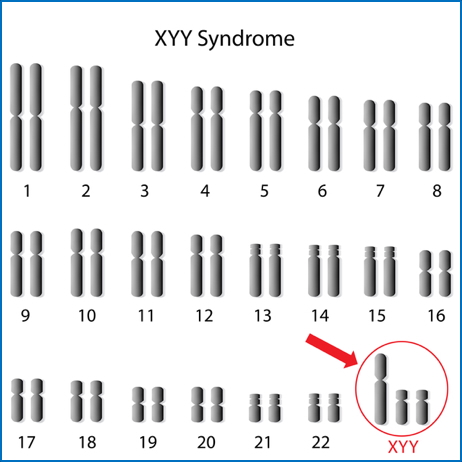
Pathophysiology
- Extra Y chromosome results in a total of 47 chromosomes
- Does not significantly impact testosterone levels or male secondary sex characteristics
- Some evidence suggests increased growth velocity in early childhood
- Mild effects on learning and neurodevelopment in some cases

Clinical Features
Most individuals with 47,XYY are phenotypically normal. However, features may include:
- Physical:
- Tall stature (often >95th percentile for height)
- Severe teenage acne (due to hormonal differences)
- Cognitive/Behavioural:
- Increased risk of learning difficulties, particularly in language and literacy
- Mild delays in motor skills and speech development
- Occasional behavioural challenges (e.g. impulsivity, ADHD-like traits)
- Other:
- Normal sexual development
- Normal testosterone levels and fertility
- Most affected individuals are never diagnosed
Investigations
- Karyotype analysis: Confirms presence of an extra Y chromosome (47,XYY)
- Developmental screening: May reveal subtle delays in early childhood
- Neuropsychological testing: Used if learning or behavioural difficulties are present
Management
- Speech and Language Therapy: For early language delays
- Educational Support: Tutoring or additional learning support as needed
- Psychological Support: If behavioural or emotional issues arise
- Dermatological Care: Treatment for acne, often with topical or oral agents
- Routine Monitoring: Most cases require minimal intervention once developmental milestones are supported
Complications
- Social and emotional difficulties during school years (due to learning delays or taller stature)
- Mild increase in risk of autism spectrum features or ADHD
- No increased risk of aggressive or criminal behaviour – a historical misconception that has been debunked
Differential Diagnosis
- Klinefelter’s syndrome (47,XXY) – important to distinguish due to very different endocrine and reproductive implications
- Tall stature due to familial or constitutional factors
- ADHD or learning disability from other causes
Summary – Supermale Syndrome
Supermale syndrome (47,XYY) is a genetic condition affecting males who have an extra Y chromosome. Most individuals are phenotypically normal and lead healthy, fertile lives, though some may experience mild learning or developmental differences. For more resources on chromosomal anomalies, visit our Genetics & Cancer Overview page.