
Table of Contents
Overview – Dwarfism Genetics
Dwarfism genetics primarily refers to inherited skeletal dysplasias that result in disproportionate short stature, most commonly due to mutations in the fibroblast growth factor receptor 3 (FGFR3) gene. The two best-known conditions are achondroplasia and hypochondroplasia, both inherited in an autosomal dominant manner. These conditions share similar pathogenesis but vary in clinical severity and presentation timeline. Understanding their genetic basis and phenotype is key in paediatrics, clinical genetics, and counselling.
Achondroplasia
Definition
- A form of disproportionate dwarfism characterised by impaired chondrocyte proliferation in growth plates.
- “A-chondro-plasia” = “No cartilage growth”.
Aetiology
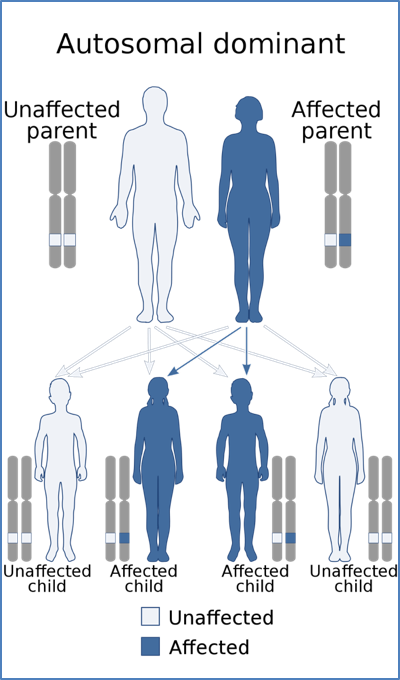
- Autosomal dominant inheritance
- Mutation in the FGFR3 gene (fibroblast growth factor receptor 3)
- 80% of cases arise from de novo mutations (new mutations in children of unaffected parents)
Pathogenesis
- Normal FGFR3 function: Acts as a negative regulator of bone growth.
- Hypermorphic mutation: Exaggerated inhibition → reduced endochondral ossification
- Result: Impaired long bone growth, especially in limbs and cranial base
Genotype
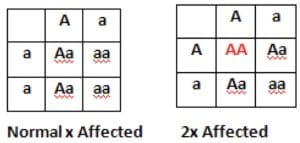
- Affected individuals are heterozygous (Aa)
- AA (homozygous) genotype is lethal in infancy
- Genetic outcomes:
- Normal × Affected → 50% chance of affected child
- Affected × Affected →
- 25% AA (nonviable)
- 50% Aa (affected)
- 25% aa (unaffected)
Phenotype
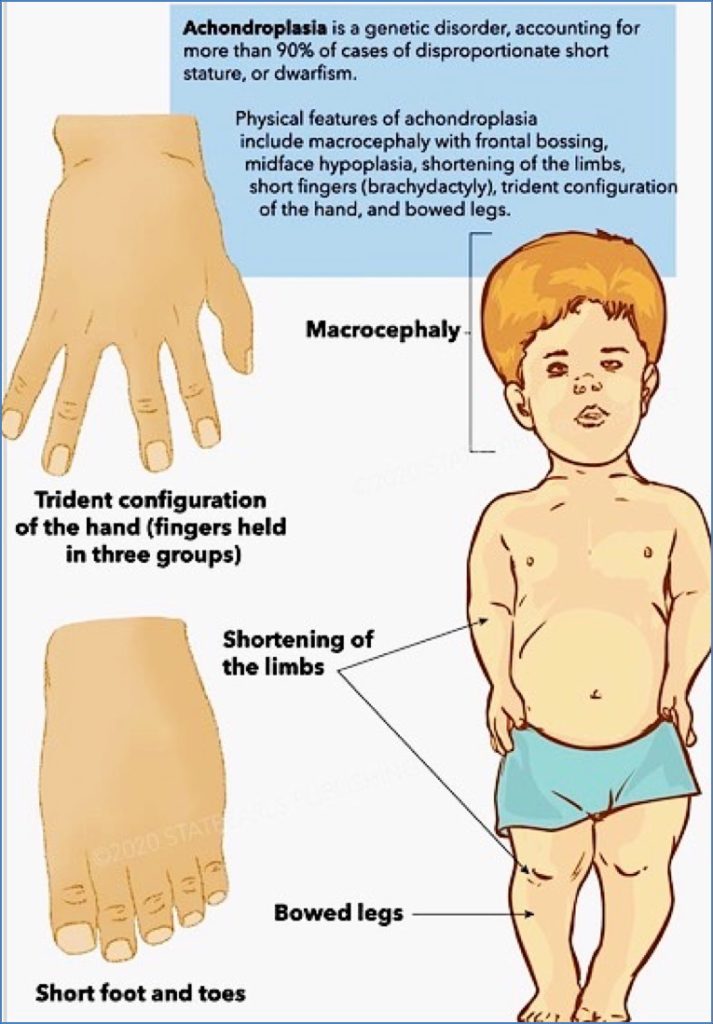
- Short stature, especially in limbs
- Frontal bossing, midface hypoplasia
- Disproportionate limb-to-torso ratio
- Normal intelligence and lifespan
Hypochondroplasia
Definition
- A milder form of skeletal dysplasia
- “Hypo-chondro-plasia” = “Reduced cartilage growth”
Aetiology
- Also autosomal dominant
- Mutation in the FGFR3 gene, but distinct from the achondroplasia variant
Pathogenesis
- Similar hypermorphic mutation → excessive inhibition of bone growth
- Effect is less severe than in achondroplasia
Phenotype
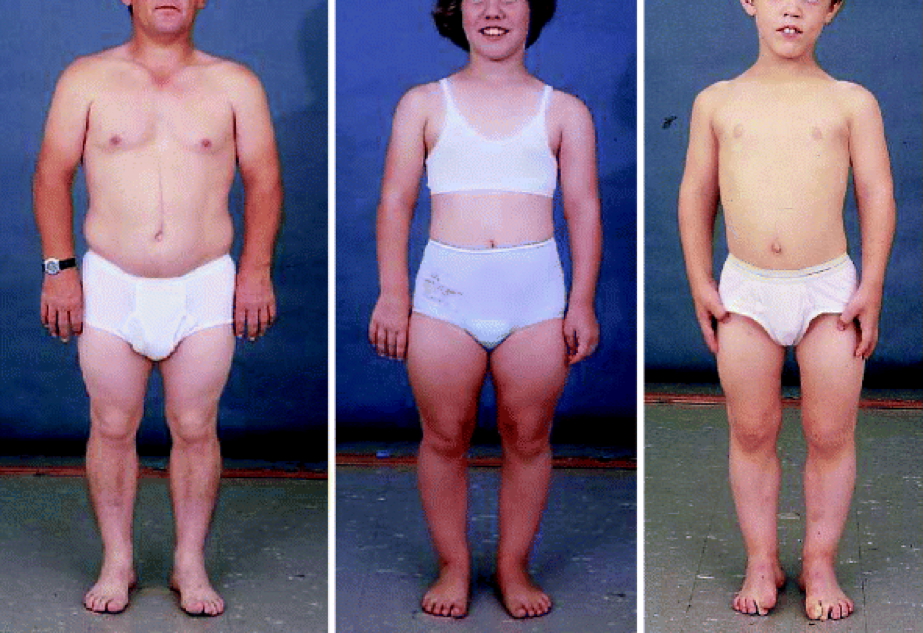
- Short stature
- Mild limb disproportion
- Facial features typically normal
- Often not diagnosed until toddler or early school-age
Summary – Dwarfism Genetics
Dwarfism genetics most commonly involves mutations in the FGFR3 gene leading to achondroplasia or hypochondroplasia. Both conditions are autosomal dominant, with achondroplasia being more severe and frequently resulting from new mutations. Hypochondroplasia presents more subtly and later in childhood. Understanding the genetics, phenotype, and inheritance patterns is essential for diagnosis and genetic counselling. For a broader context, see our Genetics & Cancer Overview page.