
Table of Contents
Overview – Down’s Syndrome
Down’s syndrome, also known as Trisomy 21, is the most common chromosomal condition associated with intellectual disability and characteristic physical features. Caused by the presence of an extra copy of chromosome 21, it presents with a spectrum of clinical manifestations and is more likely with advanced maternal age. Early diagnosis through prenatal screening enables timely support and intervention.
Definition
Down’s syndrome is a chromosomal disorder in which individuals have three copies of chromosome 21 (Trisomy 21), instead of the usual two. This results in a combination of distinctive physical features and varying degrees of cognitive impairment.
Aetiology
- Cause:
- Trisomy 21 due to nondisjunction during meiosis
- The karyotype is typically 47, XY, +21 (or 47, XX, +21 in females)
- Risk Factors:
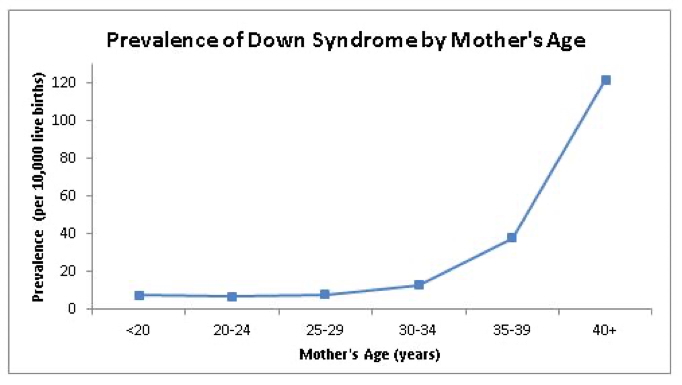
- Strongly associated with increasing maternal age
- Majority of cases are sporadic (not inherited)
Clinical Features
- Neurological:
- Intellectual impairment (mild to moderate)
- Developmental delays
- Facial Features:
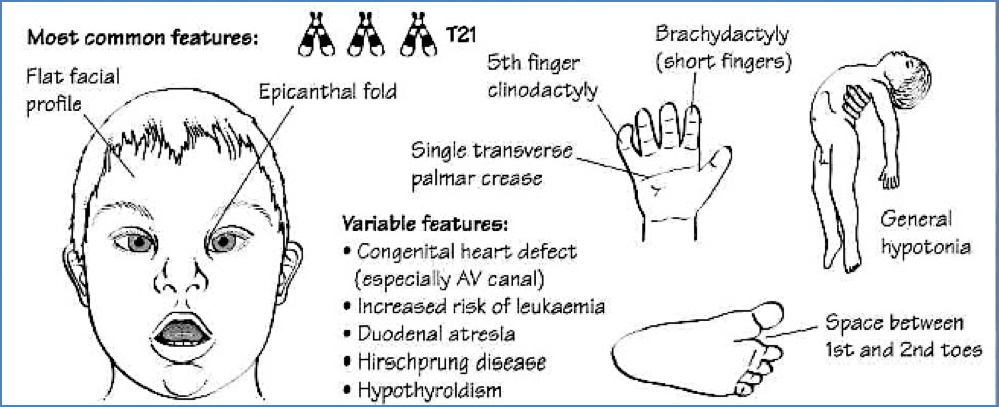
- Flattened facial profile, especially nasal bridge
- Almond-shaped, upward-slanting palpebral fissures
- Epicanthal folds
- Small ears and short neck
- Ocular:
- Brushfield spots (tiny white/grey spots on the iris)
- Musculoskeletal:
- Hypotonia (poor muscle tone)
- Joint hypermobility
- Short stature
- Small hands and feet
- Single palmar crease
- Fifth finger clinodactyly (curving toward the thumb)
- Other Features:
- Protruding tongue
- Congenital heart disease (in ~50% of cases)
- Gastrointestinal anomalies (e.g. duodenal atresia, Hirschsprung’s disease)
- Increased risk of hearing and vision issues
- Increased risk of leukaemia and early-onset Alzheimer’s
Investigations
Antenatal Screening
- Combined Test (10–14 weeks):
- Nuchal translucency ultrasound
- Maternal serum markers (PAPP-A and hCG)
- Also screens for Edward’s and Patau’s syndromes
Diagnostic Testing
- Indicated if screening suggests high risk:
- Chorionic Villus Sampling (CVS) (11–13 weeks)
- Amniocentesis (from 15 weeks onwards)
- Confirmatory karyotype analysis
Management
- Supportive and Symptom-Based Care:
- Multidisciplinary approach: Paediatrics, cardiology, ENT, speech and language therapy, physiotherapy, occupational therapy
- Social services and special education support
- Regular screening for common complications (thyroid dysfunction, hearing, vision, cardiac monitoring)
- Family Support:
- Genetic counselling
- Community support groups
Prognosis
- Life expectancy is variable but has improved significantly with modern medical care
- Many individuals live into their 60s with appropriate support
- Quality of life can be good with early intervention, education, and social inclusion
Summary – Down’s Syndrome
Down’s syndrome (Trisomy 21) is a chromosomal disorder caused by an extra copy of chromosome 21. It presents with a range of physical characteristics and intellectual disability. Early antenatal screening enables prompt diagnosis and multidisciplinary management. For more related content, visit our Genetics & Cancer Overview page.