
Table of Contents
Overview
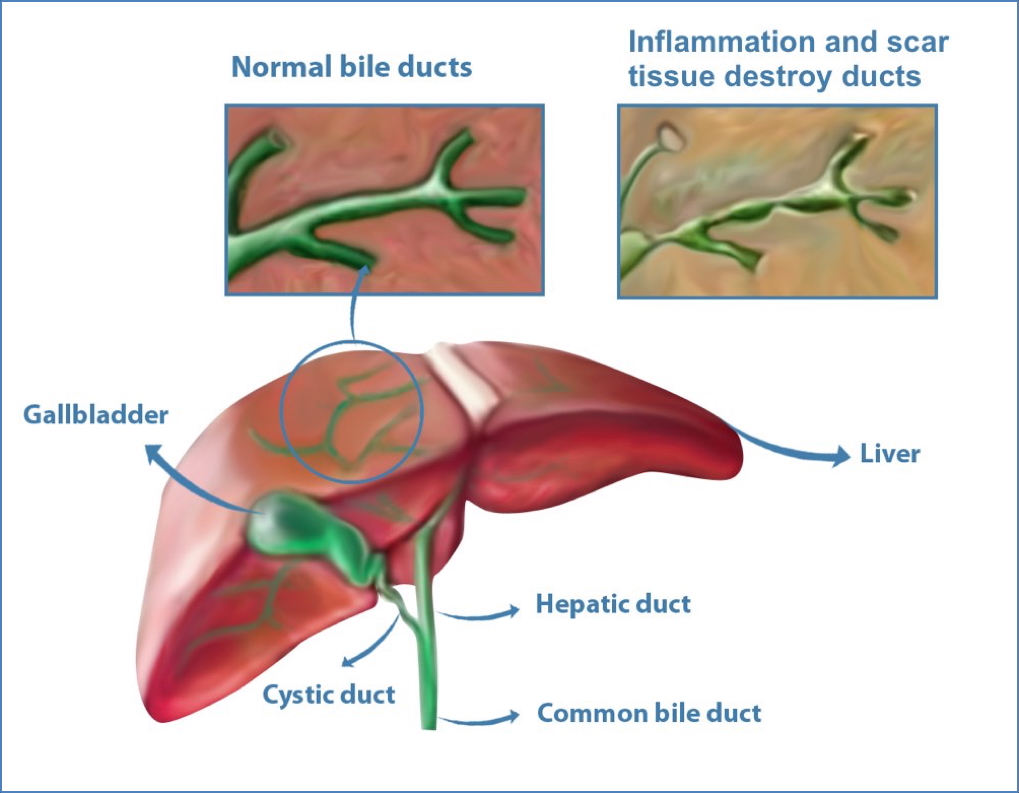
Primary biliary sclerosis (PBS), also known as chronic non-suppurative destructive cholangitis, is a rare autoimmune liver condition characterised by progressive destruction of intrahepatic bile ducts. This results in cholestasis, fibrosis, and eventually cirrhosis and liver failure. Unlike secondary biliary cirrhosis, which stems from chronic biliary obstruction, PBS is autoimmune in origin, though the exact triggers remain unclear. It presents insidiously and often affects middle-aged women. Early diagnosis and treatment can delay progression and improve quality of life.
Definition
Primary biliary sclerosis (PBS) is a chronic, autoimmune-mediated liver disease marked by non-suppurative destruction of intrahepatic bile ducts, leading to cholestasis, fibrosis, and eventual cirrhosis.
Aetiology
- Autoimmune in origin
- Precise cause unknown
- Distinction:
- Primary biliary sclerosis → Autoimmune
- Secondary biliary cirrhosis → Chronic biliary obstruction
Pathogenesis
- Presence of anti-mitochondrial antibodies (AMA) and antinuclear antibodies (ANA)
- Chronic inflammation targets small intrahepatic bile ducts
- Leads to bile duct destruction → progressive cholestasis
- → Ongoing hepatocyte injury → fibrosis → cirrhosis
Clinical Features
Symptoms
- Insidious onset
- Fatigue
- Jaundice (typically cholestatic)
Signs
- Hepatomegaly
- Possible pruritus (in advanced cholestasis)
Investigations
- Liver function tests (LFTs):
- ↑ Bilirubin
- ↑ ALP (alkaline phosphatase)
- ↑ GGT (gamma-glutamyl transferase)
- Autoimmune screening:
- ANA positive
- AMA positive (highly specific for PBS)
Management
Supportive Treatment
- Ursodeoxycholic acid (improves bile flow and LFTs)
- Corticosteroids (e.g. prednisone) in selected cases
- Fat-soluble vitamin supplementation (A, D, E, K)
Definitive
- Liver transplantation in advanced cirrhosis or liver failure
Complications
- Progressive fibrosis → cirrhosis
- Liver failure
Differential Diagnosis
- Primary sclerosing cholangitis
- Autoimmune hepatitis
- Chronic viral hepatitis
- Secondary biliary cirrhosis
- Drug-induced cholestasis
Summary
Primary biliary sclerosis is an autoimmune disease of the liver characterised by the progressive destruction of intrahepatic bile ducts, leading to cholestasis, fibrosis, and liver failure. It typically presents insidiously and is associated with positive ANA and AMA antibodies. Early use of ursodeoxycholic acid can delay disease progression, although liver transplantation remains the only definitive cure. For a broader context, see our Gastrointestinal Overview page.