
Table of Contents
Overview
Haemorrhoids are a very common anorectal condition characterised by swollen and dilated venous cushions in the lower rectum or anal canal. They are the most frequent cause of minor rectal bleeding, especially in adults, and often present with bleeding, pain, and discomfort. They are classified into internal and external, with differences in symptoms and treatment approaches. Prompt recognition and conservative management are usually effective, but surgical intervention may be necessary in refractory cases.
Definition
Dilated and engorged vascular cushions of the rectal venous plexus, caused by increased venous pressure and valve incompetence.
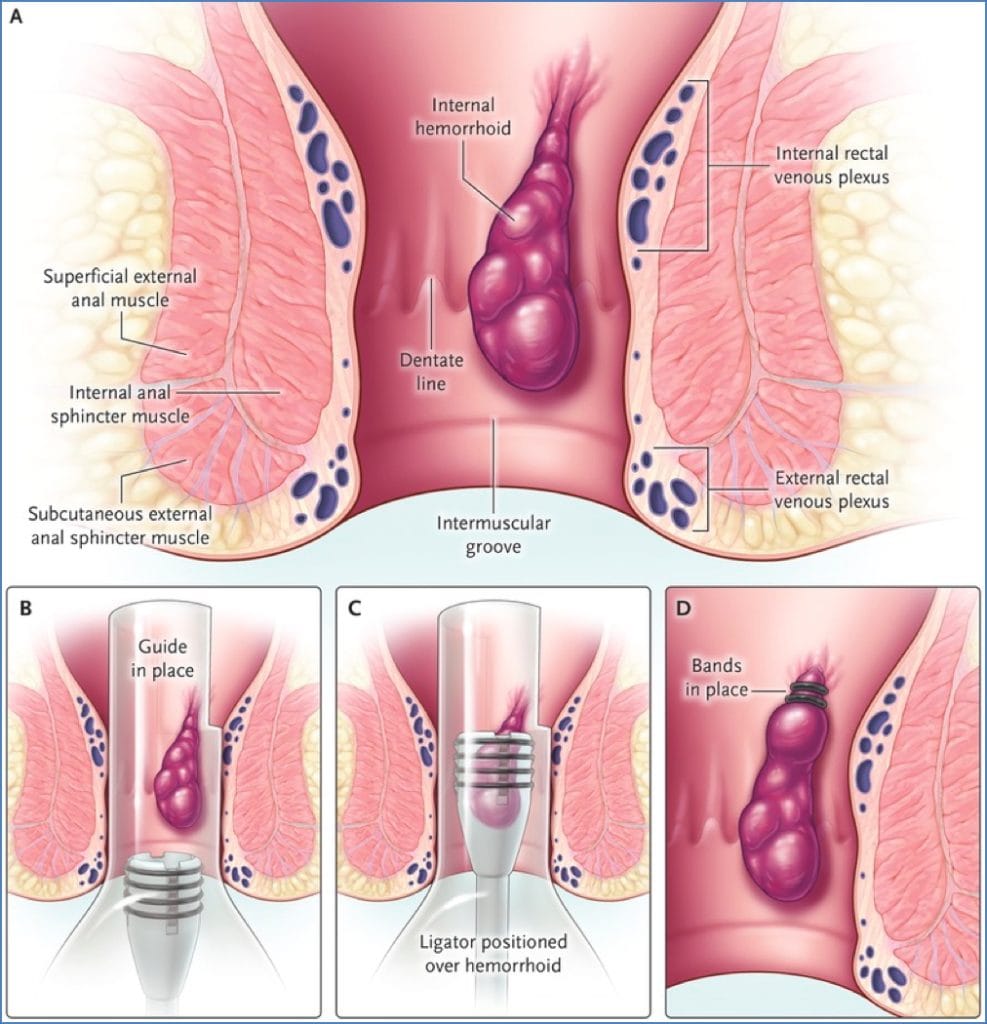
- Internal haemorrhoids: Located above the dentate line; usually painless
- External haemorrhoids: Located below the dentate line; typically painful
Aetiology
- Incompetence of the rectal venous valves
- Chronic increases in intra-abdominal pressure due to:
- Chronic constipation
- Pregnancy
- Chronic cough or asthma
- Heavy lifting
- Prolonged straining
Pathogenesis
- Chronic intra-abdominal pressure → dilation of rectal veins
- Valve incompetence develops → venous pooling and engorgement
- This leads to prolapse of rectal tissue and haemorrhoid formation
Clinical Features
- Most common cause of minor rectal bleeding (>50%)
- Internal haemorrhoids
- Painless bright red bleeding per rectum
- May prolapse with straining
- Possible itching or mucous discharge
- External haemorrhoids
- Painful swelling near the anus
- Tender on examination
- Often associated with thrombosis or irritation

Investigations
While clinical diagnosis is often sufficient, consider:
- Proctoscopy or anoscopy – to assess internal haemorrhoids
- DRE (Digital Rectal Exam) – to exclude other pathology
- Colonoscopy – if red flag features (weight loss, anaemia, >50yrs) or to rule out malignancy
Management
First-Line (Conservative)
- High-fibre diet
- Increased fluid intake
- Avoid prolonged straining
- Topical analgesics and local hygiene
- Rest and sitz baths
Second-Line (Surgical)
- Internal haemorrhoids → Rubber band ligation (banding)
- External haemorrhoids → Surgical excision under general anaesthetic (due to pain)
Complications
- Thrombosis and necrosis (especially with external haemorrhoids)
- Prolapse
- Anaemia from chronic bleeding
- Local infection or abscess formation
Summary
Haemorrhoids are a common cause of painless or painful rectal bleeding, depending on whether they are internal or external. Most cases respond well to dietary modification and hygiene, while surgery may be needed for severe or persistent cases. For a broader context, see our Gastrointestinal Overview page.