
Table of Contents
Overview – Cellular Signalling
Cellular signalling is the communication system that enables individual cells to coordinate their behaviour and function within multicellular organisms. This system governs vital processes such as metabolism, immunity, differentiation, and apoptosis. Whether the signals are local or systemic, and whether the receptors are intracellular or membrane-bound, effective signal transduction is essential for cellular homeostasis, adaptability, and response to external stimuli.
Purpose of Intercellular Signalling
- Coordinates multicellular function toward the common good of the organism
- Allows cells to receive, process, and respond to information from their environment or other cells
- Results in regulation of:
- Movement
- Growth and reproduction
- Digestion and metabolism
- Circulation and respiration
- Sensory function
- Temperature and balance
- Immunity
- Differentiation and programmed cell death (apoptosis)
- A single signal can trigger different responses in different cell types
Signal Transduction
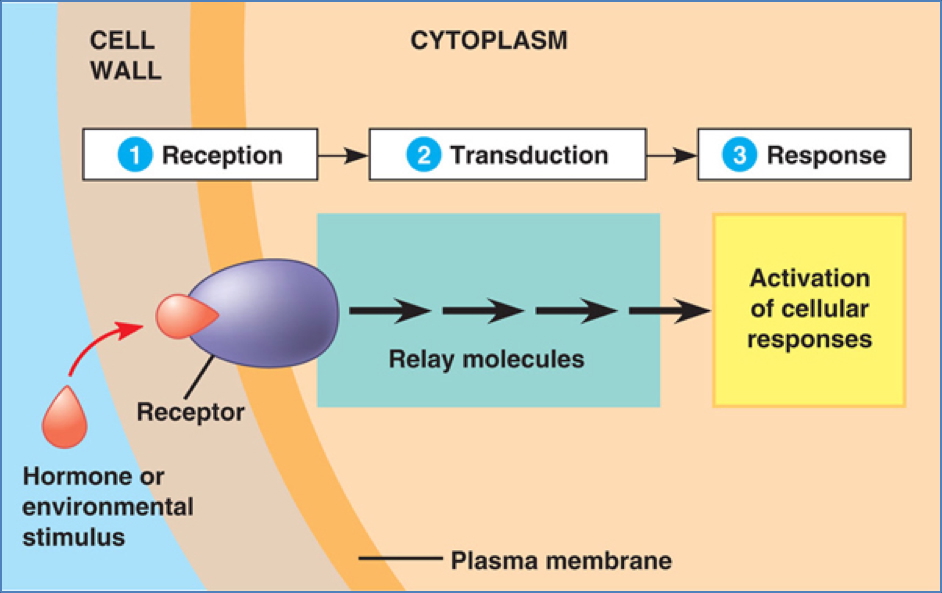
- Signals are typically converted (“transduced”) from one form to another:
- Signalling cell produces a signalling molecule
- Can be peptides, amino acids, nucleotides, steroids, fatty-acid derivatives, or gases
- Target cell detects the signal via a receptor protein
- Receptor transduces the signal into an intracellular cascade
- Signal is relayed, amplified, and potentially diverged
- Intracellular messengers activate target proteins
- Leads to changes in gene expression, enzymatic activity, or cell structure/behaviour
- Signalling cell produces a signalling molecule
Types of Signalling – Range & Specificity
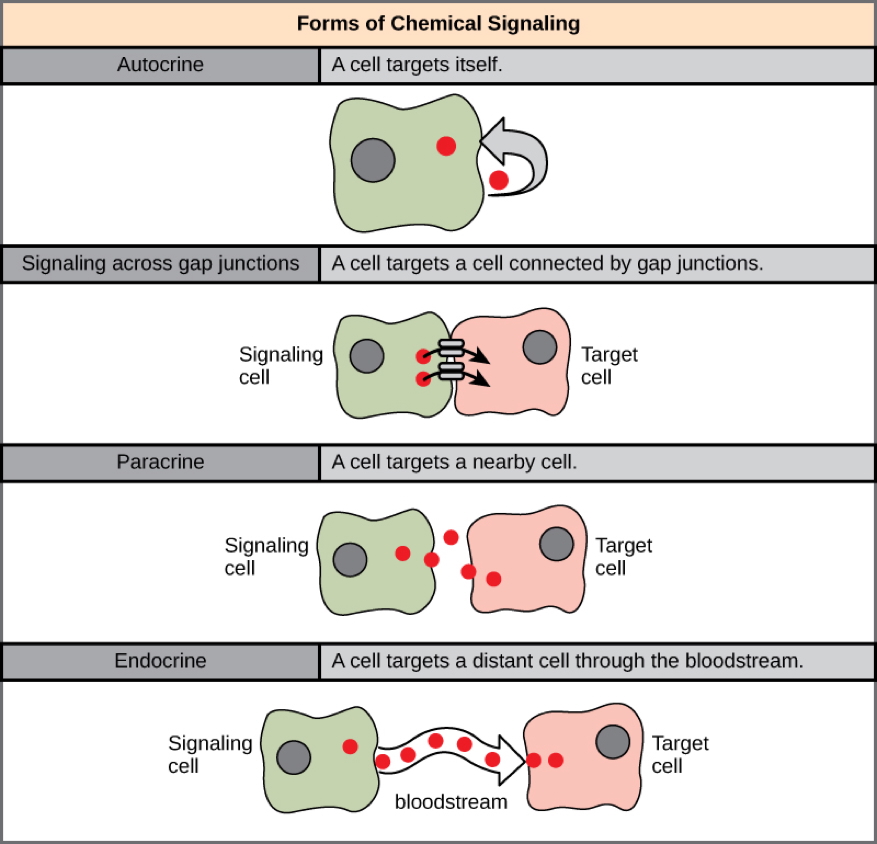
- Endocrine signalling → hormones travel via bloodstream to distant targets (e.g. insulin)
- Paracrine signalling → acts on nearby cells of different type (e.g. growth factors)
- Autocrine signalling → acts on same cell type that produced the signal (e.g. immune cells)
- Neuronal signalling → specific, rapid delivery via neurons and synapses (e.g. neurotransmitters)
- Contact-dependent signalling → direct membrane contact between signalling and target cells
Receptor Types
1. Intracellular Receptors
- Located in cytoplasm or nucleus
- Respond to lipid-soluble signals (e.g. steroid/thyroid hormones, nitric oxide)
- Signal diffuses through the membrane and binds receptor → conformational change
- May directly regulate transcription
- Others activate cytosolic enzymes

2. Plasma Membrane-Bound Receptors
These handle water-soluble or membrane-impermeable signals:
A. Ion-Channel-Linked Receptors
- Also known as ligand-gated ion channels
- Binding opens channel → ion influx/efflux → electrical or signalling changes
- Typical ligands: neurotransmitters
B. Enzyme-Linked Receptors
- Receptors themselves are enzymes or linked to enzymes
- Ligand binding activates enzymatic function
- Commonly involved in cell growth and proliferation
- Triggers intracellular signalling cascades (e.g. MAPK pathway)
C. G-Protein-Linked Receptors (GPCRs)
- Largest and most versatile receptor class
- Signal binds to GPCR → activates G-protein (GDP → GTP switch)
- Activated G-protein initiates downstream effects:
- Opens ion channels
- Activates membrane-bound enzymes (e.g. adenylyl cyclase → cAMP)
- G-proteins self-deactivate by hydrolysing GTP to GDP

Summary – Cellular Signalling
Cellular signalling is the essential mechanism by which cells perceive and respond to internal and external cues. It underlies critical physiological processes such as immunity, growth, differentiation, and homeostasis. Whether by hormones, neurotransmitters, or local mediators, signal transduction ensures coordinated cellular behaviour across tissues. For a broader context, see our Cell Biology & Biochemistry Overview page.