
Table of Contents
Overview – 5 Levels of Organization
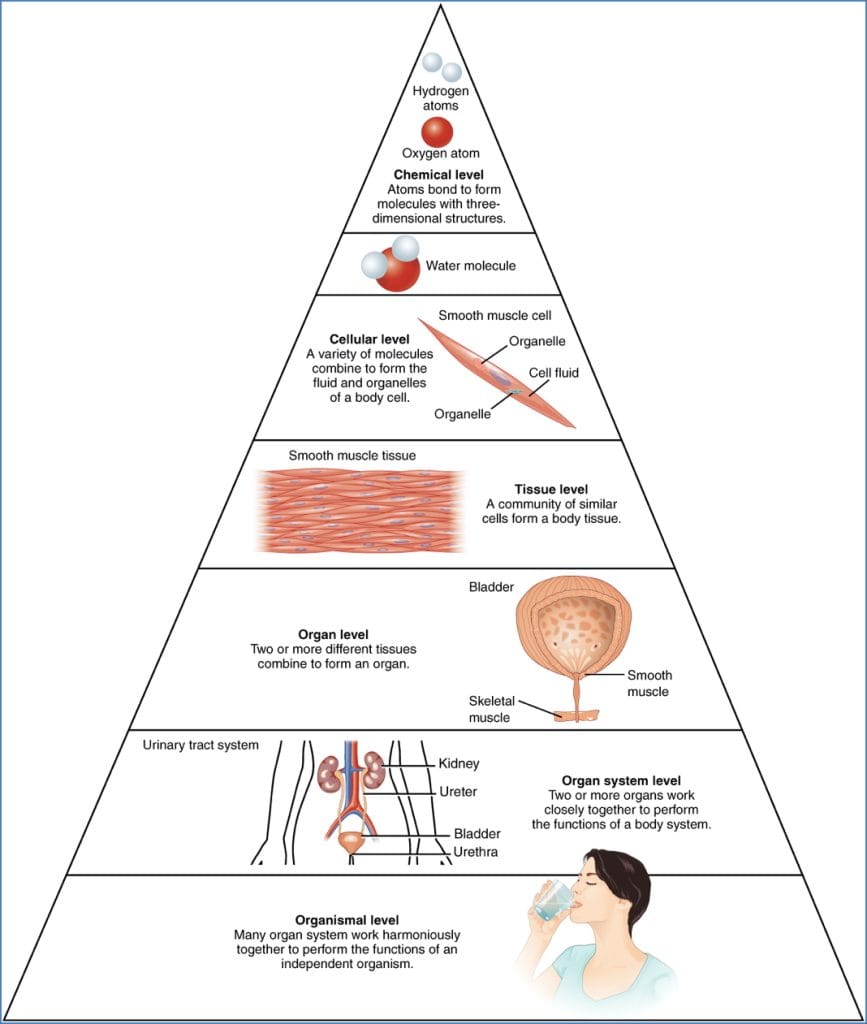
The 5 levels of organization in the body provide a structured way to understand human anatomy and function, from the smallest atomic particles to the complete organism. This hierarchical model is foundational to the study of physiology, cell biology, and clinical medicine. Recognizing these levels helps medical students grasp how microscopic processes scale up to complex organ systems — essential for clinical reasoning and integrated care.
Definition
The levels of organization describe the structural hierarchy of the human body, from the molecular building blocks of life to the coordinated function of entire organ systems in a living organism. Each level builds upon the previous, increasing in complexity.
The Chemical Level
- All matter in the body is composed of atoms and molecules.
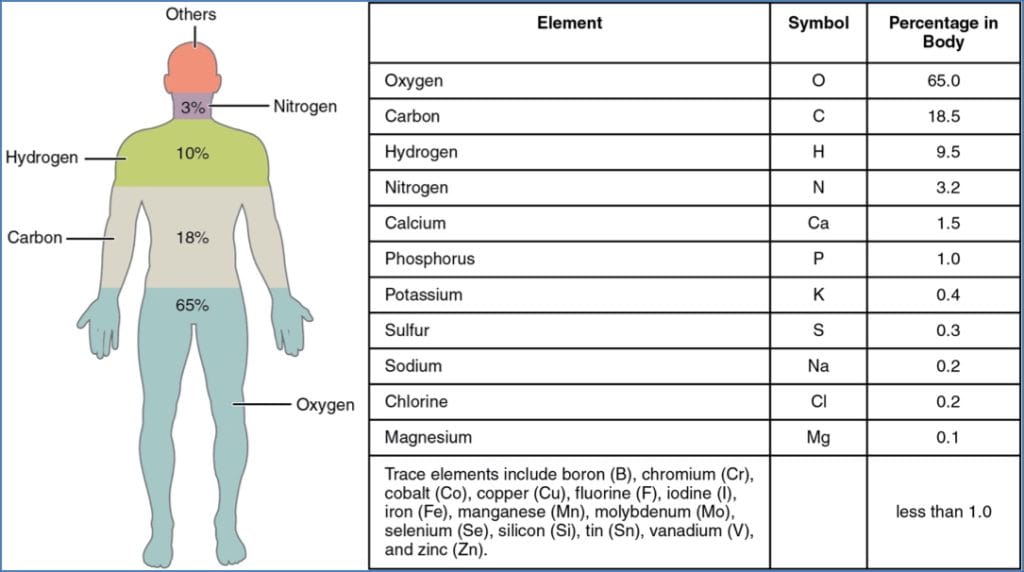
- The four key biological elements—carbon, oxygen, hydrogen, and nitrogen—make up 96% of living matter.
- These elements form the four major macromolecules of life:
- Proteins
- Carbohydrates
- Fats (lipids)
- Nucleic acids
The Cellular Level
- The cell is the basic functional unit of life.
- There are no living sub-cellular units; life processes occur within whole cells.
- Single-celled organisms (e.g. bacteria, amoebas) represent the simplest life forms.
- Multicellular organisms (e.g. humans) consist of trillions of specialized cells.
- All cells are enclosed by a plasma membrane:
- A bilayer of lipids: hydrophilic surfaces facing outwards, hydrophobic tails inwards.
- Membrane proteins include:
- Transporters (regulate material movement)
- Antigens (identify self vs. foreign)
- Receptors (receive external chemical signals)
- Fundamental functions of all cells:
- Acquire nutrients and oxygen
- Extract energy via respiration
- Eliminate waste products
- Synthesize essential macromolecules (e.g. proteins, enzymes, lipids, carbohydrates)
- Regulate material exchange with the environment
- Transport materials internally
- Respond to environmental stimuli
- Self-replicate (note: nerve and muscle cells are exceptions)

The Tissue Level
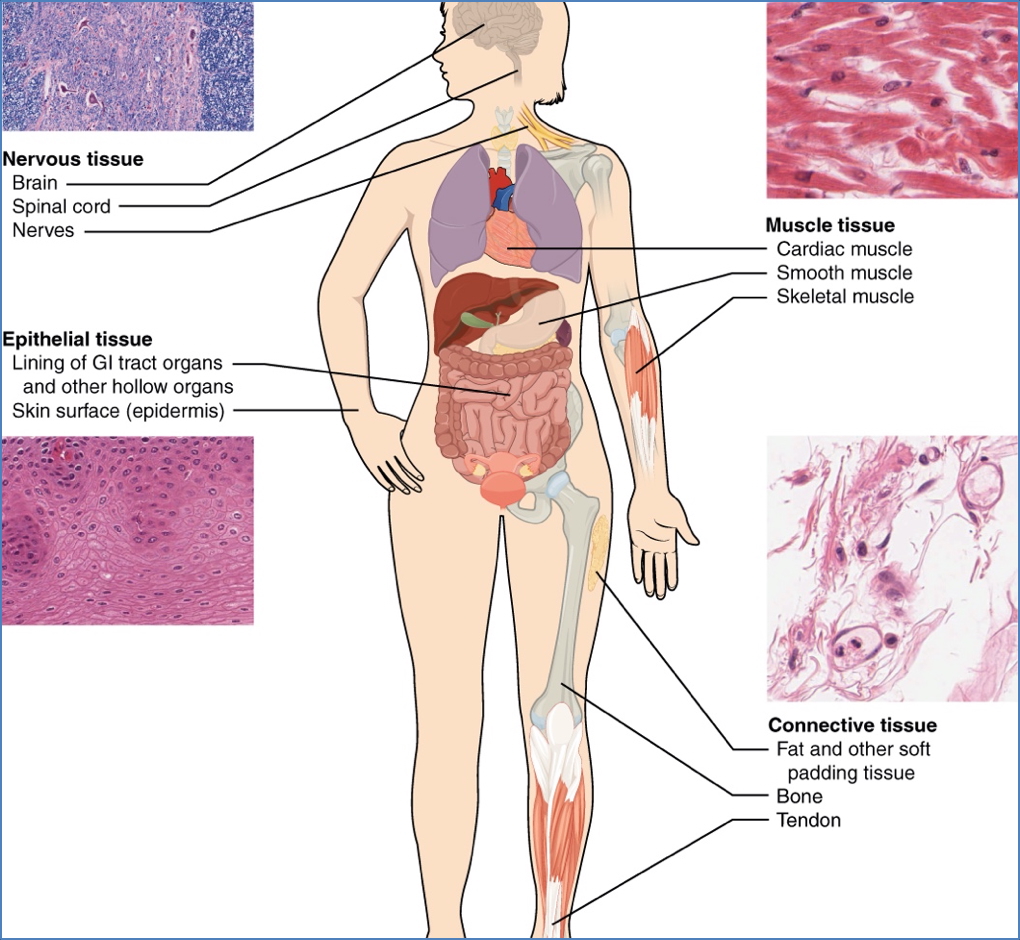
- Tissues are groups of similar cells performing a common function.
- There are four primary tissue types: Muscle Tissue
- Specialized for contraction, enabling movement.
- Three types:
- Skeletal muscle
- Cardiac muscle
- Smooth muscle
- Specialized for electrical signal transmission (action potentials).
- Allows rapid communication between body regions.
- Specialized for exchange between body and environment.
- Any substance entering or leaving the body passes through an epithelial layer.
- Two types:
- Epithelial membranes (sheets)
- Glands (exocrine or endocrine)
- Contains few cells within an abundant extracellular matrix.
- Provides structural support and anchoring.
- Includes:
- Connective tissue proper (loose or dense)
- Cartilage
- Bone
- Blood (a fluid connective tissue)
The Organ Level
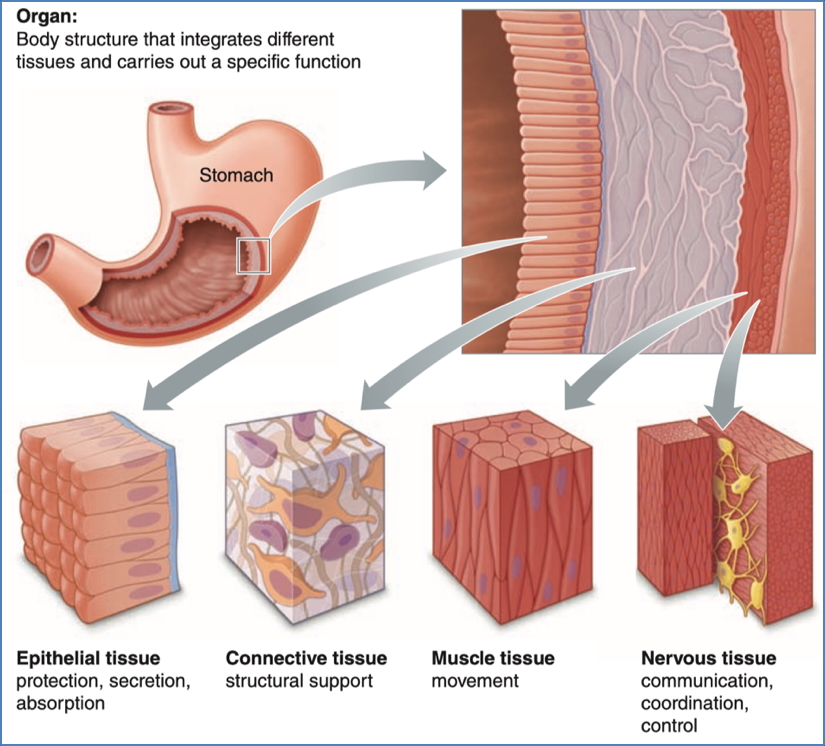
- An organ consists of two or more tissue types that work together for a specific function.
- Example: The stomach
- Epithelial tissue: secretes digestive enzymes into the lumen
- Connective tissue: binds and supports other tissues
- Muscle tissue: smooth muscle layers mix and propel contents
- Nervous tissue: regulates secretion and motility
The Organ System Level
- An organ system is a group of organs with related functions.
- Example: The digestive system includes:
- Stomach
- Small and large intestines
- Salivary glands
- Liver and gallbladder
- Exocrine pancreas
- The body comprises 11 organ systems:
- Cardiovascular
- Digestive
- Respiratory
- Urinary
- Skeletal
- Muscular
- Integumentary
- Immune
- Nervous
- Endocrine
- Reproductive
The Organismal Level
- At the highest level, all body systems work together to maintain life in the form of a functioning organism.
- Integration and homeostasis across systems allow for survival, adaptation, and reproduction.
Summary – 5 Levels of Organization
The 5 levels of organization—chemical, cellular, tissue, organ, and organ system—represent a hierarchy of biological complexity essential to human structure and function. This model underpins both physiology and clinical practice, from cellular dysfunction to system-level disease. For a broader context, see our Cell Biology & Biochemistry Overview page.